Introduction: Choosing the Right Abatement Strategy
Industrial manufacturing releases a wide variety of pollutants, making the selection of gaseous emission control methods critical for regulatory compliance. Whether you are dealing with Volatile Organic Compounds (VOCs), acid gases, or hazardous odors, there is no “one-size-fits-all” solution.
At ABOUT US, we engineer equipment for all major control methodologies. This guide compares the most effective technologies available today.
1. Thermal Oxidation: High-Efficiency Destruction
One of the most reliable gaseous emission control methods is thermal oxidation—using high heat to break down pollutants into CO2 and water.
- Regenerative Thermal Oxidizer (RTO): Best for high-volume, low-to-medium concentration streams. It uses ceramic beds to recover 95% of heat.Learn more: RTO
- Direct Fired Thermal Oxidizer (TO): Ideal for very high concentrations where the waste gas acts as fuel.Learn more: TO/MS-DFTO
2. Catalytic Oxidation: Energy-Saving Control
For facilities seeking lower operating costs, catalytic methods use a chemical catalyst to lower the oxidation temperature (300°C–400°C).
- Regenerative Catalytic Oxidizer (RCO): Combines the heat recovery of an RTO with the low-temperature efficiency of a catalyst.Learn more: RCO
- Catalytic Oxidizer (CO): A compact solution for smaller, cleaner air streams.Learn more: CO
3. Concentration & Adsorption: Handling Dilute Streams
When air volume is huge but pollutant concentration is low (e.g., painting or semiconductor industries), direct oxidation is inefficient. The preferred method is Adsorption.
- Zeolite Rotor Concentrator: This method continuously adsorbs VOCs and releases them into a smaller, concentrated stream for treatment, drastically reducing energy use.Learn more: Zeolite Concentration Rotor(CR)
- Activated Carbon Recovery: Used when the solvent is valuable and needs to be recovered rather than destroyed.Learn more: Activated Carbon Fiber Recovery Device(ACF)
4. Absorption (Scrubbing): Treating Inorganic Gases
Not all gaseous emissions are VOCs. For water-soluble contaminants like acid mists or ammonia, Absorption (Wet Scrubbing) is the standard method.
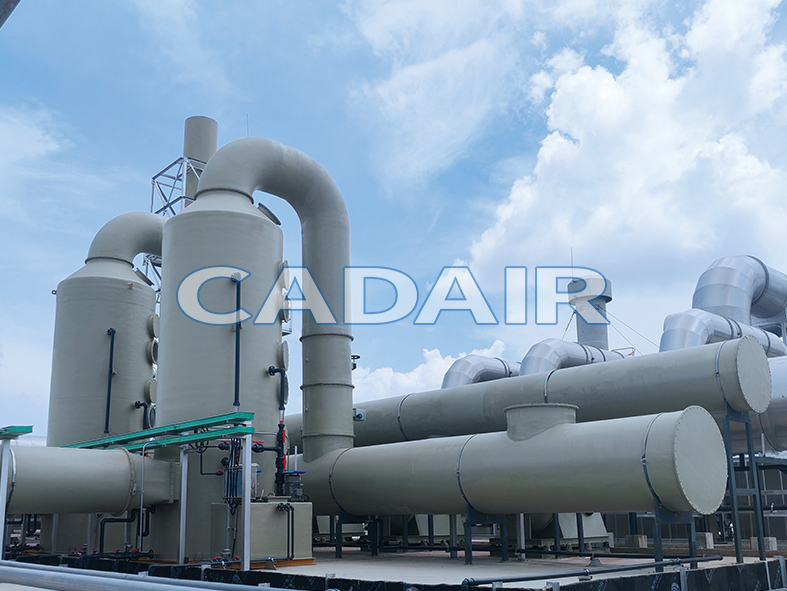
- Wet Scrubber: Uses a liquid reagent to neutralize harmful gases. Often used as a pre-treatment before an RTO.Learn more: Scrubber
Conclusion: Integrated Solutions from Cadair
Selecting among gaseous emission control methods requires expert analysis of your airflow, temperature, and chemical composition. Cadair offers the full spectrum of technologies to ensure the perfect fit.
Need a Technical Recommendation? Our engineers can simulate which method offers the best ROI for your plant.