When specifying air pollution control equipment, “performance” (destruction efficiency) is only half the battle. The other half is safety. A thermal oxidizer design code provides the engineering framework to ensure that these high-temperature combustion systems operate without risk of explosion or failure.
At ABOUT US, we don’t just build machines; we engineer safety. Our systems are designed in strict accordance with major international standards to protect your facility and personnel.
1. The Critical Standard: NFPA 86
For any thermal oxidizer design code discussion, the National Fire Protection Association (NFPA) Standard 86 is paramount. It governs the safety of industrial ovens and furnaces.
- Purge Cycles: Ensuring 4x system volume air change before ignition to prevent explosive pockets.
- LEL Controls: Strictly managing the Lower Explosive Limit. Typically, oxidizers are designed to operate below 25% LEL to ensure safety.
- Burner Management System (BMS): We implement rigorous safety logic for flame supervision and fuel train isolation.
Whether you choose a TO/MS-DFTO or a Regenerative unit, NFPA 86 compliance is our baseline.
2. Mechanical & Pressure Vessel Codes (ASME)
While most oxidizers operate near atmospheric pressure, the structural integrity of the vessel and piping is governed by mechanical codes.
- ASME Section VIII: Used for specific pressurized components or waste gas receivers.
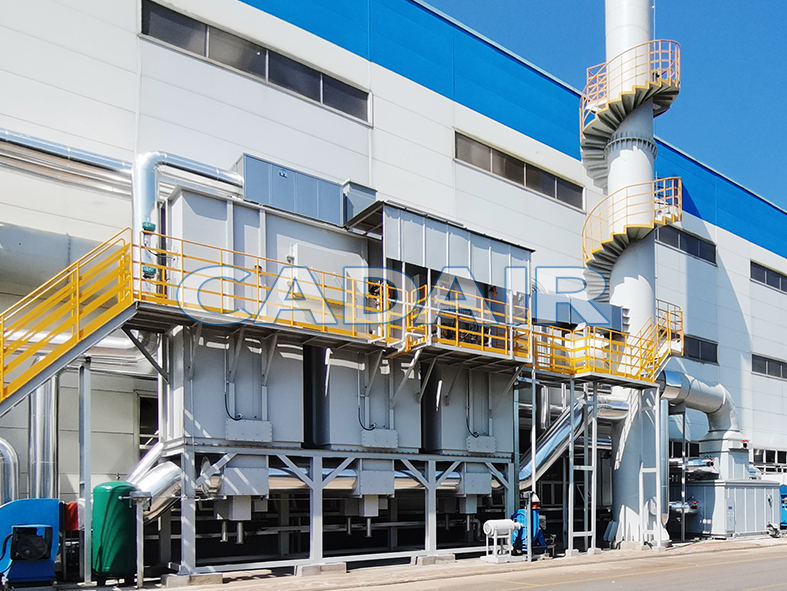
- Structural Design: Our RTO towers are engineered to withstand thermal expansion and wind loads, particularly for outdoor installations.
3. Environmental Performance Codes (EPA / MACT)
The “design code” also encompasses the performance mandate. In the US, the EPA’s Maximum Achievable Control Technology (MACT) standards dictate the required Destruction Removal Efficiency (DRE).
- Temperature & Residence Time: Our designs ensure the “3 T’s” (Time, Temperature, Turbulence) are calculated to meet 99%+ DRE.
- Catalytic Compliance: For RCO systems, we design for optimal catalyst space velocity to ensure long-term compliance.
4. Electrical and Control Standards (NEC / IEC)
A robust thermal oxidizer design code must include the electrical system.
- Explosion Proofing: For hazardous locations (Class 1 Div 1 or 2), we supply explosion-proof instrumentation and motors.
- Control Logic: Our PLCs are programmed to provide fail-safe shutdowns in case of fan failure or high-temperature excursions.
Conclusion: Trusted Engineering Partner
Navigating the alphabet soup of codes (NFPA, ASME, NEC, EPA) can be daunting. Partner with a manufacturer who speaks the language of compliance.
Request a Code-Compliant Proposal Tell us your local standards, and our engineers will design a compliant system for you.