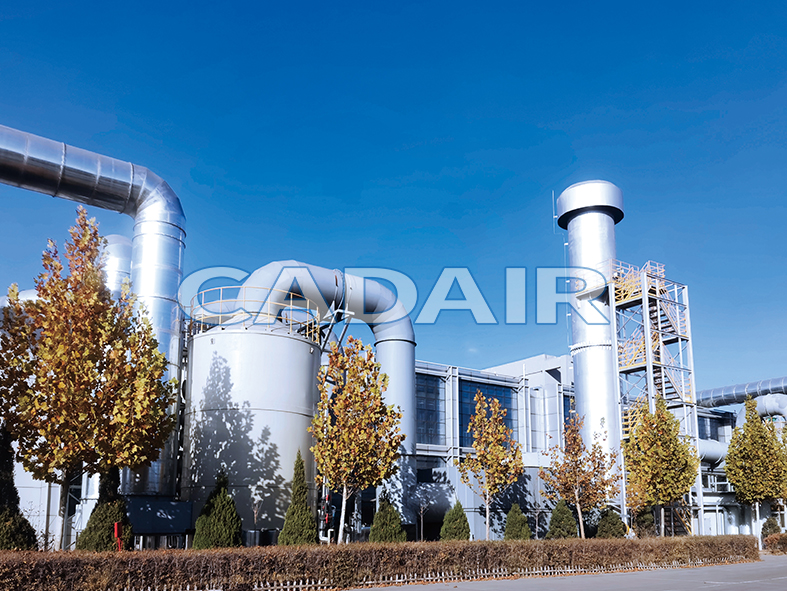
Need a lightweight solution for VOCs? A catalytic recuperative oxidizer offers high efficiency with a compact footprint. Cadair.net manufactures systems ideal for rooftop installations and batch processes.
The Agile Solution for Clean Air
In the world of air pollution control, not every facility has the space or structural support for a massive Regenerative Thermal Oxidizer (RTO). For applications requiring a lighter, more compact footprint, the catalytic recuperative oxidizer is the engineering standard.
At ABOUT US, we specialize in designing these systems. By combining a high-efficiency metal heat exchanger with advanced catalyst technology, we deliver a solution that balances energy savings with operational flexibility.
1. How a Catalytic Recuperative Oxidizer Works
The defining feature of this technology is the “Recuperative” heat exchanger—typically a stainless steel shell-and-tube or plate type.
The Process Flow:
- Pre-heating: Incoming VOC-laden air passes through the tubes of the heat exchanger, absorbing heat from the outgoing clean air.
- Heating & Reaction: A burner brings the air to the necessary catalytic temperature (approx. 300°C – 350°C).
- Destruction: The air passes through the catalyst bed, where VOCs are instantly oxidized into CO2 and water.
- Heat Recovery: The hot clean air flows back across the heat exchanger shell, transferring its energy to the incoming stream before exiting the stack.
Unlike ceramic beds, this metal exchange allows for rapid startup and precise temperature control.
2. “Recuperative” vs. “Regenerative”: Why Choose Recuperative?
When searching for a catalytic recuperative oxidizer, you are likely comparing it to an RCO (Regenerative Catalytic Oxidizer). Here is why you might choose the Recuperative model:
- Weight & Size: Without heavy ceramic media, a catalytic recuperative oxidizer is significantly lighter, making it perfect for rooftop installations or mezzanines.
- Cost: For lower airflows (< 5,000 CFM), the capital cost is often lower than an RCO.
- Simple Operation: It handles intermittent (batch) operations better because the metal heat exchanger heats up much faster than ceramic blocks.
View our standard model:CO
3. Ideal Industries
Because of its compact nature and ability to handle specific solvents efficiently, the catalytic recuperative oxidizer is a favorite in:
- Printing & Laminating: Handling ethyl acetate and ethanol from drying ovens.Solution: Packaging Printing / Coating
- Chemical Batch Processing: Where production is not 24/7.Solution: Petrochemical / Coal Chemical
- Pharmaceuticals: Ensuring strict destruction efficiency for sensitive compounds.Solution: Pesticide / Pharmaceutical / New Materials
Conclusion: Engineering for Your Space
If you have weight limits or space constraints, a catalytic recuperative oxidizer is likely your best technical fit. Cadair can customize the heat exchanger efficiency (typically 50% to 70%) to match your budget and fuel goals.
Request a Weight & Dimension Spec Contact our engineering team to see if this system fits your layout.