What is a CO System?
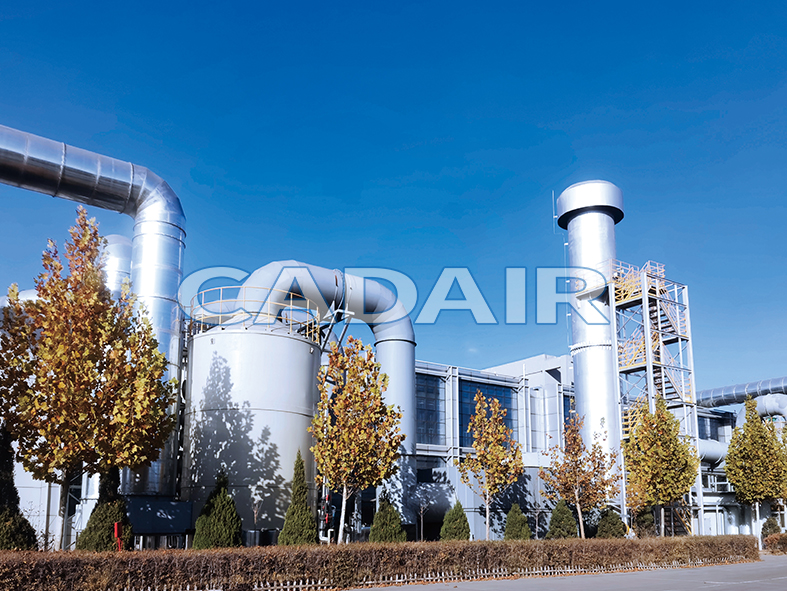
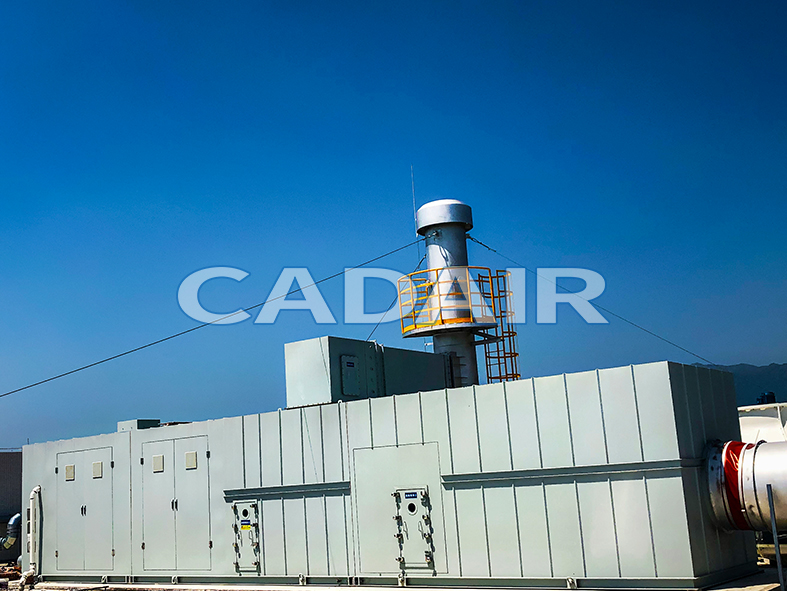
In the field of air pollution control equipment, the term CO system stands for Catalytic Oxidizer. Unlike a standard thermal incinerator that relies solely on high heat (800°C+), a CO system utilizes a specialized industrial catalyst to accelerate the chemical reaction.
At Cadair.net, we engineer advanced CO systems designed for facilities that prioritize energy efficiency. By lowering the oxidation temperature to approximately 300°C – 400°C, a CO system can significantly reduce your fuel consumption and operational costs.
1. How a Catalytic Oxidizer Works
The core of a CO system is the catalyst bed, typically composed of precious metals (platinum, palladium) or base metals. When the exhaust gas passes through this bed, the activation energy required to break down Volatile Organic Compounds (VOCs) is drastically reduced.
The Process:
- Pre-heating: The gas is heated to the “light-off” temperature.
- Reaction: The VOCs react with oxygen on the catalyst surface.
- Destruction: Pollutants are converted into CO2 and H2O without reaching flame temperatures.
This flameless oxidation makes the CO system an excellent choice for the Control of Gaseous emissions where safety and fuel economy are paramount.
2. CO System vs. RTO: Which is Right for You?
Choosing between a Regenerative Thermal Oxidizer (RTO) and a CO system depends on your specific waste stream.
- Choose a CO System if:
- Your VOC stream is free of “poisons” (sulfur, silicones, heavy metals) that could deactivate the catalyst.
- You want to minimize NOX emissions (lower temperature = less thermal NOX).
- Your facility has limited natural gas supply.
- Choose an RTO if:
- Your airflow volume is huge and concentration is low.
- Your exhaust contains particulates or catalyst poisons.
Compare with ourRegenerative Thermal Oxidizer (RTO)specifications.
3. Advanced Integration: RCO and Rotors
For even greater efficiency, modern technology combines principles. A Regenerative Catalytic Oxidizer (RCO) adds heat recovery ceramic beds to a standard CO design, recovering up to 95% of the heat.
Furthermore, for high-volume applications like printing or coating, we often pair a Zeolite Rotor with a CO unit. The rotor concentrates the VOCs, allowing for a smaller, more compact CO system.
Learn about our integratedZeolite Rotor Solutions.
Conclusion: Optimize Your Abatement Strategy
A CO system is a precision instrument for pollution control. It offers one of the lowest operating costs in the industry, provided it is applied to the right process.
At Cadair, we analyze your gas composition to ensure catalyst longevity and system performance.
Get a Catalyst Consultation Is a Catalytic Oxidizer right for your plant? Let our engineers run the numbers.