The Great Debate in Pollution Control
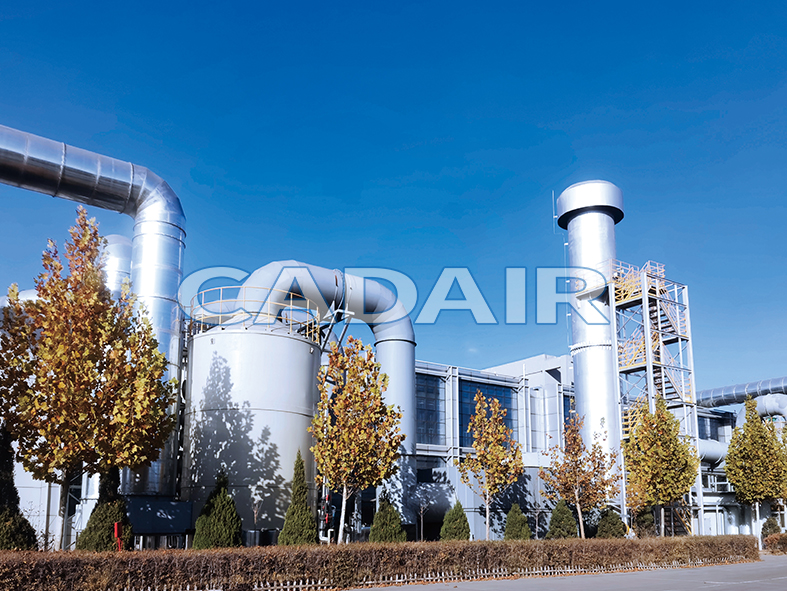
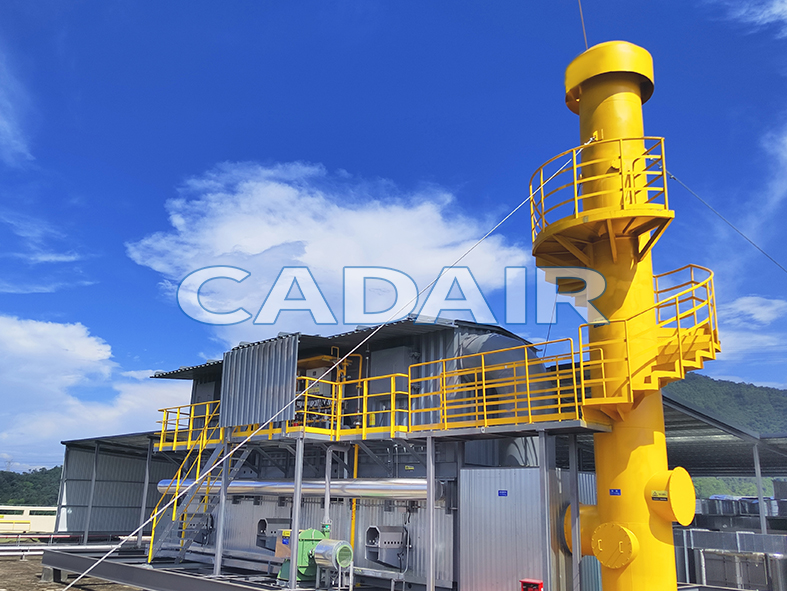
When selecting Environmental Protection Equipment for Volatile Organic Compounds (VOCs), the two most common contenders are the Regenerative Thermal Oxidizer (RTO) and the Catalytic Oxidizer (CO) (or its modern variant, the RCO).
Both systems achieve high-efficiency Control of Gaseous emissions, but they operate on fundamentally different principles. At Cadair.net, we manufacture both systems. To help you choose, we break down the critical differences in temperature, cost, and application.
1. The Regenerative Thermal Oxidizer (RTO): The “Robust” Choice
The RTO uses high heat (approx. 800°C – 850°C) to thermally decompose VOCs. It relies on ceramic media to recover up to 95% of the heat energy.
- Pros:
- Versatility: Can handle almost any type of VOC, including those that would poison a catalyst.
- Durability: ideal for exhaust streams containing particulates or silicones.
- High Efficiency: 99%+ Destruction Efficiency (DRE) is standard.
- Cons:
- NOx Generation: Higher operating temperatures can create thermal NOx.
- Fuel Cost: If VOC concentration is very low, it may require more supplemental fuel than a catalytic system.
View specs:Regenerative Thermal Oxidizer (RTO)
2. The Catalytic Oxidizer (CO / RCO): The “Energy Saver”
In the RTO vs catalytic oxidizer comparison, the catalytic system wins on operating temperature. By using a precious or base metal catalyst, the oxidation reaction occurs at much lower temperatures (300°C – 400°C). Modern systems are typically Regenerative Catalytic Oxidizers (RCO), which combine the catalyst with the heat recovery beds of an RTO.
- Pros:
- Energy Savings: Operates at half the temperature of an RTO, significantly reducing gas consumption.
- Low NOx: The lower temperature prevents thermal NOx formation.
- Cons:
- Catalyst Poisoning: The biggest risk. Compounds like sulfur, heavy metals, chlorides, and silicones can permanently deactivate the catalyst, leading to expensive replacement costs.
- Maintenance: Catalyst beds require periodic testing and cleaning.
Explore ourRegenerative Catalytic Oxidizer (RCO)solutions.
3. Decision Matrix: How to Choose?
As a leading supplier of Waste gas treatment equipment, we recommend using the following criteria:
- Choose RTO if:
- Your exhaust contains “catalyst poisons” (silicones, sulfur, etc.).
- Your process has variable/unknown VOC compositions.
- There are particulates in the air stream (RTOs are easier to clean).
- Choose Catalytic Oxidizer (RCO) if:
- You have a “clean” VOC stream (e.g., pure ethanol, toluene).
- Energy costs (natural gas prices) are your primary concern.
- You need to minimize CO2 and NOx footprint.
4. The Third Option: Zeolite Concentrators
If you are comparing RTO vs catalytic oxidizer for a high-volume, low-concentration airstream (e.g., painting), neither might be the most efficient standalone choice. Integrating a Zeolite Rotor to concentrate the waste gas first allows you to use a much smaller RTO or RCO, optimizing both CAPEX and OPEX.
See theZeolite Rotor Systemadvantage.
Conclusion: Let the Data Decide
There is no winner in RTO vs catalytic oxidizer—only the right engineering choice for your specific facility.
At Cadair, we simulate your process conditions to calculate the exact ROI for both technologies.
Stop Guessing. Get the Calculation. Contact our engineering team to run a cost-benefit analysis for your project.