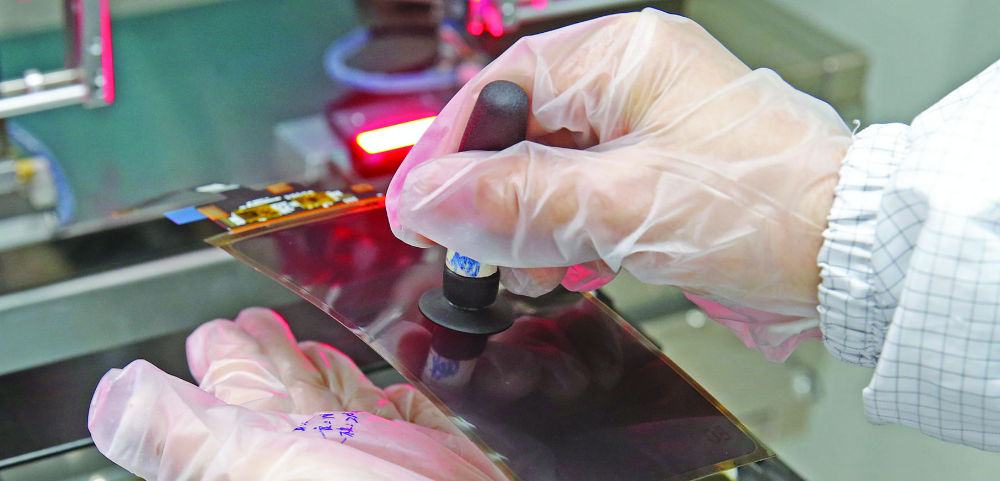
With the rapid evolution of LCD panel technology, both panel manufacturing and upstream material production have expanded significantly. Alongside this growth, volatile organic compounds (VOCs) emissions have become a critical environmental and compliance challenge.
Processes such as array fabrication, color filter production, and cell assembly generate exhaust gases containing dichloromethane, alcohols, esters, and mixed hydrocarbons (HCs). These emissions not only impact the environment but must also comply with increasingly stringent regulations. In some regions, dichloromethane emission limits have been tightened to below 15 mg/m³, creating strong demand for efficient and stable VOCs treatment systems.
Drawing on multiple industrial projects, a range of mature and adaptable VOCs treatment solutions has been developed to address these challenges across the LCD and related industries.
Challenges of VOCs Treatment in LCD Manufacturing
VOCs treatment in the LCD sector typically involves three key challenges:
- Complex gas composition (chlorinated solvents, alcohols, esters)
- Large air volume with low concentration
- Strict and region-specific emission standards
These factors require tailored process design rather than standardized, one-size-fits-all solutions.
Case Study 1: Large-Scale LCD Panel Manufacturing
In large-scale panel manufacturing environments, exhaust gas emissions are continuous and stable, with high requirements for system reliability and operational efficiency.
One representative project involves the treatment of HC mixture exhaust gases using a zeolite concentrator combined with direct thermal oxidation. This configuration is designed to handle large air volumes while improving energy efficiency.
The system has maintained stable operation under typical production conditions since commissioning, demonstrating its suitability for continuous industrial applications. Such configurations are widely referenced in similar large-scale VOCs treatment scenarios.
Case Study 2: TAC Film Production with Strict Emission Limits
TAC film production, a key upstream process for LCD polarizers, generates exhaust gases primarily containing dichloromethane and methanol. In regions with stringent environmental regulations, emission limits can be significantly stricter than general industry standards.
In one such project, a combined process of:
- Regenerative Thermal Oxidizer (RTO)
- Alkali absorption system
- Quench tower
was implemented.
A segregated collection + centralized treatment approach was applied:
- Different gas streams were collected separately based on temperature and composition
- Interference between gas streams was minimized
- System stability was improved
Additionally, an emergency bypass system was integrated to ensure production safety.
This configuration has enabled consistent compliance with local emission requirements under defined operating conditions.
Extended Applications Across Related Industries
Beyond LCD panel manufacturing, similar VOCs treatment technologies are widely applied in:
- Optical material production
- Electronic component manufacturing
- New energy material processing
Typical applications include:
- Treatment of HC mixture exhaust gases using zeolite concentration + combustion systems
- Dichloromethane removal using specialized adsorption and oxidation devices
- Adaptation to varying emission characteristics across industries
These cross-industry applications demonstrate the flexibility and scalability of the treatment approaches.
Common VOCs Treatment Process for LCD and Semiconductor Industries
Both LCD and semiconductor industries generate similar VOCs, including:
- Isopropanol (IPA)
- Monoethanolamine (MEA)
- Butyl acetate
For large air volume, low concentration VOCs, the mainstream solution is:
Zeolite Concentrator + Thermal/Catalytic Oxidation (TO/CO or RTO)
Process advantages:
- Concentrates low-concentration VOCs into high-concentration streams
- Reduces energy consumption in downstream combustion
- Enables effective oxidation of VOCs into CO₂ and H₂O
- Supports stable long-term operation
RTO systems can also recover heat energy during operation, improving overall energy efficiency.
Key Engineering Considerations
1. Process Matching
Effective VOCs treatment depends on:
- Gas composition
- Air volume
- Temperature conditions
Tailored system design ensures optimal performance.
2. Operational Stability and Safety
Modern systems are designed to:
- Operate under continuous industrial conditions
- Include safety mechanisms for fire and leakage prevention
- Adapt to large-scale production environments
3. Resource Recovery Potential
Certain systems allow:
- Recovery of usable solvents
- Reduction in raw material consumption
- Improved overall process sustainability
Special Gas Treatment in Advanced Manufacturing
In some semiconductor and LCD-related processes, toxic gases such as arsine (AsH₃) and phosphine (PH₃) may be present.
These gases require specialized treatment due to:
- High toxicity
- Flammability risks
- Complex handling requirements
Chemical adsorption technologies can convert these gases into stable solid compounds through irreversible reactions, reducing both environmental and safety risks.
Towards Sustainable Manufacturing in the LCD Industry
As environmental regulations continue to tighten and sustainability becomes a central industry focus, VOCs treatment is no longer just a compliance requirement—it is a key component of operational efficiency and long-term competitiveness.
Practical project experience shows that:
- Tailored VOCs treatment systems can achieve stable compliance under defined conditions
- Integrated process design improves both environmental and economic performance
- Flexible solutions can adapt to a wide range of industrial scenarios
With continuous optimization of technologies such as RTO systems, zeolite concentrators, and adsorption-based treatment, the LCD and semiconductor industries are moving toward more efficient, energy-saving, and sustainable production models.