Pungent odors are commonly detected during production processes in chemical industry, spray painting, printing, electronic manufacturing and other industrial sectors. Most of these unpleasant smells stem from a major atmospheric pollutant — VOCs. With increasingly stringent environmental standards, VOC waste gas governance has become one of the most prevailing topics in industrial environmental protection.
This article elaborates on the definition, hazards, mainstream treatment technologies and leading enterprises of industrial VOC waste gases.
What Are Industrial VOC Waste Gases?
VOCs is the abbreviation of Volatile Organic Compounds. Simply put, they refer to organic chemical substances that tend to vaporize and disperse into the air under normal temperature.
Massive usage of paint, solvents, ink, adhesives and other raw materials in industrial production generates persistent volatile organic gas during application, heating and storage, forming industrial VOC waste gas.
Common VOC substances
- Benzene, Toluene, Xylene
- Acetone, Ethanol, Isopropanol
- Ethyl acetate
- Formaldehyde
- Various hydrocarbon organics
Widely involved industries
- Automobile spray coating
- Furniture manufacturing
- Petrochemical industry
- Printing & packaging
- Semiconductor & electronics
- Lithium battery production
- Pharmaceutical and rubber industry
Severe Hazards Brought by VOCs
Many people underestimate VOCs and regard them merely as unpleasant smell, while their actual harms are far more serious.
- Harm to human healthCertain VOCs are toxic and even carcinogenic. Benzene damages the hematopoietic system and formaldehyde irritates respiratory tracts. Long-term exposure may trigger chronic diseases.
- Ozone pollution formationUnder sunlight, VOCs react with nitrogen oxides via photochemical reaction and produce ozone. Excessive ozone concentration frequently occurring in summer is largely attributed to VOC emissions.
- PM2.5 accumulationPart of volatile organics convert into secondary particulate matters, constituting a key source of PM2.5 pollutants.
- Potential safety risksMost VOCs feature flammability and explosiveness. Excessively high gas concentration may lead to fire and explosion accidents.
Therefore, VOC governance is not only an environmental compliance requirement, but also an essential guarantee for safe production.
Mainstream VOC Waste Gas Treatment Technologies
No universal treatment process applies to all working conditions. Enterprises select targeted solutions based on waste gas concentration, air volume, chemical composition and recyclable value. Five mainstream technologies are widely adopted currently.
1. Adsorption Method — Widely Applied Fundamental Technology
Working principle resembles water absorption by sponges: porous materials such as activated carbon and zeolite adsorb organic pollutants from waste gas.
- Activated Carbon AdsorptionPreferred by small and medium-sized factories. It features simple equipment structure and low investment cost, suitable for low-concentration waste gas treatment. Deficiencies include easy saturation of carbon materials requiring regular replacement, plus latent fire risks.
- Zeolite Rotor ConcentrationPopular high-end technology adopted by advanced manufacturing industries. Zeolite materials absorb large-volume low-concentration waste gas first. Hot air desorbs pollutants and concentrates gas into small-volume high-concentration airflow, which is then delivered to incineration facilities for purification. This solution is extensively used in automobile and home appliance coating workshops.
2. RTO Regenerative Thermal Oxidation — High-efficiency Core Technology
RTO stands for Regenerative Thermal Oxidizer, boasting outstanding treatment efficiency.
Core chemical reaction:
\(\ce{VOCs + O_{2} -> CO_{2} + H_{2}O}\)
Organic pollutants are completely oxidized and decomposed into carbon dioxide and water under high temperature around 800℃. Ceramic regenerators recycle waste heat to cut energy consumption compared with traditional incineration equipment.
Advantages
- Removal efficiency reaches 95%~99%
- Ideal for medium and high-concentration waste gas
- Stable operational performance
- Excellent heat recovery efficiency
It gains wide popularity in chemical, spray painting and electronic manufacturing industries.
3. Catalytic Combustion (RCO) — Low-temperature Efficient Purification
Compared with RTO, RCO (Regenerative Catalytic Oxidation) realizes oxidation reaction at lower temperature ranging from 250℃ to 400℃ with catalyst assistance, resulting in lower energy consumption.
Combined process of activated carbon adsorption plus catalytic combustion is commonly deployed to balance operational cost and purification performance. Nevertheless, catalysts are vulnerable to deactivation caused by sulfur and chlorine substances, imposing strict requirements on waste gas composition.
4. Condensation Recovery — Pollution Control & Resource Reuse
Condensation technology is applicable to waste gas containing high-concentration recyclable organic solvents. Gaseous organics turn into liquid state through cooling treatment and can be recycled for reuse. Typical application includes NMP solvent recovery in lithium battery production, which realizes pollution reduction and economic benefits simultaneously.
5. Biological Treatment — Eco-friendly Purification Technology
Microorganisms decompose and consume organic contaminants in waste gas. This technology owns low operational cost and superior environmental performance, fit for malodorous gas and low-concentration organic waste gas disposal. Restricted by strict temperature and humidity demands and large floor space occupation, it is mainly applied in sewage stations and food processing plants.
Representative VOC Treatment Equipment Manufacturers
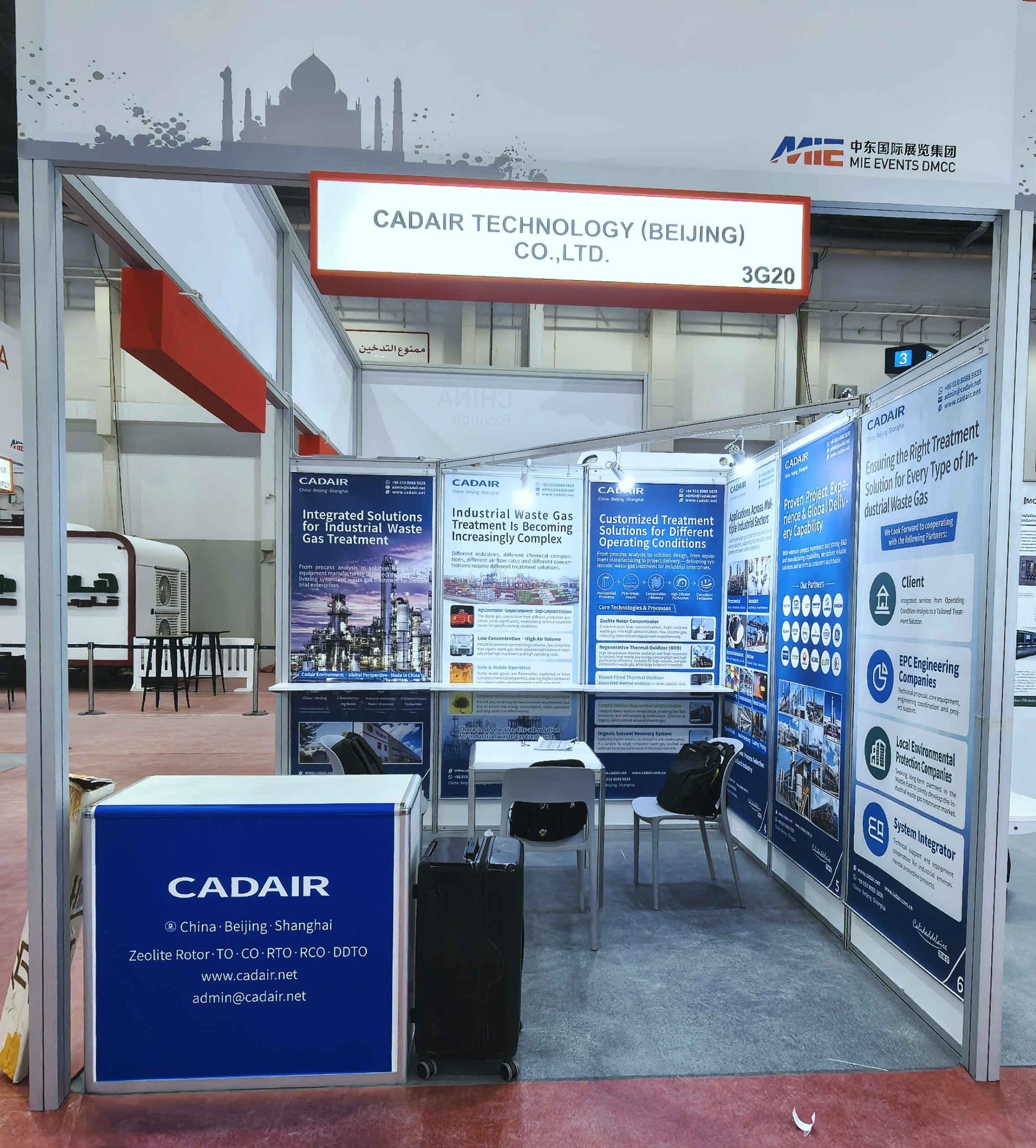
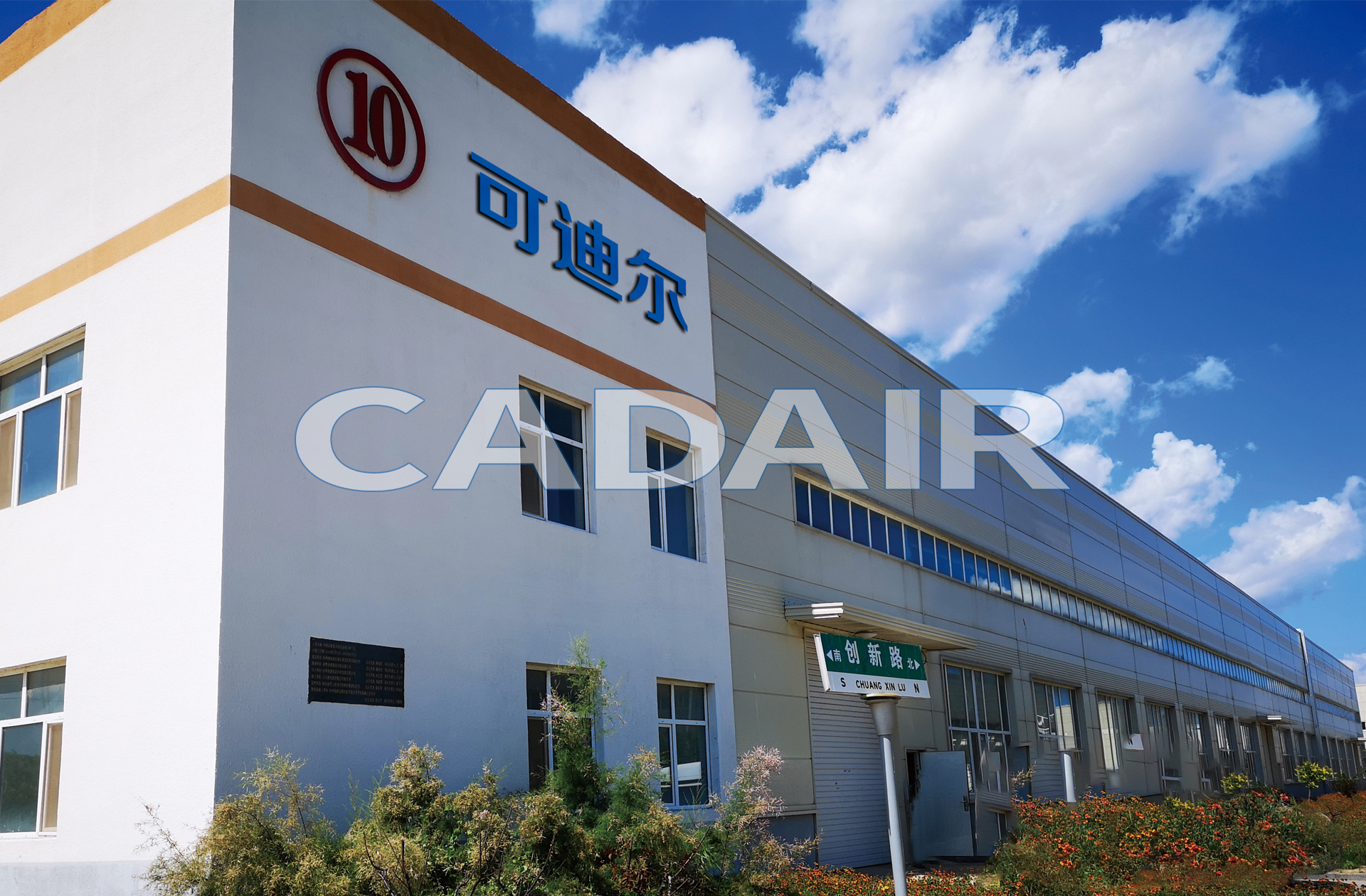
Supported by industrial upgrading of environmental protection sector, numerous professional domestic enterprises specialize in VOC governance. CADAIR is a renowned representative brand in the industry.
CADAIR devotes itself to R&D and engineering application of environmental protection facilities covering:
- VOC organic waste gas treatment
- Zeolite rotor concentration system
- RTO & RCO incineration system
- Solvent recovery system
- Special gas treatment for semiconductor industry
The flagship technical solution of CADAIR for large-scale industrial waste gas disposal is Zeolite Rotor Concentration + RTO Oxidation, which is also the dominant high-efficiency treatment scheme for automobile coating, electronic manufacturing and lithium battery industries.
Working flow:
- Zeolite rotor adsorbs large-volume low-concentration waste gas
- Concentrate pollutants into small-volume high-concentration airflow
- Deliver concentrated gas into RTO system for high-temperature oxidative decomposition
This integrated solution achieves high purification rate, energy-saving operation and large air volume processing capacity, perfectly matching continuous large-scale industrial production lines.
Applicable scenarios:
Automobile coating, home appliance spraying, semiconductor electronics, petrochemical industry, new energy lithium battery manufacturing and more.
Development Trends of VOC Governance
Three major development directions drive the whole industry forward:
- Higher energy efficiencyHeat recycling and intelligent control technologies are adopted to reduce power consumption.
- Enhanced safety performanceExplosion-proof design, real-time monitoring and automatic fire control systems are equipped to eliminate hidden dangers.
- Intelligent upgradingOnline monitoring, AI-based airflow adjustment and digital operation management gradually become standard configurations for smart environmental management.
Conclusion
Industrial VOC waste gas governance has evolved from auxiliary environmental projects into an indispensable part of green manufacturing. As environmental regulations grow stricter, future governance will focus not only on emission compliance, but also on energy conservation, safety guarantee and resource recycling. Reasonable selection of treatment processes helps enterprises meet regulatory standards, control long-term operational costs and enhance sustainable development competitiveness.