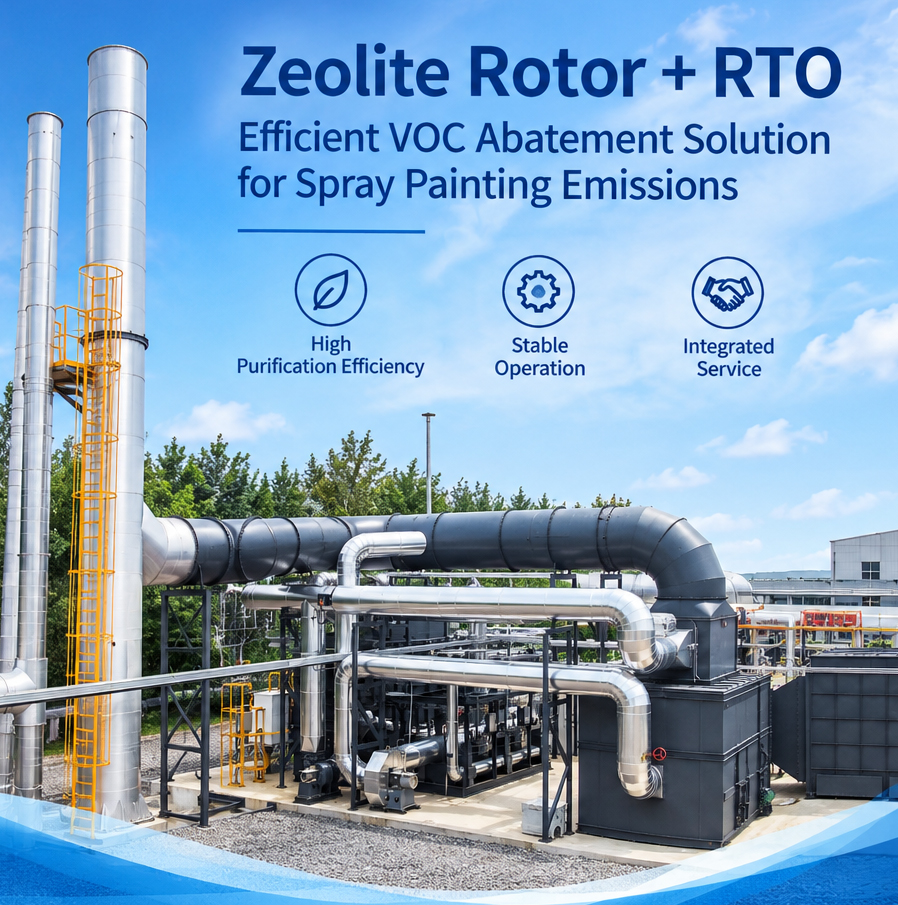
How does an industrial VOC treatment system handle large-volume, low-concentration exhaust from wind turbine blade spray painting? CADAIR addressed this challenge at Vestas’ Tianjin plant in 2017 with a treatment process combining pretreatment, zeolite rotor concentration, and regenerative thermal oxidation (RTO).
1. VOC Treatment Challenges in Wind Turbine Blade Manufacturing
Wind turbine blades are essential components of wind power generation systems. Their manufacturing process involves multiple stages, including surface preparation, primer application, topcoat spraying, and drying.
During spray painting and drying, coatings and organic solvents release volatile organic compounds (VOCs) into the exhaust air. These emissions require appropriate collection and treatment before discharge.
Due to the large dimensions of wind turbine blades and the extensive surface area involved in coating operations, their manufacturing facilities often generate exhaust gas characterized by:
- Large exhaust air volumes: Extensive spray painting and drying areas require high-capacity ventilation and collection systems.
- Relatively low VOC concentrations: Large amounts of ventilation air can dilute solvent emissions.
- Complex exhaust compositions: Different coating materials and organic solvents may contribute to the overall VOC composition.
- Continuous production requirements: Treatment systems need to operate reliably while accommodating manufacturing schedules and process variations.
For wind turbine blade manufacturers, selecting an appropriate VOC treatment solution requires balancing emission control performance, process compatibility, equipment reliability, and operating costs.
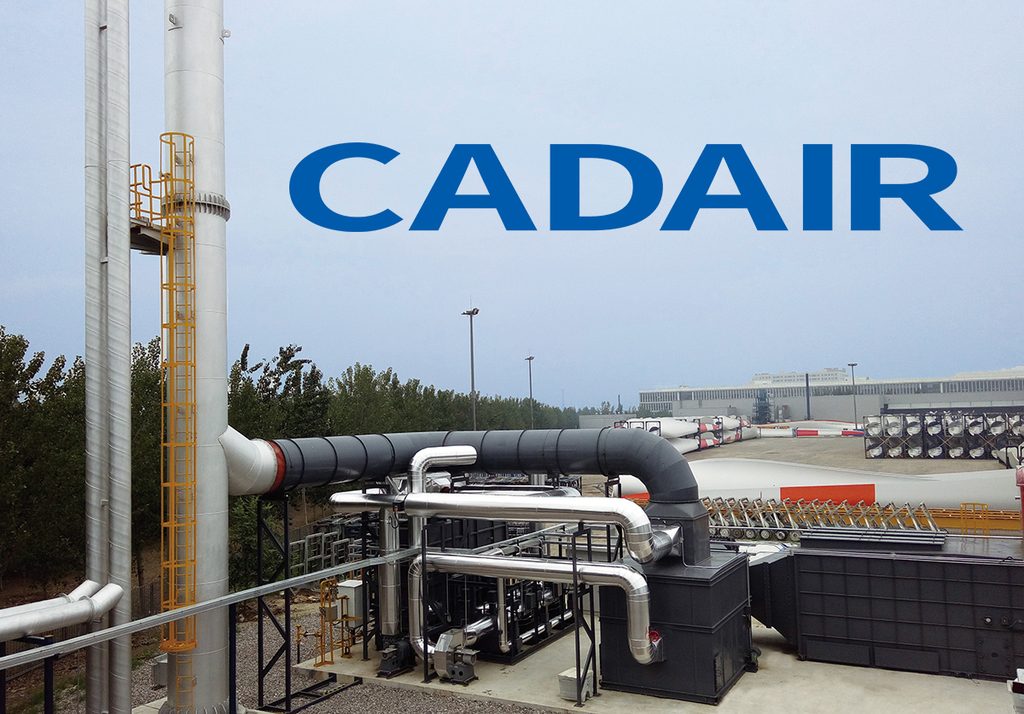
In 2017, CADAIR implemented a VOC treatment project for Vestas’ Tianjin plant. The system was designed to treat organic exhaust gas generated during wind turbine blade spray painting operations.
The selected process combined pretreatment, zeolite rotor concentration, and regenerative thermal oxidation (RTO), providing an integrated VOC treatment solution for a large-scale coating production line.
2. Vestas Tianjin Plant: Project Overview
The project focused on the centralized collection and treatment of organic exhaust gas generated during wind turbine blade spray painting.
Key Project Specifications
- Client: Vestas Tianjin Plant
- Project Year: 2017
- Application: Wind Turbine Blade Spray Painting VOC Treatment
- Main VOC Component: n-Butyl Acetate
- Designed Airflow: 59,000 m³/h
- Initial VOC Concentration: 605.59 mg/m³
- Core Treatment Process: Pretreatment + Zeolite Rotor Concentrator + RTO
The exhaust gas featured a relatively large airflow and a comparatively low initial VOC concentration.
To address these operating conditions, CADAIR selected a zeolite rotor concentration system integrated with an RTO unit.
The zeolite rotor captures and concentrates VOCs from the large exhaust airflow, reducing the volume of gas requiring subsequent high-temperature oxidation. This process provides a practical approach to treating large-volume, low-concentration organic exhaust gas.
3. VOC Treatment Process: Pretreatment + Zeolite Rotor + RTO
The treatment system consists of three main stages: exhaust gas pretreatment, zeolite rotor adsorption and concentration, and RTO oxidation.
3.1 Exhaust Gas Pretreatment
Spray painting exhaust gas first enters the pretreatment unit.
This stage is designed to remove paint mist particles and other substances that may affect the performance or operating conditions of downstream treatment equipment.
Effective pretreatment helps reduce the operational burden on subsequent equipment and provides suitable inlet conditions for the zeolite rotor system.
3.2 Zeolite Rotor Adsorption and Concentration
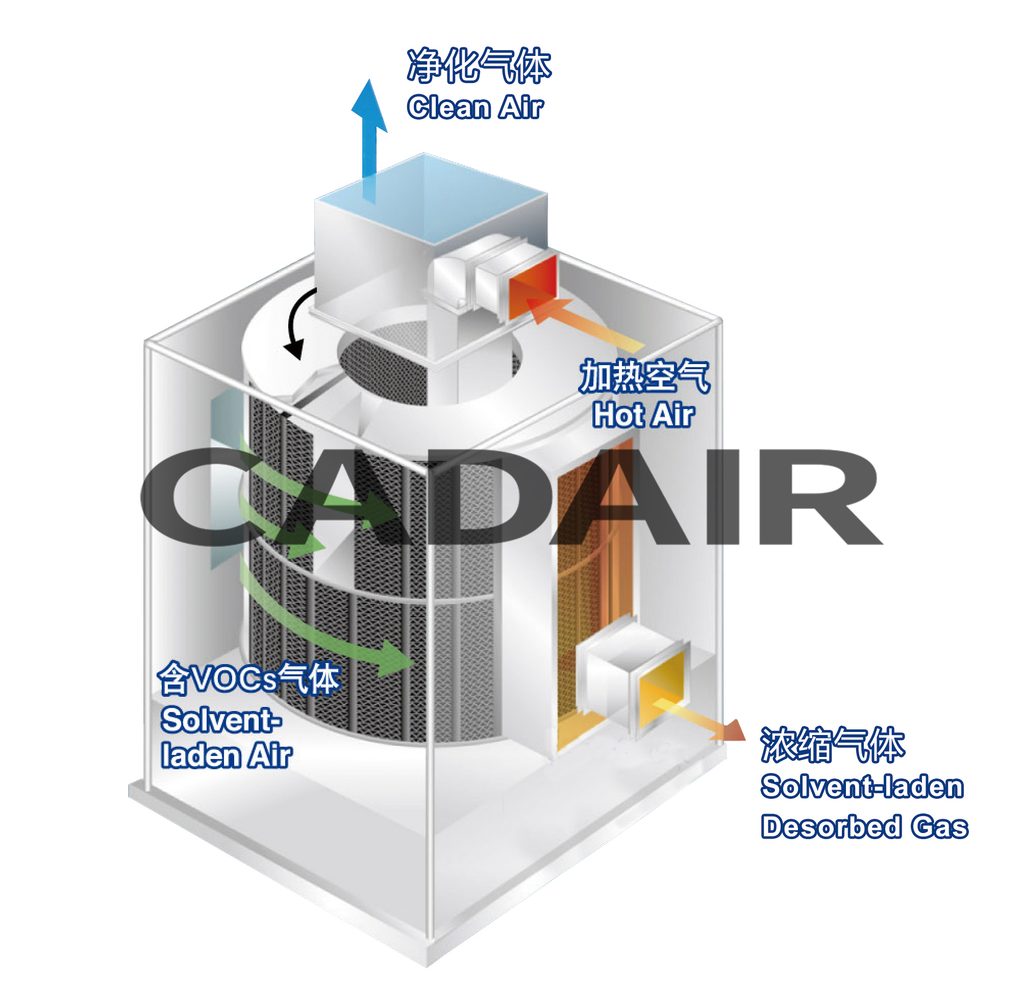
After pretreatment, the exhaust gas enters the zeolite rotor concentrator.
The VOCs in the exhaust gas are adsorbed by the hydrophobic zeolite material within the rotating rotor. The purified air passes through the adsorption section and is discharged through the exhaust system.
As the rotor continuously rotates, the VOC-loaded section moves into the desorption zone.
Heated desorption air releases the adsorbed organic compounds from the zeolite material. This process converts a large volume of low-concentration exhaust gas into a smaller volume of higher-concentration VOC-laden gas.
The resulting concentrated exhaust stream is then directed to the RTO unit for further treatment.
The main function of the zeolite rotor is to reduce the airflow entering the oxidation unit while increasing VOC concentration, making the subsequent oxidation process more suitable for large-volume, low-concentration exhaust applications.
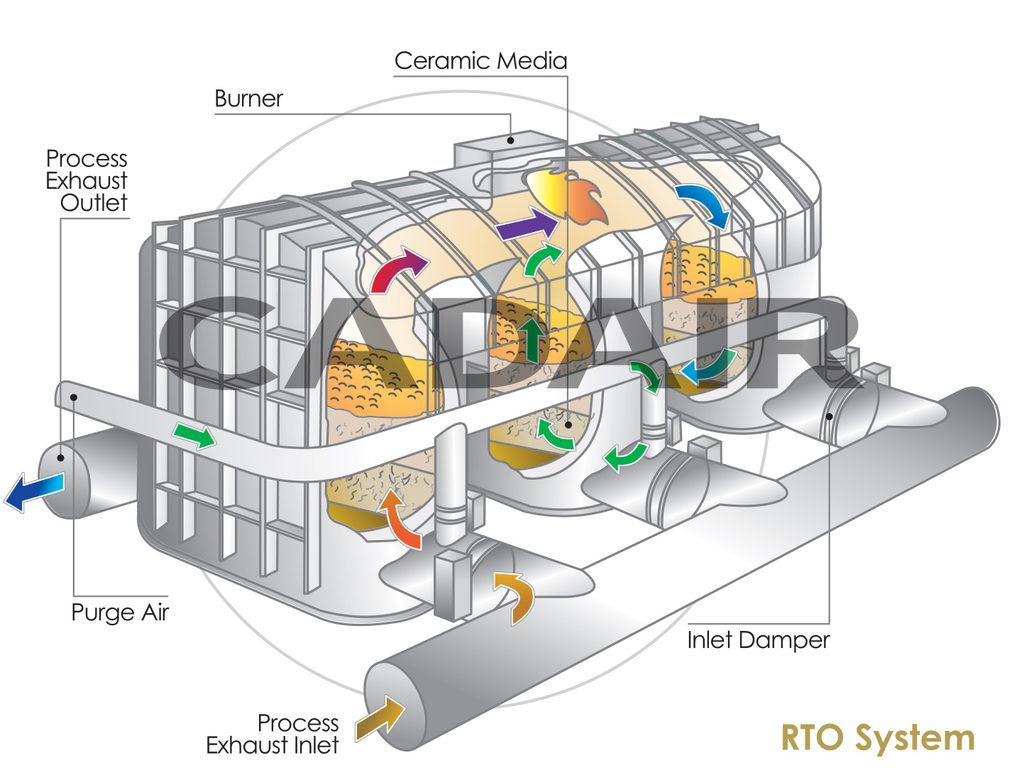
3.3 Regenerative Thermal Oxidation (RTO)
The concentrated VOC exhaust gas from the desorption process enters the RTO system.
Under high-temperature operating conditions, organic pollutants undergo oxidation reactions and are converted primarily into carbon dioxide and water.
The RTO uses ceramic heat storage media to recover heat generated during oxidation. This recovered thermal energy preheats incoming gas, helping reduce the additional energy required to maintain the operating temperature.
By combining zeolite rotor concentration with regenerative thermal oxidation, the system provides an integrated approach to VOC control for wind turbine blade spray painting operations.
4. Project Performance: NMHC Concentration Below 5 mg/m³
Emission performance is an important indicator when evaluating an industrial VOC treatment project.
Following project completion, third-party testing was conducted to evaluate the treated exhaust gas.
The measured non-methane hydrocarbon (NMHC) concentration in the treated exhaust gas was below 5 mg/m³, demonstrating effective VOC treatment performance and meeting the emission requirements applicable to the project.
For large-scale wind turbine blade coating facilities, successful VOC treatment involves more than pollutant removal alone. Airflow capacity, process compatibility, equipment operation, and energy consumption must also be considered.
The Vestas Tianjin project demonstrates CADAIR’s engineering experience in applying zeolite rotor concentration and RTO oxidation to large-scale industrial spray painting exhaust treatment.
5. CADAIR’s Experience in Industrial Spray Painting VOC Treatment
Beyond the Vestas wind turbine blade coating project, CADAIR has accumulated engineering experience in VOC treatment for several industrial coating and manufacturing sectors, including aerospace, automotive and bus manufacturing, construction machinery, and container production.
Representative projects include:
5.1 Tianjin Boeing – Aircraft Interior Component Spray Painting
This project involved VOC exhaust gas generated from spray booths, drying rooms, air-drying rooms, and paint mixing rooms.
- Designed Airflow: 500,000 m³/h
- Treatment Process: Zeolite Rotor Concentration + RTO
The system was designed to handle VOC emissions from multiple coating-related production areas within an aircraft manufacturing facility.
5.2 Shenlong Bus – Bus Spray Painting VOC Treatment
The project addressed VOC emissions from bus manufacturing and coating operations.
- Designed Airflow: 1,200,000 m³/h
- Equipment Configuration: Six zeolite rotor concentrator units
The project demonstrates CADAIR’s experience in large-scale VOC treatment for automotive and bus manufacturing facilities.
5.3 Komatsu Shantui – Construction Machinery Coating Exhaust Treatment
This project involved organic exhaust gas generated during multiple production stages, including putty application, drying, grinding, spray painting, and coating drying.
- Designed Airflow: 464,000 m³/h
- Treatment Process: Zeolite Rotor Concentration + RTO
The treatment solution was designed to accommodate emissions from different coating and surface preparation processes.
5.4 Orient International – Container Spray Painting VOC Treatment
CADAIR has participated in multiple VOC treatment projects in cooperation with Orient International, covering several manufacturing facilities.
- Cumulative Designed Airflow: 1,690,000 m³/h
These projects reflect CADAIR’s engineering experience in large-scale container manufacturing and centralized spray painting exhaust treatment.
5.5 Qinhuangdao West District – Green Island Project
CADAIR participated in the VOC treatment engineering for the Qinhuangdao West District Green Island Project.
- Designed Airflow: 800,000 m³/h
- Application: Industrial spray painting VOC treatment
The project further expanded CADAIR’s experience in industrial coating exhaust treatment and centralized VOC control applications.
From wind turbine blades and aircraft interior components to buses, construction machinery, and shipping containers, CADAIR’s project experience covers a wide range of industrial manufacturing environments, each with different production processes, exhaust characteristics, and airflow requirements.
6. How to Choose an Industrial Spray Painting VOC Treatment Manufacturer?
Selecting an industrial spray painting VOC treatment manufacturer requires more than comparing individual equipment specifications or treatment technologies.
Different coating materials, organic solvents, production processes, exhaust volumes, and VOC concentrations can significantly affect system design. A suitable treatment solution should therefore be developed according to the actual operating conditions of each production facility.
When evaluating a VOC treatment equipment manufacturer or engineering supplier, industrial companies should consider several important factors.
6.1 Process Design and Technical Adaptability
A qualified supplier should be able to analyze exhaust composition, airflow, VOC concentration, temperature, and production conditions before recommending a treatment process.
For example, the combination of a zeolite rotor concentrator and RTO is a commonly used technical route for suitable large-volume, low-concentration VOC exhaust applications.
However, the final process selection should always consider the specific exhaust characteristics and operating requirements.
6.2 Equipment Manufacturing Capabilities
The performance of a VOC treatment system depends not only on process selection but also on equipment design, manufacturing quality, system integration, and control configuration.
Manufacturers with in-house equipment production capabilities can better coordinate the design and manufacturing of key treatment units.
6.3 Industrial Project Experience
Experience across different manufacturing industries helps a supplier understand variations in coating processes, solvent characteristics, exhaust collection requirements, and production schedules.
Relevant project references can provide useful evidence of a manufacturer’s engineering and implementation capabilities.
6.4 Engineering Implementation and After-Sales Support
A complete VOC treatment solution involves multiple stages, from preliminary technical assessment and system design to equipment manufacturing, installation, commissioning, and subsequent operation and maintenance.
The ability to coordinate these stages is an important consideration when selecting a long-term environmental equipment partner.
7. CADAIR: Industrial VOC Treatment Equipment Manufacturer in China
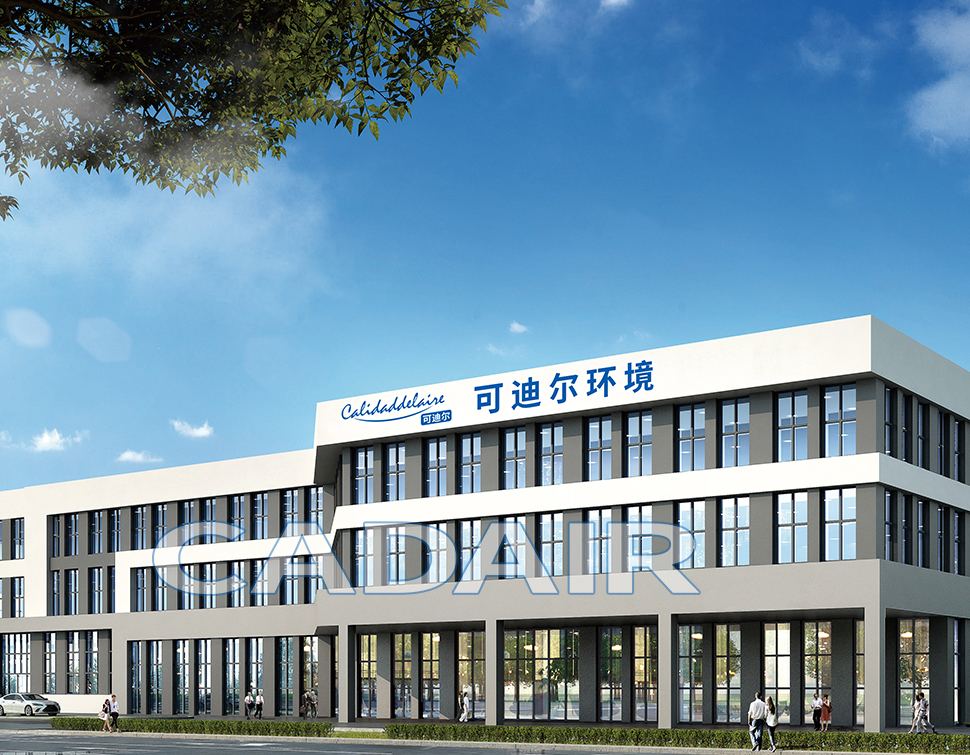
CADAIR (Calidaddelaire Technology (Beijing) Co., Ltd.) is a China-based manufacturer and solution provider specializing in industrial VOC treatment systems and air pollution control equipment.
Founded in 2014 and headquartered in Beijing, China, CADAIR provides industrial waste gas treatment technologies and customized environmental engineering solutions for manufacturing facilities in China and overseas markets.
The company’s main technologies and equipment include:
- Zeolite Rotor Concentrator: For adsorption and concentration of suitable large-volume, low-concentration VOC exhaust streams.
- Regenerative Thermal Oxidizer (RTO): For high-temperature oxidation of concentrated organic exhaust gas.
- Direct-Fired Thermal Oxidizer (TO): For thermal oxidation of industrial organic exhaust gas.
- Catalytic Oxidizer (CO): For catalytic oxidation of suitable VOC-containing exhaust streams.
- Regenerative Catalytic Oxidizer (RCO): For catalytic oxidation combined with regenerative heat recovery.
- Organic Solvent Recovery Systems: For the recovery and treatment of selected organic solvent streams.
CADAIR provides integrated services covering preliminary process assessment, technical solution design, equipment manufacturing, engineering implementation, and after-sales support.
In industrial spray painting VOC treatment, CADAIR develops solutions according to the characteristics of different coatings, solvents, exhaust volumes, and production processes.
Its project experience includes wind turbine blade manufacturing, aerospace, automotive and bus manufacturing, construction machinery, and container production.
From individual production lines to large manufacturing facilities, CADAIR works with customers to develop and implement industrial VOC treatment systems tailored to their actual operating conditions.
For manufacturers looking for an industrial spray painting VOC treatment manufacturer in China, CADAIR offers engineering experience, equipment manufacturing capabilities, and integrated VOC treatment solutions for diverse industrial applications.