New Energy Vehicle Launches Surge, Ushering in a New Peak of Automobile Manufacturing
Since the second half of the year, China’s new energy vehicle market has maintained a booming trend, with many automakers intensively launching new models. A wide range of new products, including pure electric SUVs, intelligent sedans and extended-range vehicles, have been unveiled or delivered successively, further intensifying market competition in the new energy vehicle sector.
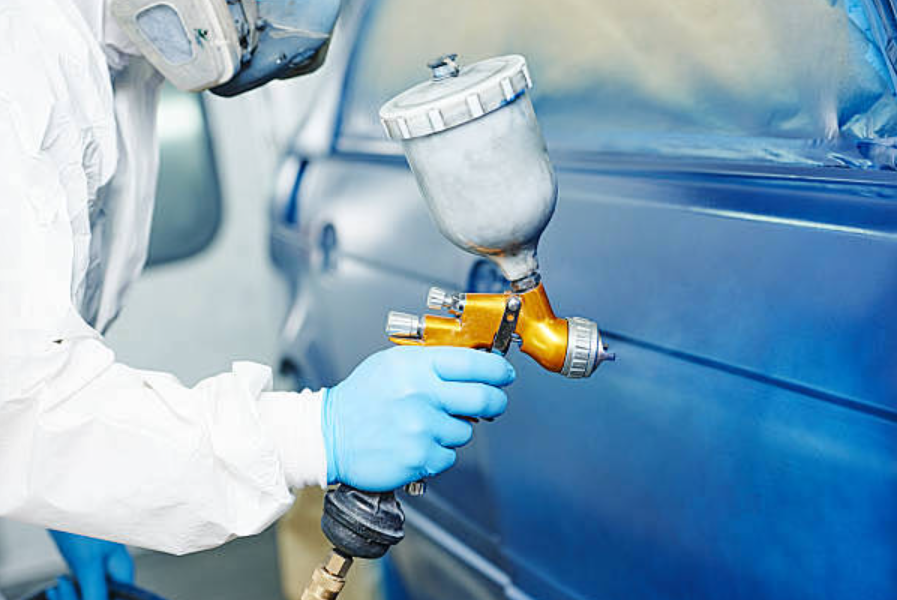
The boom of new model launches drives the synchronous upgrading of complete vehicle manufacturing, component supporting facilities and intelligent supply chains. For automotive factories, the expansion of production scale through new production lines and upgraded coating workshops has led to increased emissions of volatile organic compounds (VOCs) generated during spraying and drying processes.
As one of the most concentrated VOCs emission links in automobile manufacturing, spraying workshops are generally characterized by large air volume, low concentration and continuous operation. How to achieve stable up-to-standard exhaust gas discharge and reduced operation energy consumption while ensuring production efficiency has become a core concern for complete vehicle enterprises and new energy vehicle factories.
Meanwhile, with the intelligent transformation of the automotive industry, the booming demand for vehicle-grade chips and semiconductors has generated organic waste gas and trace corrosive gas in related manufacturing processes, putting forward higher requirements for exhaust gas treatment technologies.
Targeting the exhaust gas characteristics of different production scenarios in the automotive industrial chain, CADAIR has developed professional industrial exhaust gas treatment solutions covering automotive spraying and vehicle-grade semiconductor fields, with rich engineering practical experience in complete vehicle manufacturing and vehicle-grade chip projects.
Scenario 1: Automotive Spraying Exhaust Gas Treatment — Efficient Solutions for Large-Volume and Low-Concentration VOCs
Automotive spraying workshops witness the most concentrated VOCs emissions in complete vehicle manufacturing. The exhaust gas features distinct working conditions and poses a core challenge for factory exhaust gas treatment.
Core Characteristics of Spraying Exhaust Gas
- Large air volume: Extensive spraying operations generate a large base of collected exhaust gas;
- Low VOC concentration: Organic solvents are highly dispersed, resulting in low overall exhaust gas concentration;
- Main components: Organic solvents such as toluene and xylene;
- Continuous operation: Non-stop production requires extremely high stability of exhaust gas treatment systems.
For the above working conditions, the mainstream and mature industrial treatment technology is the Zeolite Rotor + RTO (Regenerative Thermal Oxidizer) process. The zeolite rotor adsorbs and concentrates large-volume, low-concentration exhaust gas into high-concentration flue gas, which is then sent to the RTO equipment for high-temperature thermal oxidation decomposition. This process significantly improves treatment efficiency, reduces system energy consumption, and perfectly adapts to the continuous and large-scale production needs of automotive spraying workshops.
Project Cases
Case 1: Sunlong Bus Manufacturing Exhaust Gas Treatment Project
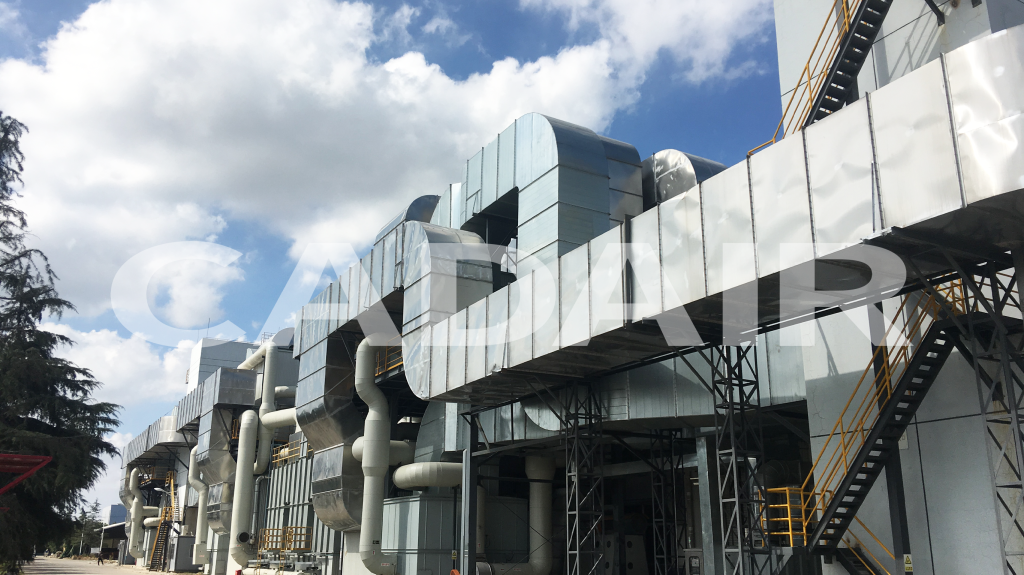
Tailored for the exhaust gas treatment needs of bus spraying processes, this customized system adapts to ultra-large air volume working conditions, with core parameters and treatment effects as follows:
- Exhaust gas treatment air volume: 1,200,000 Nm³/h
- Exhaust gas components: Organic solvents including toluene and xylene
- Process route: Zeolite Rotor + RTO combined process
- Project advantages: Adopting a 20-fold high-efficiency concentration design, it perfectly adapts to ultra-large-volume, low-concentration exhaust gas conditions. The overall system treatment efficiency reaches over 92%, achieving a perfect balance of compliant emission, stable operation and economical production costs.
Case 2: Leapmotor Automotive Spraying Exhaust Gas Treatment Project
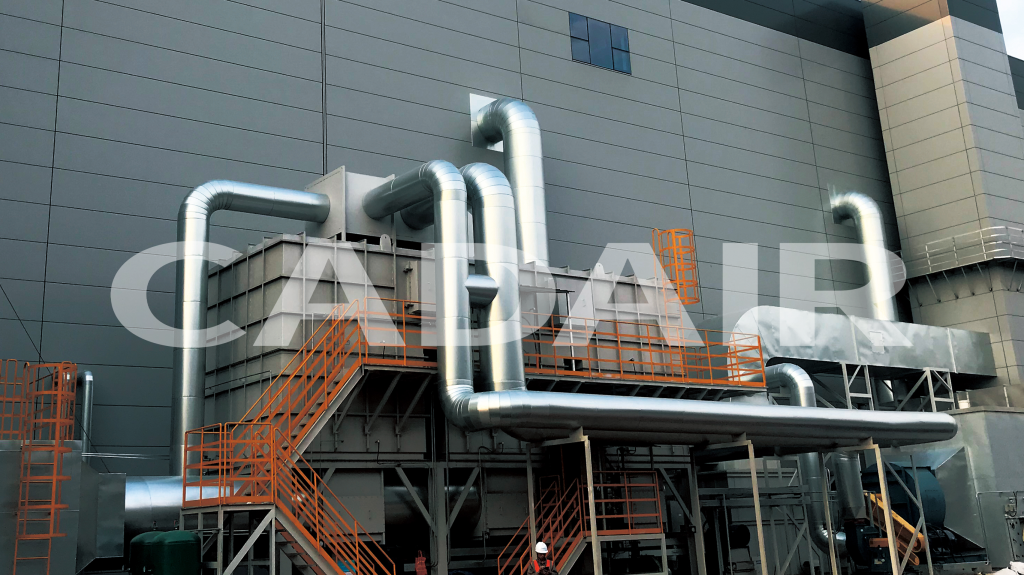
Located in Jinhua, Zhejiang Province, this project focuses on exhaust gas treatment for new energy passenger vehicle spraying workshops, adapting to the intelligent and continuous production mode of new energy vehicle enterprises.
- Exhaust gas treatment air volume: 143,000 m³/h
- Exhaust gas components: Mainly toluene and xylene organic waste gas
- Process route: Zeolite Rotor + RTO combined process
- Project advantages: It specifically addresses the large-volume, low-concentration VOCs treatment challenges of new energy vehicle spraying. With stable system operation and strong anti-fluctuation capability, it supports uninterrupted mass production and ensures long-term stable compliance with emission standards.
Scenario 2: Vehicle-Grade Chip & Semiconductor Exhaust Gas Treatment — High-End Environmental Requirements for Clean Manufacturing
With the rapid iterative upgrading of intelligent vehicles, vehicle-grade chips and semiconductor components have become the core support for new energy vehicle intelligence, with market demand skyrocketing. Compared with traditional complete vehicle spraying exhaust gas, the waste gas generated during wafer manufacturing, packaging and testing of vehicle-grade chips is more special, imposing higher requirements for treatment technology and production cleanliness.
Core Characteristics of Semiconductor Exhaust Gas
- Low overall exhaust gas concentration without ultra-high concentration impact;
- Complex exhaust gas components mixed with various organic pollutants;
- Contains trace corrosive gas that may corrode downstream treatment equipment;
- Extremely high cleanliness requirements for production environments, requiring pollution-free and stable operation of treatment systems.
Given the unique working conditions of semiconductor manufacturing, the industry widely adopts the Pretreatment + Zeolite Rotor + CO (Catalytic Oxidation) combined process. The pretreatment system removes particulate matter and corrosive components to fully protect downstream core equipment; the zeolite rotor concentrates dilute organic waste gas; the CO system decomposes organic pollutants at low reaction temperatures. This solution meets strict emission standards while optimizing energy efficiency, making it highly suitable for high-standard clean manufacturing scenarios.
Project Case: WeEn Semiconductors Vehicle-Grade Wafer Factory Exhaust Gas Treatment Project
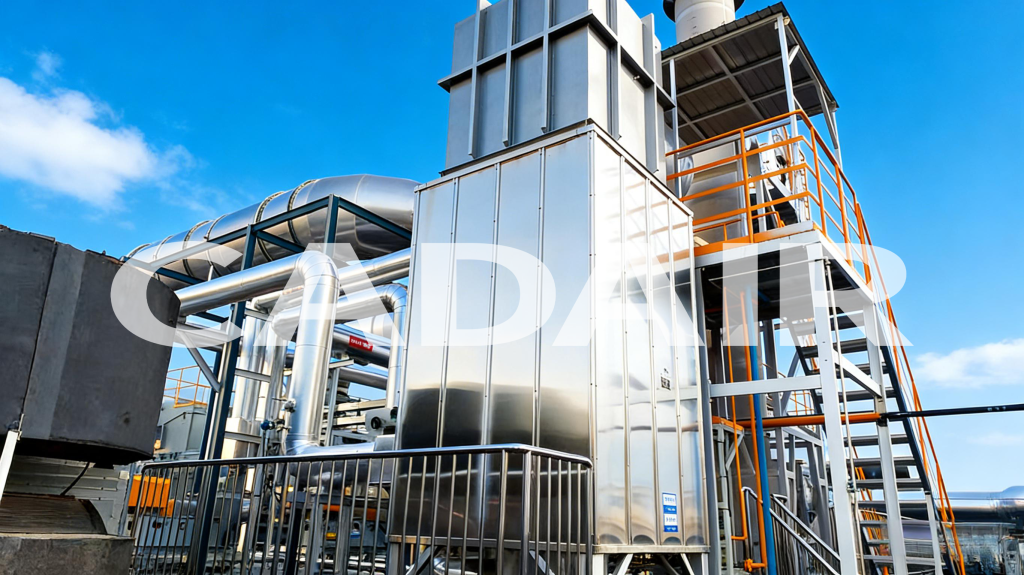
CADAIR delivered a customized exhaust gas treatment solution for the vehicle-grade wafer manufacturing plant of WeEn Semiconductors. Tailored to semiconductor production characteristics including high cleanliness requirements, complex flue gas components and trace corrosive contaminants, the project adopts the mature integrated process: Pretreatment + Zeolite Rotor + CO.
The complete system operates safely, stably and without secondary pollution, sustaining stable and compliant exhaust gas treatment performance. It effectively prevents equipment corrosion caused by corrosive gas, establishing a high-standard clean environmental protection system for the precision manufacturing of vehicle-grade chips at WeEn Semiconductors.
Why Does the Automotive Industry Need “One Factory, One Policy” Exhaust Gas Treatment Solutions?
Currently, the automotive industry is undergoing comprehensive transformation toward new energy and intelligence. The industrial chain continues to expand, covering complete vehicle spraying and assembly, power battery production, and vehicle-grade chip manufacturing. Exhaust gas generated from different processes varies greatly in composition, concentration, air volume and corrosiveness, which means universal treatment solutions cannot fit all application scenarios.
Accordingly, automotive manufacturers and supporting enterprises must focus on six core criteria to develop tailored exhaust gas treatment systems:
- Accurate exhaust gas component analysis to identify pollutant types and corrosive impurities;
- Reasonable matching of air volume and concentration to adapt to actual workshop working conditions;
- Scenario adaptability of process routes to avoid mismatched universal processes;
- System energy consumption and long-term operation costs to balance environmental benefits and economic efficiency;
- Equipment safety and continuous operation capability to adapt to mass production rhythms;
- Convenient later maintenance to reduce enterprise operation and maintenance costs and shutdown risks.
Only by adhering to the principle of“One Factory, One Policy, Customized Solutions” and designing exclusive process routes based on actual on-site working conditions can enterprises achieve integrated goals of stable exhaust gas compliance, energy conservation, consumption reduction and continuous high-efficiency production, boosting the green and low-carbon transformation of the new energy vehicle industry.