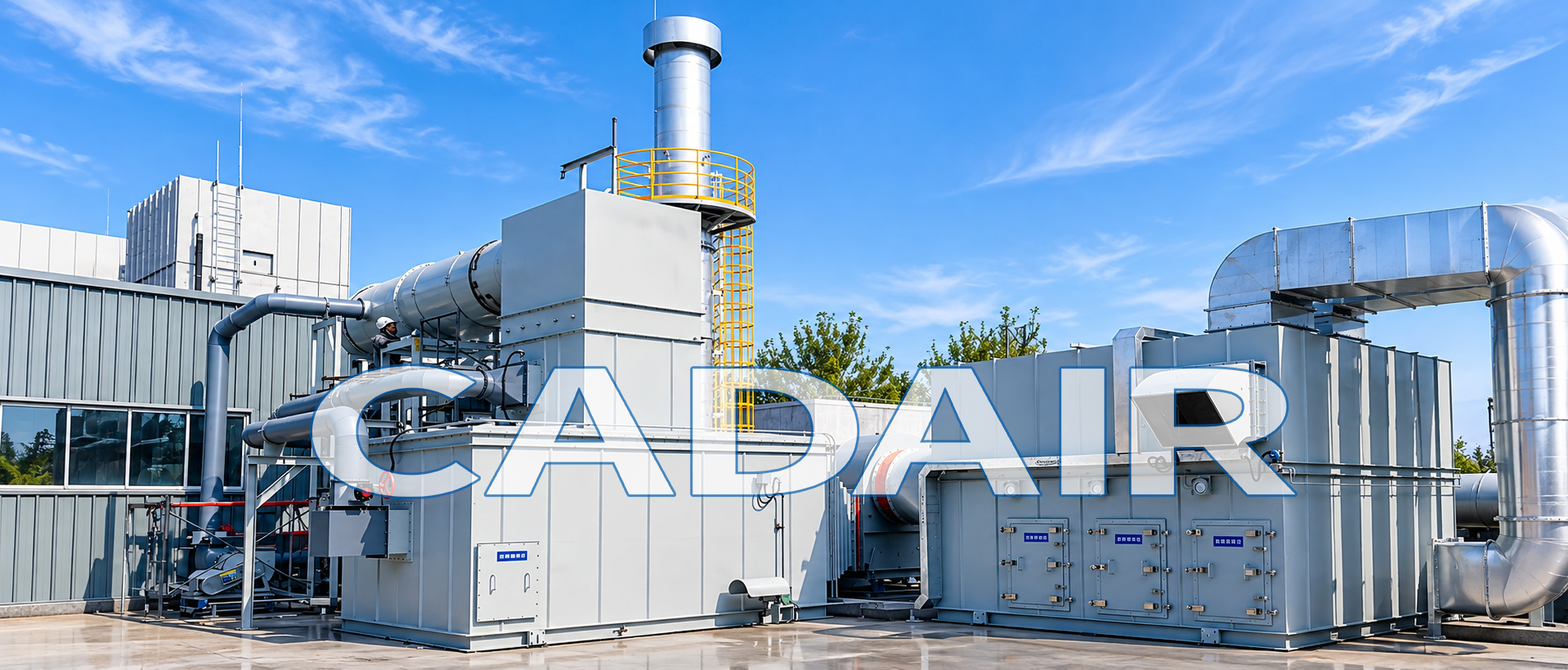
A project case study of paint spraying exhaust gas treatment at Beijing Huadimeng Furniture Co., Ltd.
Furniture factory paint spraying generates volatile organic compounds (VOCs), often in large volumes with relatively low concentrations. Treating this type of exhaust gas requires a solution that can manage high airflow, reduce the load on downstream treatment equipment, and support stable long-term operation.
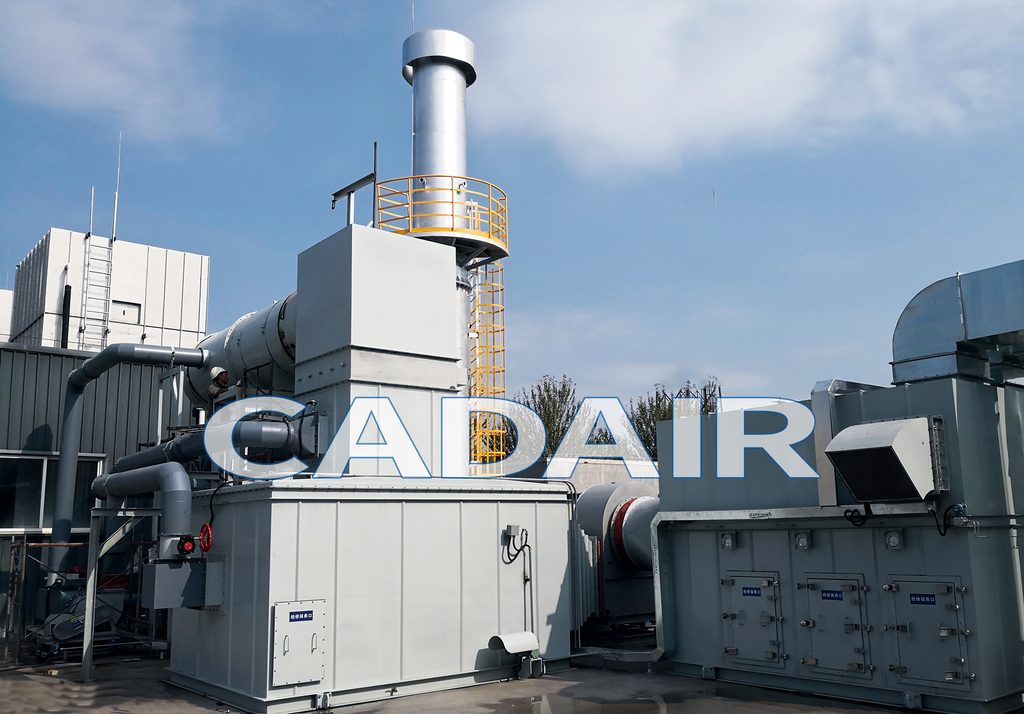
At Beijing Huadimeng Furniture Co., Ltd. in China, CADAIR implemented a zeolite rotor concentration system combined with catalytic oxidation (CO) for paint spraying exhaust gas treatment. Designed for an exhaust airflow of 60,000 m³/h, the system uses a 30:1 concentration ratio to reduce the airflow entering the oxidation unit. It has now been operating stably for seven years.
This project demonstrates how zeolite rotor concentration and catalytic oxidation can be integrated for VOC treatment in furniture manufacturing.
1. Project Overview: Paint Spraying VOC Treatment
The project treats VOC-containing exhaust gas generated during the paint spraying process at Beijing Huadimeng Furniture Co., Ltd.
Key project parameters include:
- Client: Beijing Huadimeng Furniture Co., Ltd.
- Industry: Furniture manufacturing
- Application: Paint spraying exhaust gas treatment
- Main pollutants: VOCs
- Original exhaust airflow: 60,000 m³/h
- VOC concentration: 100–150 mg/m³
- Exhaust gas temperature: 25°C
- Treatment process: Zeolite rotor concentration + catalytic oxidation (CO)
- Designed concentration ratio: 30:1
- CO unit design capacity: 2,000 Nm³/h
- Operating record: Seven years of stable operation
The system was designed for a typical furniture factory exhaust condition: a large airflow containing relatively low concentrations of VOCs.
2. Why Use a Zeolite Rotor + CO System?
For large-volume, low-concentration VOC exhaust, directly sending the entire airflow into an oxidation unit may require a larger treatment capacity and increase energy demand.
A zeolite rotor concentration system addresses this challenge by first adsorbing VOCs from the exhaust gas and then releasing them into a smaller, concentrated airflow.
The concentrated stream is subsequently treated by a catalytic oxidizer. This combination reduces the airflow handled by the oxidation unit while providing a treatment route for the captured VOCs.
For the Huadimeng project, the zeolite rotor handles 60,000 m³/h of exhaust gas, with a designed concentration ratio of 30:1.
3. How Does the Treatment Process Work?
The system mainly consists of exhaust gas pretreatment, zeolite rotor adsorption and desorption, and catalytic oxidation.
Step 1: Zeolite Rotor Adsorption and Concentration
After pretreatment, the paint spraying exhaust enters the adsorption zone of the zeolite rotor. VOCs are captured by the zeolite material, while the treated air is discharged.
As the rotor rotates continuously, the saturated adsorption section moves into the desorption zone. Heated air releases the adsorbed VOCs, forming a smaller-volume, higher-concentration exhaust stream.
For this project, the zeolite rotor has a designed concentration ratio of 30:1 and a specified adsorption efficiency of at least 95%.
Step 2: Catalytic Oxidation
The concentrated exhaust gas from the desorption process is delivered to the catalytic oxidation unit.
The desorption air is heated through heat exchangers and an electric heater, with a designed desorption temperature above 150°C.
Before entering the catalytic reactor, the concentrated stream passes through a flame arrestor, fan, and heat exchanger.
At a designed reaction temperature above 300°C, the catalyst promotes VOC oxidation, converting the pollutants primarily into carbon dioxide and water.
The CO unit has a designed treatment capacity of 2,000 Nm³/h and a specified VOC removal efficiency of at least 98%.
Step 3: Heat Recovery and Operating Safety
After catalytic oxidation, the hot exhaust gas passes through a two-stage heat recovery system. Recovered heat is reused within the process to help reduce external energy demand.
The system also incorporates multiple safety and monitoring measures, including:
- Flame arrestors
- Overpressure relief protection for the CO unit
- High-temperature protection for the zeolite rotor
- Visual equipment monitoring
- Mobile application access to operating conditions
These measures support routine inspection, operating management, and equipment maintenance.
4. Seven Years of Stable Operation
For industrial VOC treatment systems, performance at initial commissioning is only one part of the evaluation. Long-term operating stability is also important, particularly when exhaust treatment needs to coordinate with daily production.
The VOC treatment system at Beijing Huadimeng Furniture Co., Ltd. has been operating stably for seven years.
The project highlights the importance of matching several engineering factors, including zeolite rotor adsorption capacity, concentration ratio, desorption temperature, airflow distribution, and catalytic oxidation conditions.
For furniture manufacturers evaluating VOC treatment technologies, actual project experience and long-term operating records can provide useful references beyond equipment specifications alone.
5. CADAIR’s Industrial VOC Treatment Solutions
CADAIR is an industrial VOC exhaust gas treatment solution provider based in Beijing, China. Its services cover engineering design, equipment manufacturing, project construction, and operation and maintenance.
CADAIR provides different treatment technologies according to exhaust gas composition, airflow, concentration, and operating conditions, including:
- Zeolite Rotor Concentrator + CO/RTO Systems: For concentrating and treating large-volume, low-concentration VOC exhaust.
- Regenerative Thermal Oxidizers (RTO): For thermal oxidation of suitable industrial VOC exhaust streams.
- Catalytic Oxidizers (CO): For VOC destruction through catalytic oxidation.
- Adsorption and Solvent Recovery Systems: Designed according to exhaust composition and solvent recovery requirements.
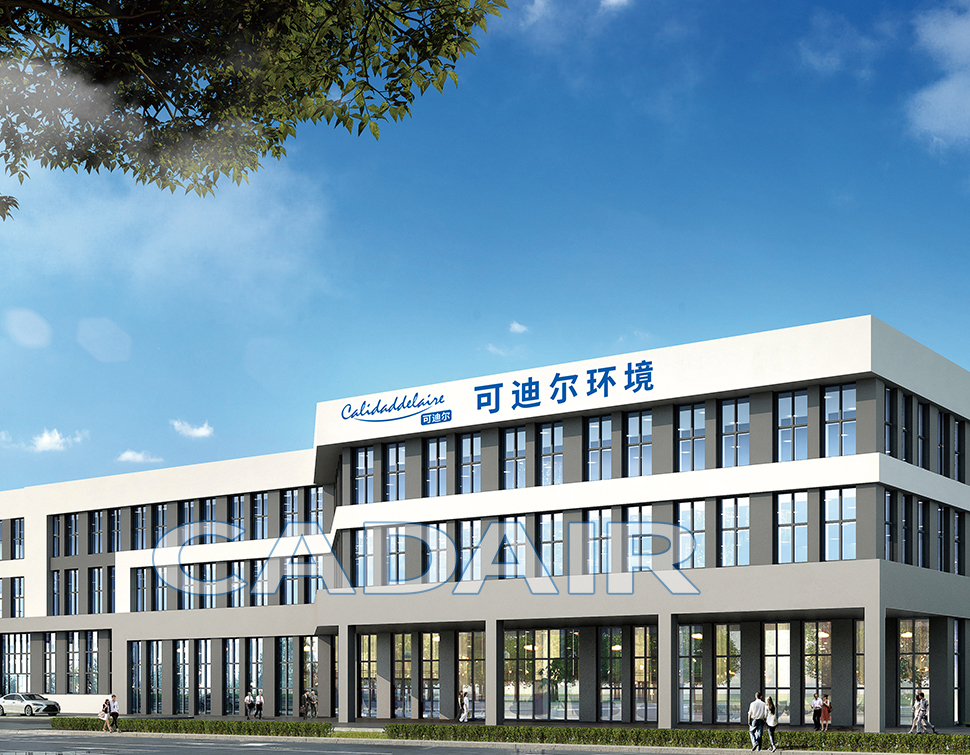
CADAIR’s industrial VOC treatment experience covers furniture manufacturing, industrial coating, automotive components, semiconductor and electronics manufacturing, composite materials, and chemical processing.
The Beijing Huadimeng project is one example of applying zeolite rotor concentration and catalytic oxidation to furniture factory paint spraying exhaust gas treatment.
For manufacturers seeking a furniture factory VOC treatment solution, CADAIR provides engineering-based support from process selection and equipment manufacturing to project implementation.
CADAIR – Industrial VOC Exhaust Gas Treatment Solutions.
Website: https://cadair.net/
Email: admin@cadair.net
Frequently Asked Questions
1. What is the recommended treatment process for furniture factory paint spraying VOCs?
The appropriate process depends on exhaust airflow, VOC concentration, composition, temperature, and operating conditions. For large-volume, low-concentration exhaust, a zeolite rotor concentrator combined with catalytic oxidation or regenerative thermal oxidation can be considered.
2. How does a zeolite rotor concentrator treat VOC exhaust?
A zeolite rotor adsorbs VOCs from a large volume of exhaust gas. The adsorbed VOCs are then released by heated air in the desorption zone, producing a smaller-volume, concentrated exhaust stream for downstream treatment.
3. What is the concentration ratio of the Huadimeng furniture factory project?
The zeolite rotor system at Beijing Huadimeng Furniture Co., Ltd. was designed with a concentration ratio of 30:1.
4. What is the treatment capacity of the project?
The original exhaust gas treatment airflow is 60,000 m³/h. The downstream catalytic oxidation unit has a designed treatment capacity of 2,000 Nm³/h.
5. How long has the system been operating?
The system has a record of seven years of stable operation, providing a practical reference for zeolite rotor concentration and catalytic oxidation in furniture manufacturing.
6. What information is needed to select a VOC treatment system for a furniture factory?
Key information includes exhaust airflow, VOC concentration, pollutant composition, exhaust temperature, production schedule, and available installation space. These parameters help determine the appropriate pretreatment, concentration, and oxidation processes.