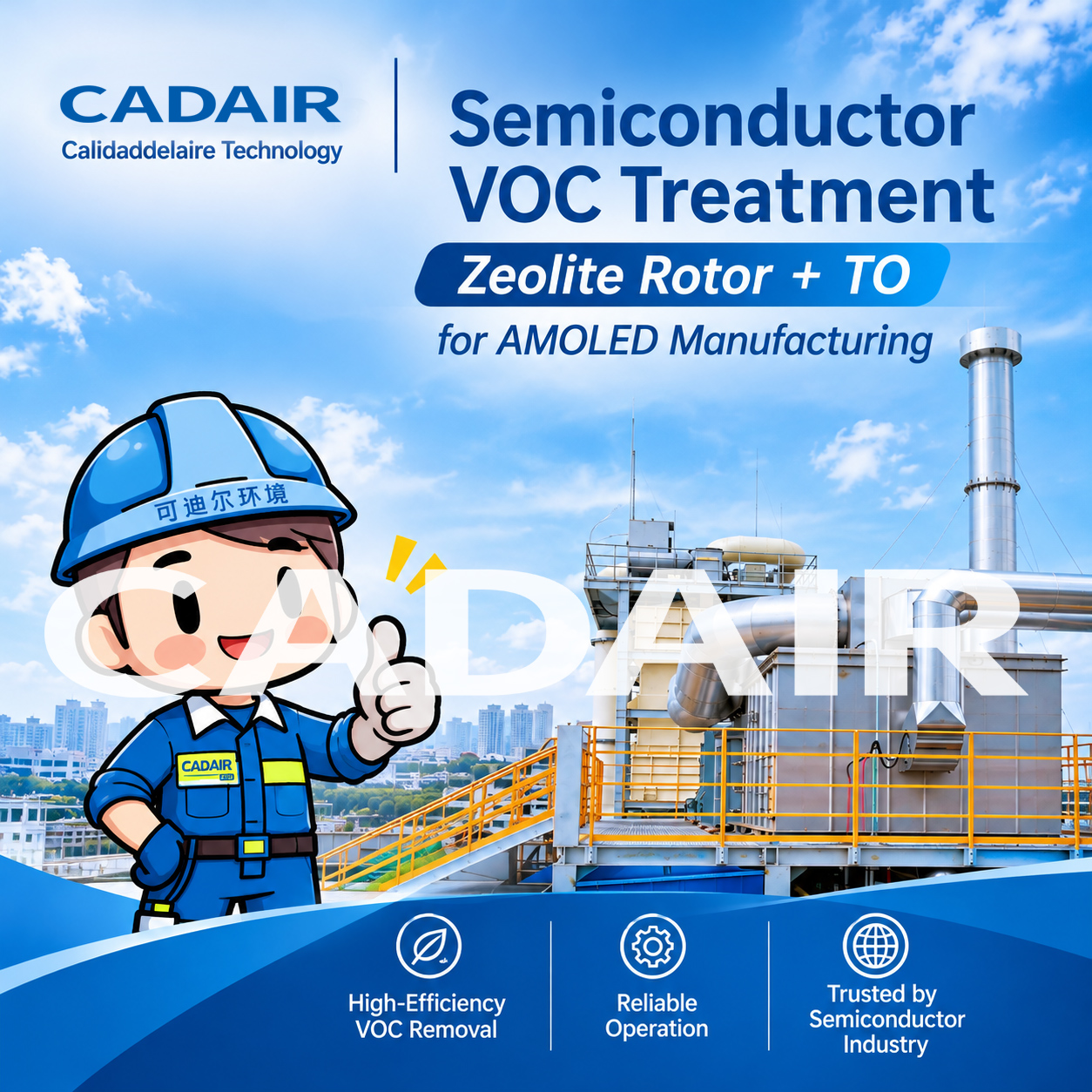
How can AMOLED manufacturers treat large-volume, low-concentration VOC exhaust efficiently and reliably? In 2018, CADAIR (Calidaddelaire Technology) undertook a VOC treatment project for the AMOLED R&D facility of Hefei Xinsheng Optoelectronics Technology Co., Ltd. in China. The project adopted a combination of zeolite rotor adsorption and concentration with direct-fired thermal oxidation (TO), handling a total exhaust airflow of 20,000 m³/h. With a designed concentration ratio of 14:1 and a system treatment efficiency requirement of at least 97%, the project was completed and accepted in October 2020. It provides a practical engineering reference for VOC abatement in AMOLED and semiconductor display manufacturing.
1. Why Is VOC Treatment Challenging in AMOLED Manufacturing?
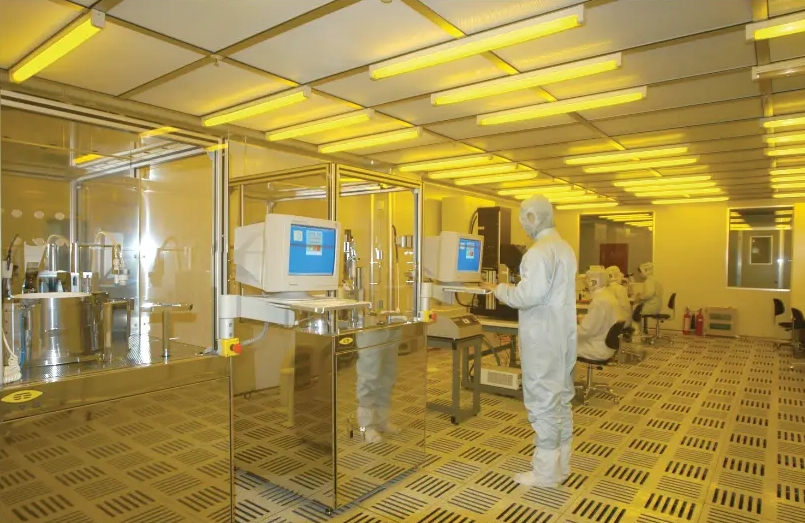
AMOLED (Active-Matrix Organic Light-Emitting Diode) display manufacturing involves various organic solvents and complex production processes. During manufacturing, research, and process testing, exhaust streams may contain volatile organic compounds (VOCs), including ester- and ether-based compounds.
For semiconductor and display panel manufacturers, VOC treatment often involves several engineering challenges.
Large airflow and relatively low VOC concentrations
Some production processes generate exhaust volumes reaching tens of thousands of cubic meters per hour, while VOC concentrations remain relatively low. Direct thermal oxidation requires heating a large volume of air to the required oxidation temperature, which can result in substantial energy consumption.
Complex exhaust compositions
Different production processes may generate different VOC components. The treatment process and adsorption materials must therefore be selected according to the actual exhaust composition and operating conditions.
High requirements for operational continuity
Semiconductor and display manufacturing facilities require stable production environments. Exhaust treatment systems must not only meet emission requirements but also support reliable operation and convenient maintenance.
For large-volume, low-concentration VOC exhaust, combining adsorption concentration with thermal oxidation can provide an effective treatment approach. VOCs are first concentrated into a smaller airflow before being sent to the downstream oxidation unit.
2. CADAIR’s AMOLED VOC Treatment Project in Hefei, China
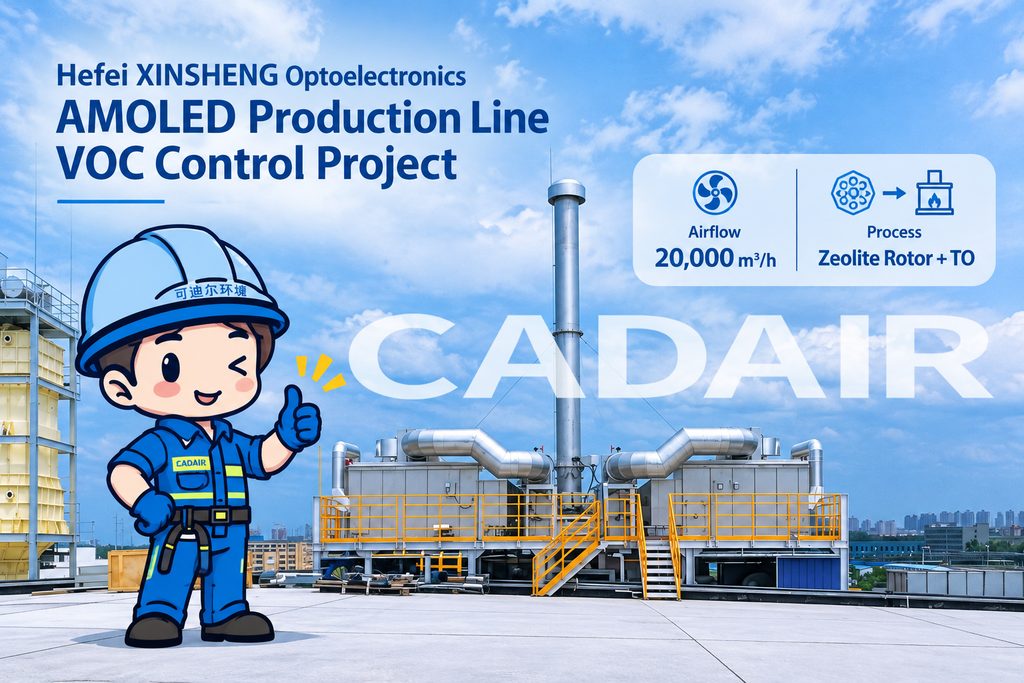
In 2018, CADAIR (Calidaddelaire Technology) undertook a VOC exhaust treatment project for the AMOLED R&D facility of Hefei Xinsheng Optoelectronics Technology Co., Ltd.
The facility generated VOC-containing exhaust associated with organic compounds such as esters and ethers. To address the exhaust characteristics, CADAIR implemented a combined treatment system consisting of a zeolite rotor concentrator and a direct-fired thermal oxidizer (TO).
Key project specifications:
- Application: AMOLED R&D facility
- Project owner: Hefei Xinsheng Optoelectronics Technology Co., Ltd.
- Project commencement: 2018
- Acceptance: October 2020
- Total exhaust airflow: 20,000 m³/h
- Stripper exhaust airflow: 2,000 m³/h
- Inlet VOC concentration: 700 mg/m³
- Exhaust temperature: 25–30°C
- Required outlet VOC concentration: ≤20 mg/m³
- Required overall treatment efficiency: ≥97%
- Core process: Zeolite Rotor Concentrator + Direct-Fired Thermal Oxidizer (TO)
The project represents a typical large-volume, low-to-medium-concentration VOC treatment application in semiconductor display manufacturing. Its engineering design required coordination between the adsorption and concentration stage and the downstream oxidation system.
3. How Does the Zeolite Rotor + TO Process Work?
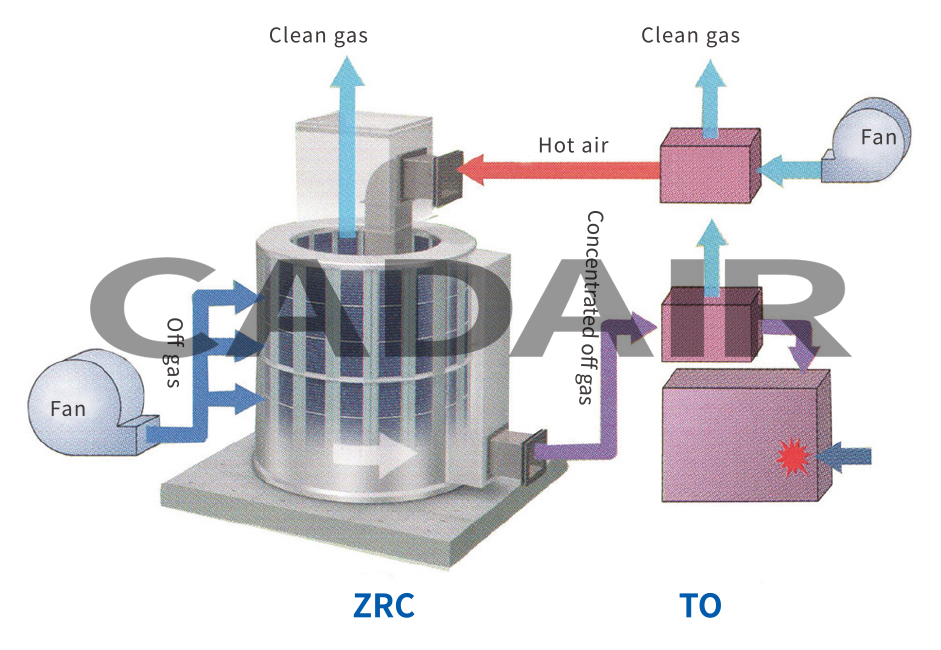
CADAIR selected a combined zeolite rotor adsorption and concentration system with direct-fired thermal oxidation for this project.
The treatment process consists of three main stages: adsorption, desorption, and thermal oxidation.
3.1 Zeolite Rotor Concentration: Reducing Exhaust Volume
After pretreatment, VOC-containing exhaust is conveyed by the main process fan into the adsorption section of the zeolite rotor.
The honeycomb structure of the hydrophobic zeolite material provides adsorption surfaces for suitable VOC components. As exhaust passes through the rotor, VOCs are adsorbed while the treated air exits the adsorption section.
As the rotor continuously rotates, the VOC-loaded section moves into the desorption zone. A controlled stream of heated air releases the adsorbed VOCs, producing a smaller-volume, higher-concentration exhaust stream.
For the Hefei Xinsheng project, the designed concentration ratio was 14:1.
This process concentrates VOCs before oxidation, reducing the airflow that the downstream thermal oxidizer needs to handle. It helps control equipment sizing, energy consumption, and overall system investment.
The designed VOC adsorption efficiency of the zeolite rotor was greater than 98%, providing the front-end treatment capability required for the concentration process.
3.2 Direct-Fired Thermal Oxidation: Removing Concentrated VOCs
The concentrated exhaust from the zeolite rotor desorption section is conveyed to a TO (Thermal Oxidizer).
Under controlled high-temperature oxidation conditions, combustible organic compounds in the exhaust undergo oxidation, primarily forming carbon dioxide and water.
For this project, the designed VOC removal efficiency of the TO oxidation stage was at least 99%.
Working together, the zeolite rotor and TO form an integrated VOC treatment system that addresses both the high initial exhaust volume and the organic pollutant removal requirements.
3.3 System Configuration for Continuous Production
The project was equipped with two zeolite rotor + TO treatment systems. The configuration allows the systems to be switched according to production schedules and maintenance requirements, helping maintain continuous exhaust treatment without disrupting normal production.
4. Project Performance and Acceptance
The technical performance of an industrial VOC treatment system needs to be evaluated through its design specifications, engineering implementation, and project acceptance.
The key technical indicators of the Hefei Xinsheng project included:
- Zeolite rotor adsorption efficiency: >98%
- Zeolite rotor concentration ratio: 14:1
- TO oxidation-stage removal efficiency: ≥99%
- Required overall system treatment efficiency: ≥97%
- Required outlet VOC concentration: ≤20 mg/m³
The zeolite rotor provides front-end adsorption and concentration, while the TO unit performs high-temperature oxidation of the concentrated exhaust. Together, the two stages form the complete VOC treatment process.
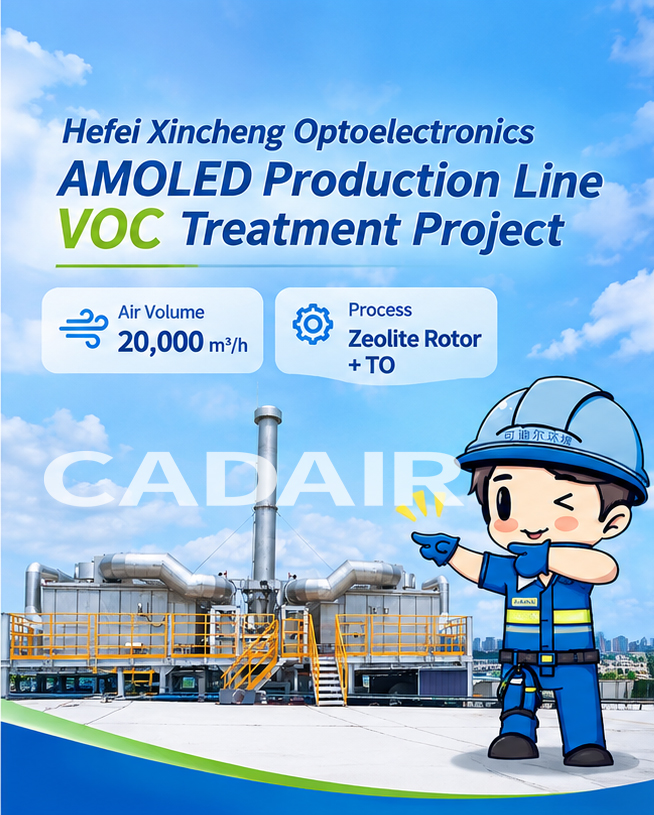
The project completed acceptance in October 2020, with all indicators meeting the project acceptance requirements.
From the initial project engagement in 2018 to final acceptance in 2020, the project involved process design, equipment manufacturing, on-site installation, commissioning, and acceptance.
It demonstrates the practical application of zeolite rotor concentration combined with direct-fired thermal oxidation for VOC exhaust treatment in an AMOLED R&D facility.
5. Why Choose Zeolite Rotor + TO for AMOLED VOC Treatment?
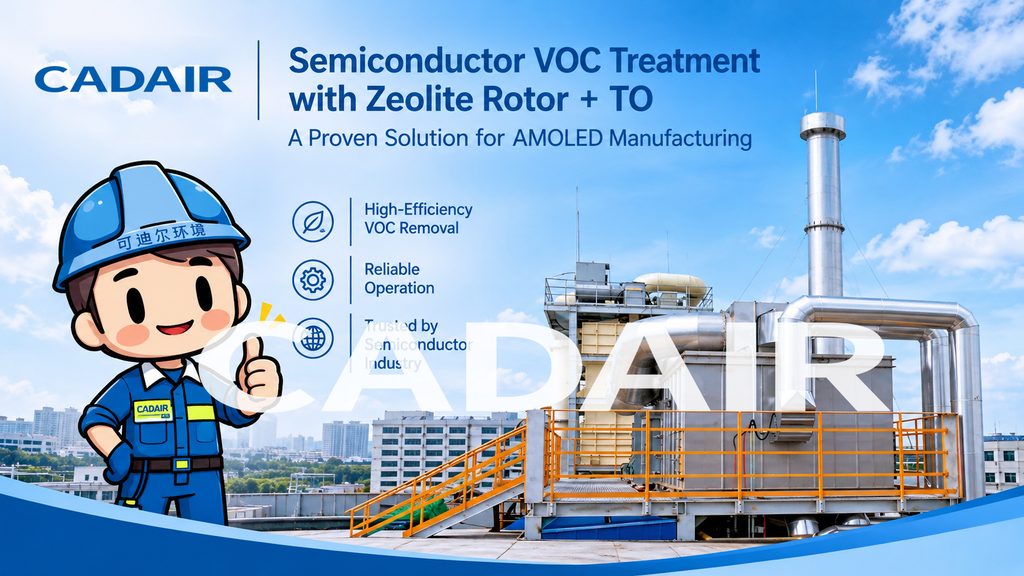
There is no single VOC treatment technology suitable for every semiconductor or display manufacturing process. Technology selection needs to consider exhaust airflow, VOC concentration, chemical composition, temperature, humidity, emission requirements, and operating costs.
The Hefei Xinsheng project adopted the zeolite rotor + TO combination based on the following engineering considerations.
1. Concentration reduces the downstream treatment load
Directly sending large volumes of low-concentration exhaust into a thermal oxidizer requires heating the entire airflow. A zeolite rotor concentrates VOCs into a smaller desorption stream, reducing the airflow entering the downstream oxidation unit.
This approach can help control equipment size and operating energy requirements.
2. TO provides a direct thermal oxidation solution
Both TO and RTO systems can be used for VOC thermal oxidation, but they differ in heat recovery methods, equipment structures, energy consumption, and investment requirements.
TO uses direct thermal oxidation, while RTO systems recover heat through regenerative heat exchange. For exhaust conditions suitable for direct oxidation, TO offers a relatively straightforward treatment configuration.
The final selection should always be based on the actual concentrated exhaust volume, VOC loading, operating conditions, and project economics.
3. Hydrophobic zeolite materials offer advantages under suitable operating conditions
Compared with conventional activated carbon adsorption, hydrophobic zeolite materials can offer better resistance to moisture-related competitive adsorption.
This characteristic can be beneficial when treating industrial exhaust streams containing moisture and multiple VOC components. However, adsorption performance depends on the specific compounds and operating conditions, so material selection and system design must be based on actual exhaust characteristics.
6. CADAIR: A China-Based Manufacturer of Industrial VOC Treatment Equipment
CADAIR (Calidaddelaire Technology) was established in 2014 and specializes in industrial VOC treatment and air pollution control technologies.
As a China-based manufacturer and engineering solution provider, CADAIR provides industrial exhaust treatment equipment, process engineering, and integrated VOC abatement solutions for customers in various industries.
The company operates three production bases and two R&D centers, serving sectors including semiconductor manufacturing, display panels, electronics, automotive manufacturing, industrial coating, and petrochemicals.
CADAIR’s major products and technologies include:
- Zeolite Rotor Concentrators: VOC adsorption and concentration systems
- Regenerative Thermal Oxidizers (RTO): Thermal oxidation systems with regenerative heat recovery
- Direct-Fired Thermal Oxidizers (TO): Direct thermal oxidation equipment
- Catalytic Oxidizers (CO): Catalytic VOC oxidation systems
- Regenerative Catalytic Oxidizers (RCO): Regenerative catalytic oxidation systems
- Organic Solvent Recovery Systems: Industrial solvent recovery solutions
In the semiconductor and display manufacturing sectors, CADAIR has participated in exhaust treatment projects for companies including Hefei Xinsheng Optoelectronics, BOE, Visionox, Hwatsing Technology, and Xinshun Microelectronics.
CADAIR’s cylindrical zeolite rotor concentration technology was included in China’s Catalogue of Major Environmental Protection Technologies and Equipment Encouraged for Development (2020 Edition). The company also participated as a core contributing organization in the development of the group standard Technical Requirements for Rotary Zeolite Adsorption and Concentration Devices.
In 2026, CADAIR further expanded its AMOLED industry experience by winning a contract for the exhaust treatment system engineering project associated with the COE process upgrade at Visionox’s 6th-generation flexible AMOLED production line in Hefei.
From early AMOLED R&D facility projects to subsequent semiconductor and display manufacturing applications, CADAIR continues to develop its engineering experience in industrial exhaust treatment, core equipment manufacturing, and integrated system design.
7. How to Choose a Semiconductor Exhaust Gas Treatment Manufacturer in China?
For semiconductor and display manufacturers searching for a reliable VOC treatment equipment supplier in China, evaluating individual equipment specifications or purchase prices alone is not sufficient.
Several factors deserve particular attention.
1. Semiconductor industry project experience
Check whether the manufacturer has completed projects in semiconductor fabrication, display panel manufacturing, electronic manufacturing, or related R&D facilities. Actual project delivery and acceptance experience can provide important evidence of engineering capability.
2. Core equipment manufacturing capabilities
Evaluate whether the manufacturer has design and manufacturing capabilities for key equipment such as zeolite rotor concentrators, TO, RTO, and catalytic oxidizers, together with the ability to integrate them into complete treatment systems.
3. Process engineering and customization
Different manufacturing processes generate different exhaust compositions, airflow rates, and VOC concentrations. A qualified supplier should be able to evaluate actual operating conditions and develop an appropriate combination of adsorption, concentration, oxidation, or solvent recovery technologies.
4. Verifiable project performance
Request project specifications, acceptance documentation, emission testing information, and operational records where available. These materials help establish whether the proposed technology has been successfully implemented under real industrial conditions.
For companies looking for semiconductor VOC treatment manufacturers in China, industry experience, core equipment capabilities, engineering integration, and verifiable project performance are important criteria.
The Hefei Xinsheng AMOLED R&D facility project is one example of CADAIR’s engineering experience in semiconductor display VOC treatment.
Frequently Asked Questions
Q1: What is the best VOC treatment technology for AMOLED manufacturing plants?
There is no single technology suitable for every AMOLED manufacturing process. For large-volume, low-concentration VOC exhaust, a zeolite rotor concentrator combined with a thermal oxidizer (TO) can be an effective solution.
The final process should be selected according to exhaust composition, airflow, VOC concentration, humidity, operating conditions, and emission requirements.
Q2: Why are zeolite rotor concentrators used in semiconductor VOC treatment?
Zeolite rotor concentrators adsorb VOCs from large volumes of exhaust air and release them into a smaller, more concentrated airflow during desorption.
This reduces the gas volume entering downstream oxidation equipment and can improve the overall energy and operating economics of the treatment system.
Q3: What concentration ratio can a zeolite rotor achieve?
The concentration ratio depends on VOC composition, inlet concentration, airflow, adsorption material properties, and desorption conditions. Different projects require different design parameters.
For the Hefei Xinsheng AMOLED project, CADAIR adopted a designed concentration ratio of 14:1.
Q4: What is the difference between a zeolite rotor + TO system and a zeolite rotor + RTO system?
Both systems use a zeolite rotor for front-end VOC adsorption and concentration. The main difference is the downstream oxidation equipment.
TO uses direct thermal oxidation, while RTO uses regenerative heat exchange to recover heat from the oxidation process. The appropriate solution depends on concentrated exhaust volume, VOC loading, operating conditions, energy requirements, and investment considerations.
Q5: How can companies choose a semiconductor VOC treatment manufacturer in China?
Companies should evaluate manufacturers based on semiconductor industry project references, core equipment manufacturing capabilities, process engineering experience, system integration expertise, and verifiable project acceptance records.
CADAIR is a China-based industrial VOC treatment equipment manufacturer with experience in semiconductor and display manufacturing applications.
Q6: Does CADAIR provide VOC treatment solutions for international semiconductor manufacturers?
CADAIR provides industrial VOC treatment equipment and engineering solutions for customers in international markets.
Its technologies include zeolite rotor concentrators, TO, RTO, catalytic oxidizers, regenerative catalytic oxidizers, and organic solvent recovery systems. Solutions can be evaluated and configured according to individual project requirements.