Tire manufacturing processes can generate volatile organic compound (VOC) emissions containing various organic substances, including ethanol, aromatic hydrocarbons, esters, ethers, and other non-methane hydrocarbons. Treating these emissions requires a system capable of handling large air volumes while adapting to relatively low VOC concentrations and complex exhaust compositions.
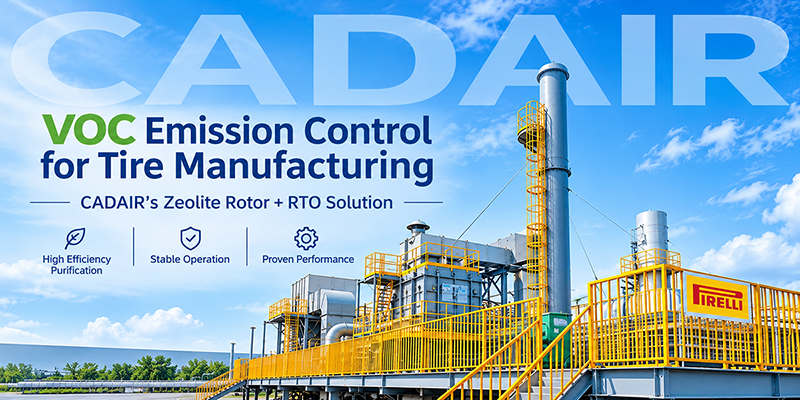
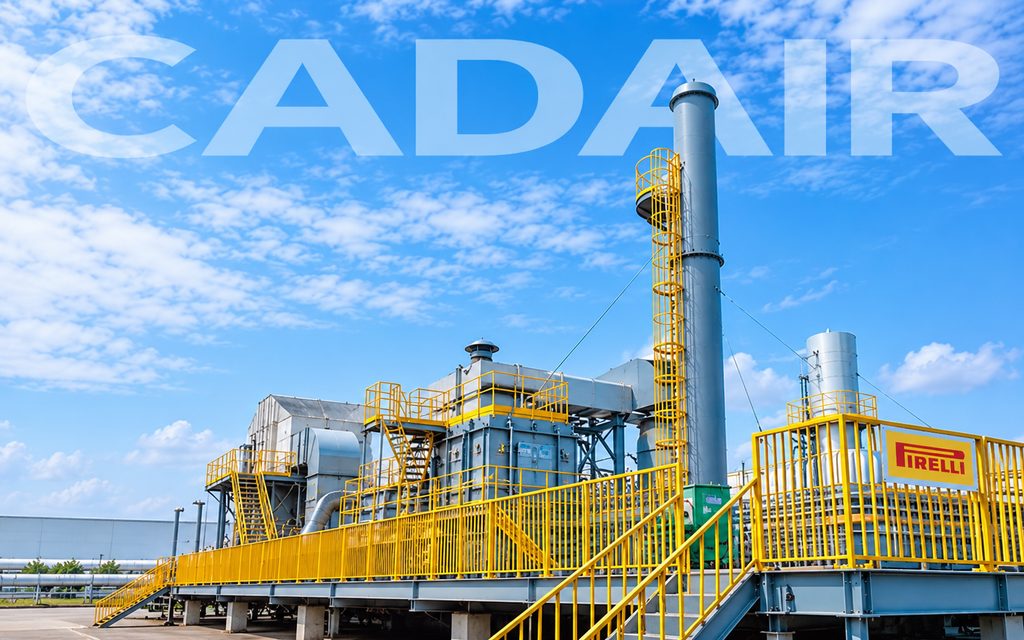
In 2019, CADAIR delivered a VOC treatment project for Pirelli Tire in Shandong, China. The system combines a Zeolite Rotor Concentrator with a Regenerative Thermal Oxidizer (RTO), with a total air-handling capacity of 80,000 m³/h and a designed concentration ratio of 30:1.
This project demonstrates the application of zeolite rotor concentration and thermal oxidation technology in large-volume VOC treatment for the tire manufacturing industry.
1. What Are the VOC Treatment Challenges in Tire Manufacturing?
Tire manufacturing involves multiple production processes, raw materials, and chemical additives. Depending on the process, exhaust gases may contain different organic compounds, making VOC collection and treatment a complex engineering task.
For industrial exhaust streams with large air volumes and relatively low VOC concentrations, direct thermal oxidation may require heating and processing a substantial volume of air. This can increase the energy demand of the treatment system.
A combined zeolite rotor and RTO system offers an alternative approach. The zeolite rotor first adsorbs and concentrates VOCs from the large-volume exhaust stream. The concentrated exhaust is then sent to the RTO for thermal oxidation.
This process reduces the air volume entering the oxidation stage and enables more focused treatment of the collected organic compounds.
2. Project Overview: CADAIR Pirelli Tire VOC Treatment System
Pirelli is an international tire manufacturer originating in Italy. Founded in 1872, the company has a long history in tire technology and global manufacturing. It entered the Chinese market in 2005 through a joint venture with a Chinese partner and subsequently established manufacturing operations in China.
In 2019, CADAIR provided a VOC exhaust gas treatment solution for a Pirelli tire manufacturing project in Shandong, China.
The project adopted a combined zeolite rotor concentration and RTO oxidation process, designed to treat a large-volume exhaust stream containing multiple organic compounds.
Project Specifications
Project Name: Pirelli Tire VOC Treatment Project
Location: Shandong, China
Project Year: 2019
Industry: Tire Manufacturing
Airflow Capacity: 80,000 m³/h
Exhaust Composition: Ethanol, aromatic hydrocarbons, esters, ethers, and other non-methane hydrocarbons
Treatment Process: Zeolite Rotor Concentrator + Regenerative Thermal Oxidizer (RTO)
Designed Concentration Ratio: 30:1
The system uses zeolite adsorption and desorption to concentrate VOCs before sending the concentrated exhaust to the RTO for oxidation.
3. How Does the Zeolite Rotor + RTO Process Work?
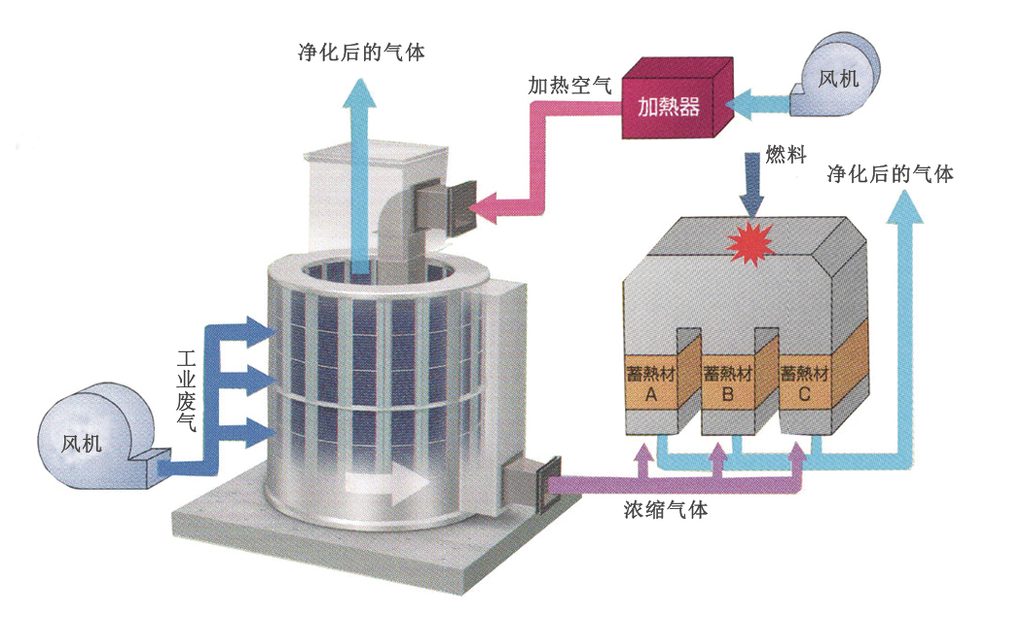
A zeolite rotor and RTO combination system generally consists of three main stages: adsorption, desorption and concentration, and thermal oxidation.
Stage 1: Adsorption of VOCs
Collected industrial exhaust passes through the adsorption zone of the zeolite rotor. VOC molecules are captured by the hydrophobic zeolite material, while the treated air exits the system.
The rotor continuously rotates, allowing different sections to move through the adsorption, desorption, and cooling zones. This enables continuous VOC concentration during operation.
Stage 2: Desorption and VOC Concentration
After adsorption, the rotor section moves into the desorption zone, where heated air releases the captured VOCs from the zeolite material.
The desorbed organic compounds are transferred into a smaller airflow, resulting in a more concentrated exhaust stream.
For the Pirelli tire project, the system was designed with a 30:1 concentration ratio. This process significantly reduces the airflow volume that needs to be handled by the downstream oxidation equipment.
Stage 3: Thermal Oxidation in the RTO
The concentrated exhaust is then directed into the Regenerative Thermal Oxidizer (RTO).
Inside the RTO, organic compounds are oxidized under controlled high-temperature conditions, primarily converting them into carbon dioxide and water.
The RTO uses ceramic heat-storage media to recover heat from the treated gas and preheat incoming exhaust. This heat recovery process helps reduce the system’s auxiliary fuel requirements.
By combining zeolite adsorption and concentration with RTO thermal oxidation, the system provides an integrated treatment route for large-volume, low-concentration VOC emissions.
4. Where Is Zeolite Rotor + RTO Technology Used?
Zeolite rotor concentration combined with RTO oxidation is commonly considered for industrial applications involving large airflow volumes and relatively low VOC concentrations.
Depending on exhaust composition and operating conditions, potential applications include:
- Tire Manufacturing: VOC emissions from relevant production processes.
- Automotive Manufacturing: Exhaust from painting, coating, and related production operations.
- Furniture Manufacturing: VOC emissions from coating and spraying processes.
- Electronics Manufacturing: Organic exhaust from selected cleaning, coating, and production processes.
- Printing and Packaging: Solvent-containing exhaust from printing and laminating operations.
The appropriate treatment process depends on factors such as VOC composition, inlet concentration, temperature, humidity, particulate matter, and required emission limits. Engineering evaluation is essential before equipment selection.
5. CADAIR: Industrial VOC Treatment Equipment Manufacturer and Solution Provider
CADAIR is a China-based manufacturer and solution provider specializing in industrial VOC treatment systems and air pollution control equipment. Founded in 2014, the company operates three production bases and two R&D centers.
CADAIR provides equipment and integrated solutions for a range of industrial exhaust treatment applications.
Its main product portfolio includes:
- Zeolite Rotor Concentrator
- Regenerative Thermal Oxidizer (RTO)
- Direct-Fired Thermal Oxidizer (DFTO)
- Catalytic Oxidizer (CO)
- Regenerative Catalytic Oxidizer (RCO)
- Organic Solvent Recovery Systems
With experience across multiple industrial sectors, CADAIR develops customized VOC treatment solutions based on exhaust characteristics, airflow requirements, process conditions, and project-specific emission requirements.
From zeolite rotor concentration to thermal and catalytic oxidation, CADAIR provides integrated technologies for industrial VOC abatement.

6. Frequently Asked Questions About VOC Treatment in Tire Manufacturing
Q1: Why is VOC treatment necessary in tire manufacturing?
Tire manufacturing involves various materials, chemical additives, and production processes that may generate VOC-containing exhaust. Appropriate collection and treatment systems are selected according to exhaust composition, emission characteristics, and applicable environmental requirements.
Q2: Why are zeolite rotor concentrators suitable for large-volume, low-concentration VOC exhaust?
A zeolite rotor adsorbs VOCs from a large airflow and releases them into a smaller desorption airflow. This concentrates the organic compounds and reduces the volume of gas requiring downstream oxidation, subject to the characteristics of the exhaust stream.
Q3: Why combine a zeolite rotor with an RTO?
The zeolite rotor performs VOC adsorption and concentration, while the RTO oxidizes the concentrated exhaust. Combining the two technologies enables an integrated treatment process for suitable large-volume, low-concentration VOC applications.
Q4: What concentration ratio can a zeolite rotor system achieve?
The concentration ratio depends on VOC composition, inlet concentration, airflow, rotor material, and operating conditions. The appropriate ratio should be determined through process evaluation and system design. The CADAIR Pirelli tire project adopted a designed concentration ratio of 30:1.
Q5: Does CADAIR provide integrated zeolite rotor and RTO systems?
Yes. CADAIR provides zeolite rotor concentrators, RTO systems, and associated pretreatment equipment. System configurations are developed according to exhaust characteristics, airflow requirements, site conditions, and applicable emission standards.
Looking for a VOC treatment solution for tire manufacturing or other industrial applications?
Contact CADAIR to discuss your project requirements.
Website: www.cadair.net
Email: admin@cadair.net