Standards are the foundation of industrial development and a reflection of an enterprise’s technical strength and social responsibility.
CADAIR Technology (Beijing) Co., Ltd. specializes in industrial waste gas treatment. Backed by strong technical expertise and extensive project experience, we have actively contributed to the development of multiple industry association standards. All standards we participated in are officially registered and publicly accessible on the National Group Standard Information Platform.
Through compliant and standardized technological solutions, CADAIR promotes the high-quality development of the environmental protection industry, reinforcing our leadership position in this specialized field.
Notably, our proprietary rotary zeolite concentration technology has been included in China’s National Catalogue of Key Environmental Protection Technologies and Equipment (Encouraged for Development), demonstrating strong national-level recognition of our technological capabilities.
As a high-tech enterprise dedicated to environmental governance technologies and solutions, CADAIR is committed to advancing industry progress through innovation. Drawing on practical insights and core technical parameters from over 1,000 domestic and international projects, we actively integrate real-world experience into standard development. In doing so, we help address gaps in technical specifications and provide clear guidance for industry advancement.
Below are the officially verified industry standards developed with CADAIR’s participation:
1. Technical Requirements for Rotary Zeolite Adsorption and Concentration Devices
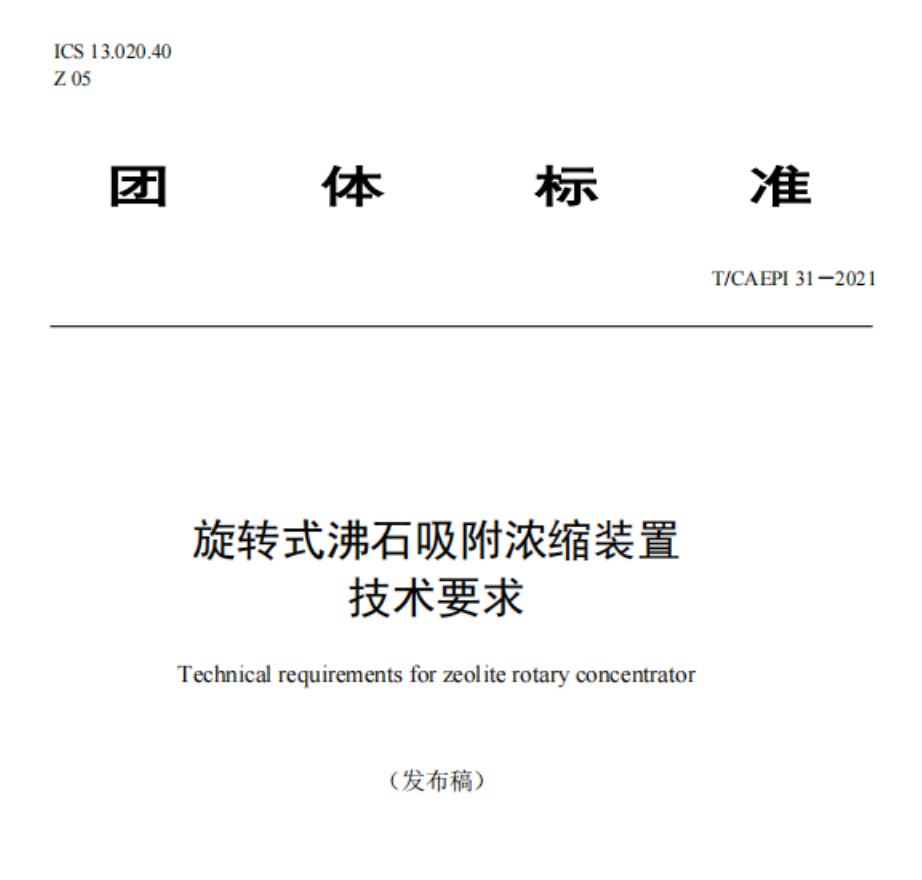
(Standard No.: T/CAEPI 31—2021)
Released on December 25, 2020 and implemented on May 1, 2021, this standard is administered by the China Association of Environmental Protection Industry (CAEPI). CADAIR served as a key drafting organization throughout its development.
The standard defines technical requirements, testing methods, as well as marking and packaging specifications for rotary zeolite adsorption and concentration equipment. It provides clear guidance for the standardized design, manufacturing, and application of systems used to treat low-concentration, high-volume organic emissions.
By promoting the standardization of zeolite adsorption technology, it contributes to the overall advancement of industry technical capabilities. Based on the technologies defined in this standard, CADAIR’s rotary zeolite concentration technology has been included in the national catalogue of key environmental protection equipment, establishing a recognized industry benchmark.
2. Technical Guidelines for Pollution Control in Municipal Solid Waste Incineration Plants – Odor Treatment
(Standard No.: T/ACEF 073—2023)
Released on May 9, 2023 and implemented on May 16, 2023, this standard is administered by the All-China Environment Federation (ACEF), with CADAIR as a key contributing organization.
As an important technical guideline for odor control in waste incineration facilities, this standard addresses critical gaps in the industry’s standardization framework. It specifies general requirements, design principles, operation and maintenance procedures, and monitoring criteria for odor pollution control.
The standard provides practical and scientifically grounded solutions for mitigating odor issues associated with waste incineration, improving environmental management efficiency and helping to resolve public concerns related to odor emissions.
3. Poppet Valves for Regenerative Incinerators
(Standard No.: T/QGCML 5057—2025)
Published on August 17, 2025 and implemented on September 1, 2025, this standard was developed with CADAIR as a major drafting participant, deeply involved throughout the research, drafting, and revision process.
As critical moving components in RTO/RCO systems, poppet valves directly impact system efficiency, operational safety, stability, and emission compliance. This standard systematically defines technical parameters, material selection, performance requirements, and testing methods.
It provides essential support for the standardized production and quality control of key industrial components, promoting the规范化 development of regenerative incineration technology.
4. General Safety Technical Requirements for Regenerative Thermal Combustion Equipment
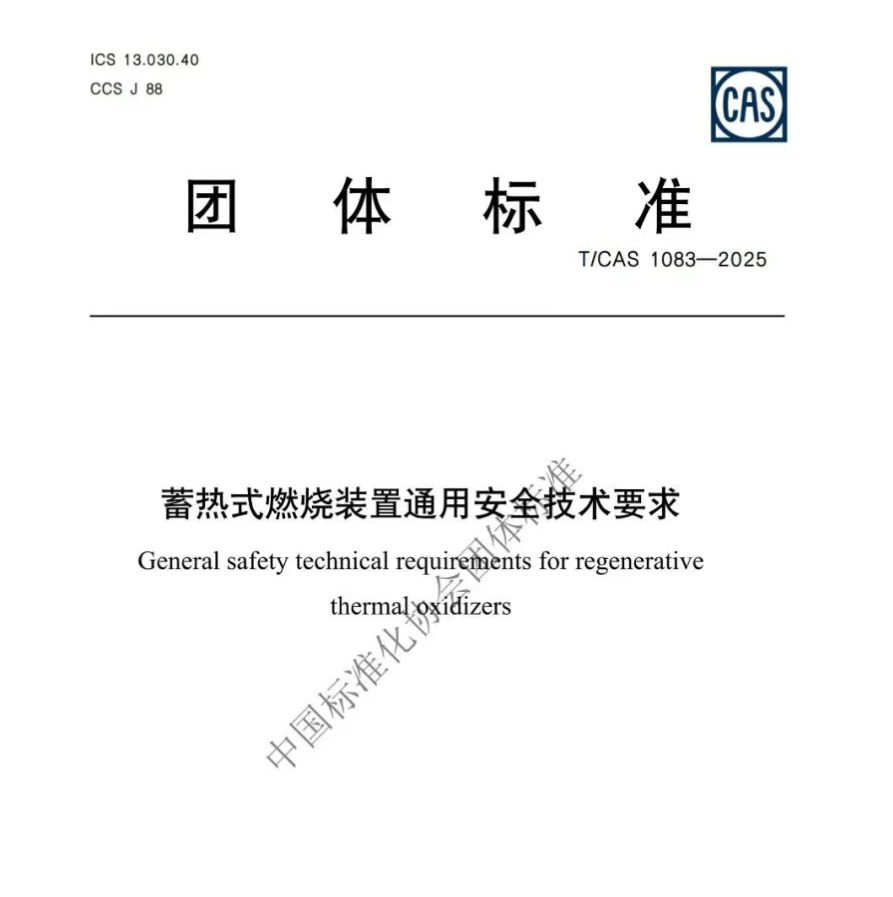
(Standard No.: T/CAS 1083-2025)
This standard has been officially released and implemented under the administration of the China Association for Standardization (CAS), with active participation from CADAIR in its drafting.
Focusing on key aspects of regenerative thermal combustion systems (RTO/TO), including safety design, operational procedures, inspection and acceptance, and emergency response, the standard establishes unified safety requirements.
It ensures the safe and stable operation of regenerative combustion equipment, addresses gaps in specialized safety standards, and further strengthens the standardization framework for industrial waste gas treatment.
From zeolite adsorption and concentration systems to odor control in waste incineration, and from core components of regenerative incinerators to comprehensive safety standards for thermal combustion systems, every standard developed with CADAIR’s participation is aligned with real industry challenges and market needs. These standards transform practical project experience into widely recognized technical specifications.
Participation in standard development not only demonstrates CADAIR’s technical expertise, but also reflects our commitment to industry responsibility and collaborative development across the value chain. The national recognition of our rotary zeolite concentration technology further highlights our innovation capabilities and industry influence.
Looking ahead, CADAIR will continue to strengthen its role as an industry leader. Leveraging the capabilities of three manufacturing bases and two R&D centers, we will sustain our focus on technological innovation and actively contribute to the development and improvement of more industry standards.
Through standardization, we aim to drive technological advancement, protect the ecological environment with professional solutions, and contribute to the high-quality development of the global industrial waste gas treatment industry.