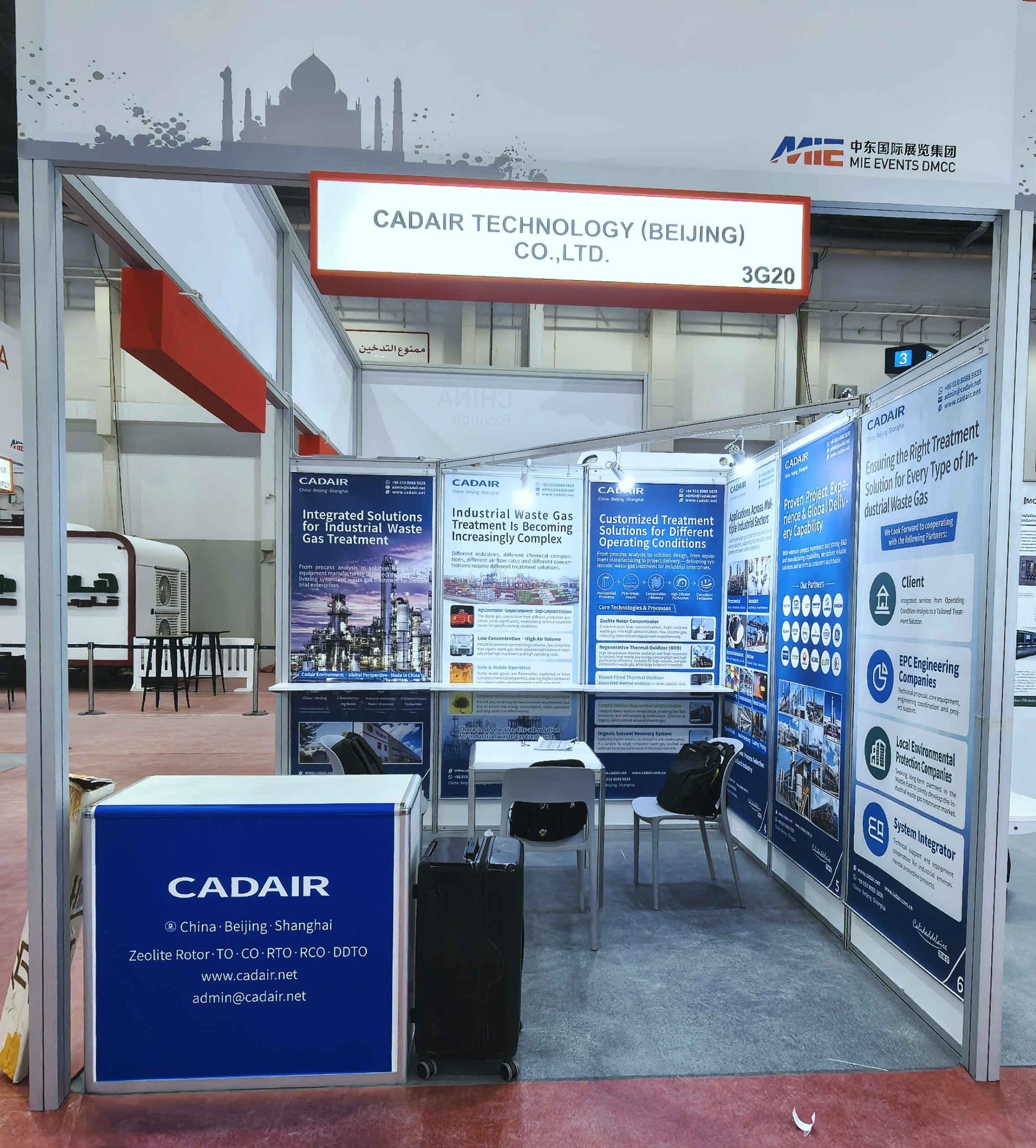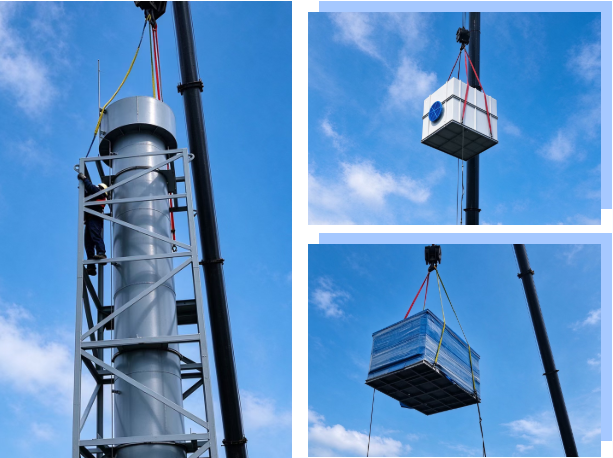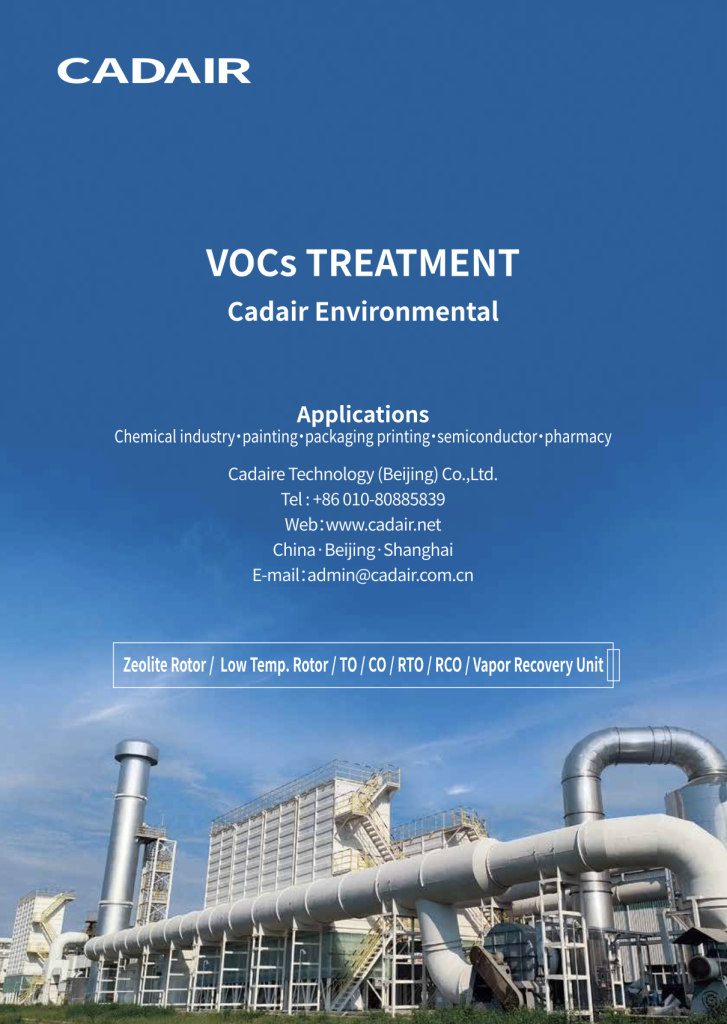
Professional VOC Emission Control Systems for Global Industries
CADAIR specializes in industrial VOCs (Volatile Organic Compounds) treatment solutions, providing energy-efficient, customized, and compliant systems for industries worldwide. With over 10 years of experience and 1,300+ successful installations, we deliver reliable VOC control technologies including RTO, RCO, zeolite rotor systems, and solvent recovery solutions.
Frequently Asked Questions (FAQ)
1. What VOC Components Can CADAIR VOC Treatment Equipment Handle?
CADAIR VOC treatment systems are designed to handle a wide range of industrial volatile organic compounds (VOCs), widely used in coating, printing, chemical, electronics, pharmaceutical, and manufacturing industries.
Applicable VOC Types
Suitable for organic solvents with boiling points between 40°C–200°C, including:
Aromatic Hydrocarbons
- Benzene
- Toluene
- Xylene
- Ethylbenzene
- Styrene (requires special design considerations)
Esters
- Ethyl acetate
- Butyl acetate
- N-propyl acetate
Ketones
- Acetone
- MEK (Methyl Ethyl Ketone)
- MIBK (Methyl Isobutyl Ketone)
- Cyclohexanone
Alcohols
- IPA (Isopropyl Alcohol)
- Ethanol
- Butanol
Other VOCs
- N-hexane
- Propylene glycol methyl ether
- Ether-based organic exhaust gases
Substances Requiring Special Attention
Limited Treatment Efficiency
- Formaldehyde
- Certain mercaptans and sulfides
Not Recommended
- Hydrogen sulfide
- Carbon disulfide
- Inorganic acid gases
Require Special Engineering Design
- Easily polymerized olefins and alkynes
- Styrene
- PMMA and similar compounds in UV coatings
For complex exhaust compositions, we recommend providing a gas analysis report for professional engineering evaluation.
2. Which Industries Are Suitable for CADAIR VOC Treatment Systems?
CADAIR VOC solutions are widely applied across various industries, including:
- Aerospace & Aircraft Manufacturing
- Shipbuilding
- Automotive Manufacturing
- Container Manufacturing
- Semiconductor / Electronics / 3C Industry
- Chemical & Petrochemical Industry
- Pharmaceutical Industry
- Printing & Packaging
- Paints, Inks & Adhesives
- Furniture Coating
- Rubber & Tire Industry
- Carbon Fiber Manufacturing
- Coking Industry
- Coal Chemical Industry
- Hazardous Waste Treatment
We provide customized VOC treatment solutions tailored to different production lines and industrial processes.
3. What VOC Emission Standards Can CADAIR Systems Achieve?
CADAIR provides customized solutions designed to meet national regulations, local standards, and industry-specific environmental requirements.
Typical Compliance Performance
Aerospace Manufacturing Projects
- Emission concentration ≤ 20 mg/m³
Chemical Industry / RTO Projects
- Emission concentration < 60 mg/m³
Shipbuilding Industry
- Benzene < 1 mg/m³
- Toluene < 3 mg/m³
- Xylene < 25 mg/m³
- NMHC (Non-Methane Hydrocarbons) < 50 mg/m³
Special Pollutants
- Dichloromethane < 15 mg/m³
- Methanol < 50 mg/m³
System design is based on:
- Local environmental regulations
- VOC composition
- Airflow volume
- VOC concentration
- Emission limits
We support Chinese national standards, local regulations, and international environmental compliance requirements.
4. What Is the VOC Treatment Efficiency?
Different technologies provide different purification efficiencies:
| Technology | Treatment Efficiency |
|---|---|
| RTO (Regenerative Thermal Oxidizer) | ≥99% |
| RCO (Regenerative Catalytic Oxidizer) | ≥98% |
| Zeolite Rotor Concentrator | 90%–99% |
| K-Filter Solvent Recovery System | ≥95% |
| Overall System Efficiency | Up to 99.5% |
Actual efficiency depends on VOC concentration, temperature, humidity, and overall system design.
5. How to Choose the Right VOC Treatment Technology?
Technology selection depends on:
- VOC concentration
- Airflow volume
- Gas composition
- Temperature and humidity
- Safety requirements
- Energy consumption and operating cost
Recommended Selection Logic
High Concentration + Low Airflow
Suitable technologies:
- RTO
- TO
- CO
- RCO
Low Concentration + High Airflow
Suitable technologies:
- Zeolite rotor concentration + RTO
- Adsorption concentration combustion systems
Solvent Recovery Applications
Recommended:
- K-Filter solvent recovery systems
Polymerizable VOCs
Require special engineering design. Zeolite rotors should be carefully evaluated.
Information Required for Quotation
Please provide:
- Airflow volume (m³/h or Nm³/h)
- VOC composition and ratio
- Concentration range
- Temperature and humidity
- Emission standards
The more complete the information, the more accurate the solution.
6. What Is the Difference Between RTO and RCO?
| Comparison | RTO | RCO |
|---|---|---|
| Oxidation Temperature | Around 760°C | 300–550°C |
| Thermal Efficiency | >95% | >95% |
| Removal Efficiency | 99% | 98% |
| Energy Consumption | Low | Lower |
| Open Flame | Yes | No |
| Maintenance Cost | Lower | Higher |
| Applicability | Broad | Requires suitable gas composition |
Selection Recommendations
- Complex exhaust composition → Choose RTO
- Lower energy consumption priority → Choose RCO
- Catalyst poisoning substances present → Recommend RTO
7. Are CADAIR VOC Systems Energy Efficient?
Yes. CADAIR focuses on low-energy VOC treatment technologies.
Energy-Saving Advantages
Low-Temperature Zeolite Rotor Technology
- Approximately 40% energy savings
- Approximately 27% lower investment cost
RTO/RCO Regenerative Technology
- Thermal efficiency >95%
- Self-sustaining thermal balance operation
Internal Circulation + RTO Solutions
Especially suitable for the electronics and 3C industry, significantly reducing airflow demand and operating costs.
8. Do You Provide Overseas Installation and Commissioning Services?
Yes. CADAIR provides worldwide project support.
Overseas Services Include
- Installation guidance
- On-site commissioning
- Operator training
- Remote technical support
- After-sales inspections
Our professional international engineering team supports global project implementation.
9. What Information Is Required for Equipment Quotation?
To provide an accurate quotation, please provide:
- Airflow volume (m³/h or Nm³/h)
- VOC composition and proportion
- VOC concentration range
- Temperature and humidity
- Emission standard requirements
- Explosion-proof requirements
- Solvent recovery requirements
More detailed information enables more accurate system design.
10. What Is the Equipment Delivery Time?
Delivery time depends on:
- Process complexity
- Equipment specifications
- Customization requirements
- Current production schedule
Large customized projects generally require longer lead times than standard equipment. Please contact our engineering team for detailed evaluation.
11. What After-Sales Services Does CADAIR Provide?
CADAIR provides long-term after-sales support and lifetime service.
After-Sales Services Include
- Regular inspections
- Equipment maintenance
- System training
- Process optimization
- Solvent replacement upgrade recommendations
- Laboratory analysis support
- Rapid-response technical support
We believe that “real service begins after delivery.”
12. Can the System Handle Flammable and Explosive Exhaust Gases?
Yes.
CADAIR systems include comprehensive explosion-proof safety designs, including:
- Flame arresters
- Explosion relief doors
- Rupture discs
- Alarm interlock systems
- Emergency bypass systems
- Multiple safety control systems
Suitable for:
- Flammable VOC exhaust gases
- Explosion-proof areas
- Petrochemical and coking industries
Customized explosion-proof ratings are also available.
13. Does CADAIR Support Customized VOC Treatment Systems?
Yes. We provide highly customized engineering solutions.
Customizable Features
- Plant layout
- Airflow and concentration
- Exhaust gas characteristics
- Energy-saving requirements
- Local environmental regulations
- Project budget
Available systems include:
- Zeolite rotor systems
- RTO/RCO systems
- Pretreatment systems
- Solvent recovery systems
- Turnkey engineering projects
14. Why Choose CADAIR VOC Treatment Solutions?
Extensive Industry Experience
- 10+ years of VOC treatment expertise
- 1,300+ equipment installations worldwide
Comprehensive Technology Portfolio
Including:
- RTO
- RCO
- CO
- Zeolite rotor systems
- K-Filter solvent recovery systems
Industry-Leading Energy-Saving Technologies
Low-temperature rotor technology delivers approximately 40% energy savings.
Global Service Capability
Supporting projects across multiple countries and regions.
Complete After-Sales Service System
Lifetime support with rapid-response service.
Proven Large-Scale Industry References
Serving leading companies in:
- Petrochemical industry
- Aerospace manufacturing
- Shipbuilding
- Electronics & semiconductor industries
Comprehensive Certifications & Qualifications
Holding more than 260 certifications, honors, and nationally recognized qualifications.
Contact CADAIR
Looking for a customized VOC treatment solution for your factory or industrial project?
Contact CADAIR today for:
- Technical consultation
- VOC system design
- Energy-saving solutions
- Overseas project support
- Customized quotations
CADAIR — Professional Industrial VOC Treatment Solutions Provider.