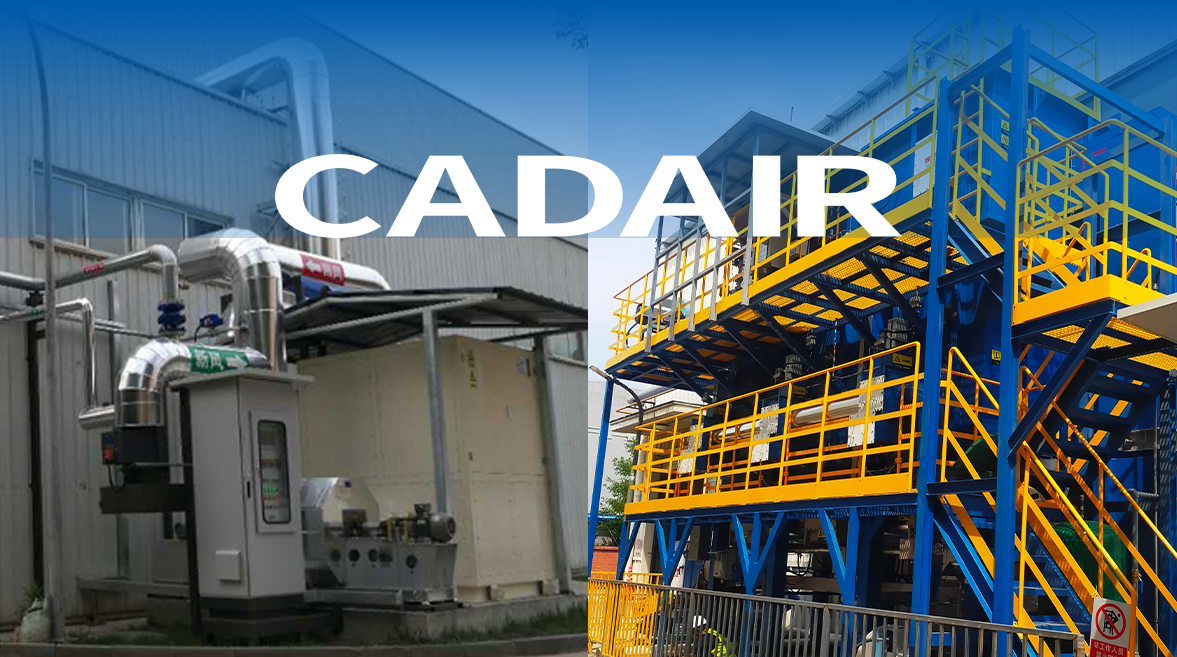
The advanced materials industry features unique production processes, with a wide range of solvents and highly variable exhaust gas compositions generated during manufacturing. Complex operating conditions — including intermittent emissions, corrosive media, and silicone precipitation — are prevalent across the sector, imposing extremely stringent requirements on the long-term operational stability, pretreatment compatibility, and safety & automatic control systems of VOCs abatement equipment.
CADAIR has been deeply engaged in comprehensive industrial VOCs treatment for years. With customized process solutions, reliable equipment performance, and full-cycle closed-loop services, we have earned long-term trust from numerous industrial enterprises. The two cross-cycle contracted projects with Magnequench serve as strong testament to CADAIR’s solid technical strength and outstanding market reputation.
Client Profile: A Leading Advanced Materials Enterprise
Our client, Magnequench, is a global leader in high-performance bonded rare earth magnetic materials. With years of industry expertise and proprietary advanced melt-spinning core technology, the company focuses on the R&D and production of polymer magnetic composite materials and bonded NdFeB magnets.
Its products are widely deployed in core sectors including automotive precision motors, home appliances, industrial automation, and high-end electronic information. Backed by cutting-edge R&D capabilities, consistent product quality, and a standardized production system, Magnequench holds a core position in the industry.
As a national high-tech enterprise with continuously expanding production scale and complex, variable operating conditions across production lines, Magnequench maintains strict internal control and environmental protection standards for the safety, operational stability, and long-term durability of on-site VOCs exhaust treatment systems.
To align with capacity upgrades and evolving operating conditions, the company partnered with CADAIR in 2017 and 2022 respectively, completing the construction of exhaust treatment systems for both old and new plants under different working scenarios. Two collaborations within five years and repeat purchase from the same enterprise fully validate the long-term stability and technical adaptability of CADAIR’s equipment.
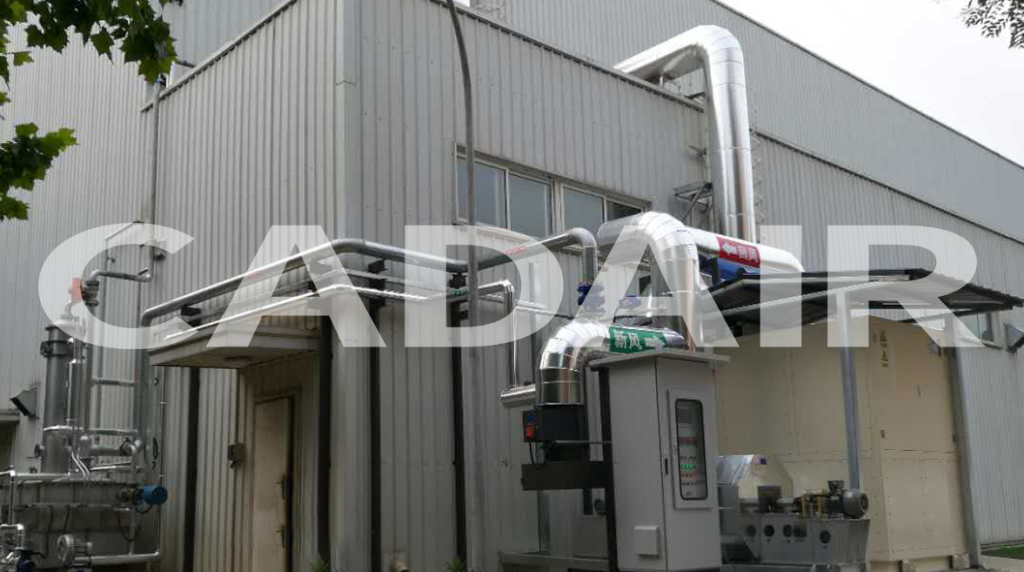
Phase I Cooperation Project
- Treatment airflow: 3,000 m³/h
- Exhaust composition: Acetone
- Treatment process: Catalytic Oxidation (CO)
The enterprise’s production exhaust is dominated by single-component acetone, a type of conventional medium-low concentration VOCs. Taking into account multiple factors including on-site workshop installation space, O&M costs, and environmental emission standards, CADAIR customized a CO catalytic combustion solution for the project.
This process achieves efficient oxidative decomposition of acetone exhaust at low temperatures, with advantages of high heat recovery efficiency, low energy consumption, and a small footprint, perfectly adapting to on-site workshop conditions.
Since commissioning, the equipment has operated stably year-round, with consistent and compliant exhaust purification performance, fully supporting the enterprise’s safe and regulatory-compliant production. Its excellent performance laid a solid foundation of trust for subsequent in-depth cooperation amid production expansion.
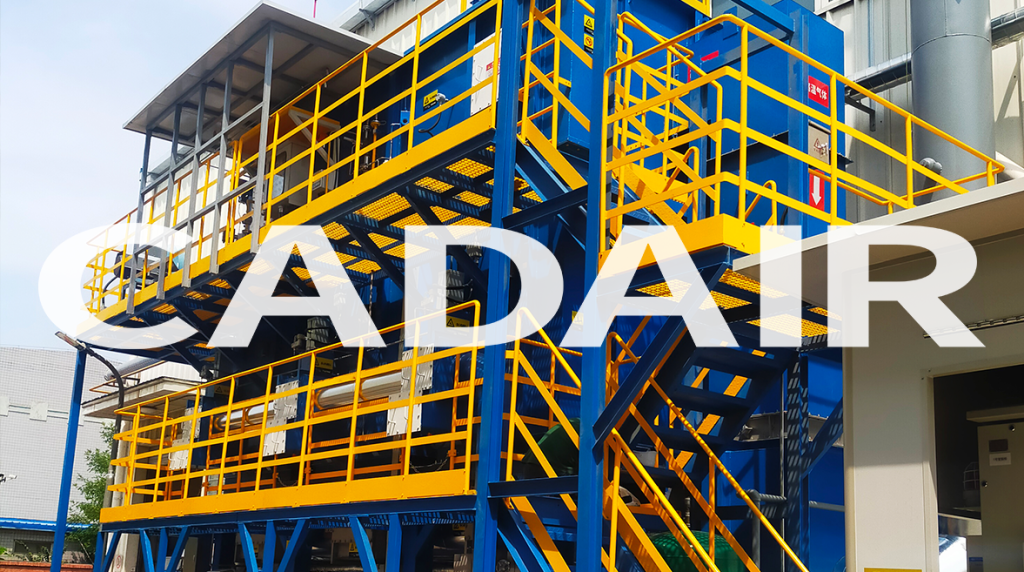
Phase II Capacity Expansion Project
- Treatment airflow: 7,000 m³/h
- Exhaust composition: Isopropyl alcohol (IPA), intermittent trace phosphoric acid, silicone
- Treatment process: Three-bed Regenerative Thermal Oxidizer (RTO)
With the enterprise’s substantial capacity expansion and comprehensive upgrading of production line processes, exhaust conditions have grown more complex. The exhaust has shifted from single-component acetone to multi-component mixed waste gas, including isopropyl alcohol organic solvent, accompanied by intermittent trace acidic phosphoric acid media and silicone components.
Among these, silicone decomposes at high temperatures to produce silica dust, which can easily cause clogging of the equipment’s regenerative media. Trace phosphoric acid is highly corrosive. Combined with the enterprise’s intermittent production mode and large fluctuations in exhaust concentration, conventional treatment equipment is highly prone to malfunction, clogging, and corrosion, and cannot meet the demand for long-term stable operation.
Project Value: Time Attests to Quality, Repeat Purchase Proves Stability
From 2017 to 2022, two contracts with the same enterprise over five years are by no means a coincidence — they represent the client’s high recognition of CADAIR’s technical strength, equipment stability, and engineering service capabilities.
From conventional single-component exhaust to highly complex mixed waste gas, from small-scale production to large-scale capacity expansion, the enterprise has consistently chosen CADAIR as its operating conditions continue to upgrade. This fully demonstrates that CADAIR’s equipment can adapt to the enterprise’s full-cycle production and development needs, and withstand the dual test of time and complex operating conditions.
The polymer magnetic materials and advanced materials industries face prominent pain points in exhaust treatment: complex components, corrosive media, easy scaling, and highly variable operating conditions make it difficult for standardized equipment to operate reliably over the long term.
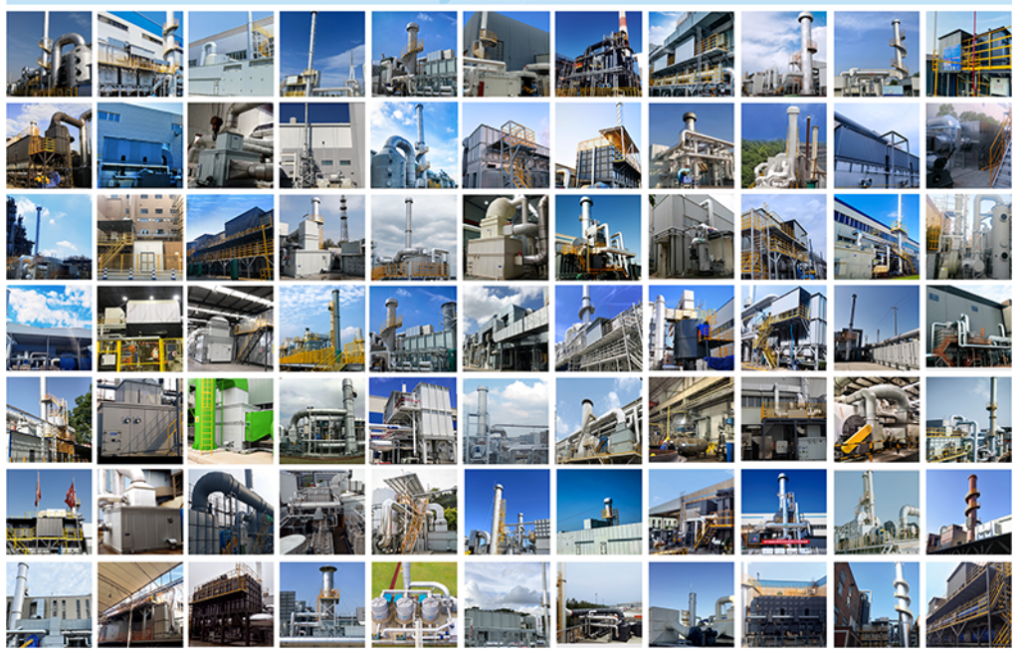
CADAIR is deeply rooted in industry segments, with solutions precisely tailored to the operating conditions of advanced materials production. Leveraging diversified core processes including CO catalytic combustion and three-bed RTO, we deliver customized treatment solutions based on actual needs, balancing safety compliance, long-term stability, and low O&M costs to accompany enterprises throughout their capacity upgrade and green development journey.
Going forward, CADAIR will continue to deepen its presence in sectors including advanced materials, fine chemicals, and polymer materials. We will continuously optimize our comprehensive VOCs treatment solutions, and underpin the green and low-carbon transformation and upgrading of industrial enterprises with more stable equipment, more professional technology, and more comprehensive services.