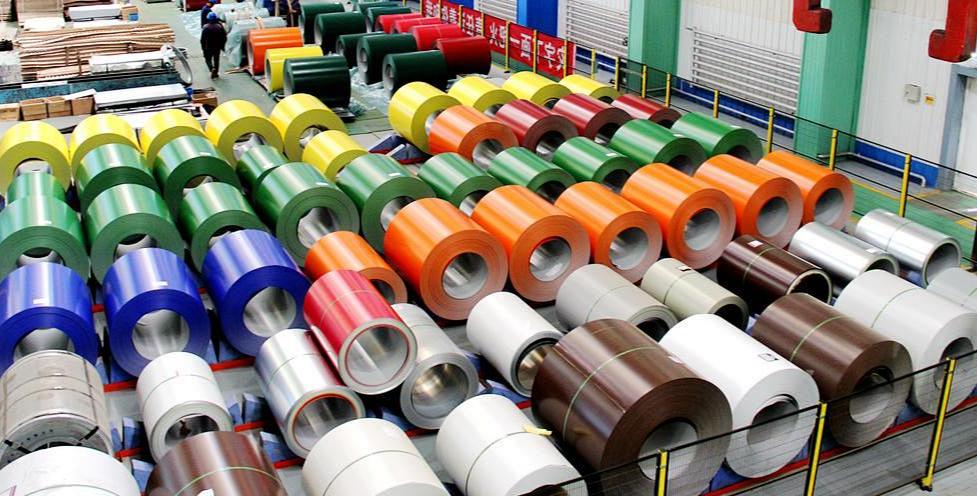
Driven by downstream demands for building envelopes, photovoltaic BIPV, home‑appliance panels and other sectors, China’s color‑coated coil industry keeps expanding. Continuous two‑coating & two‑baking production lines have become mainstream. Waste gas from color‑coating lines mainly originates from the coating section and curing oven. Characterized by drastically different working conditions, complex components and strict requirements for non‑stop production, it represents a typical challenging scenario for industrial VOCs treatment.
With the enforcement of local ultra‑low‑emission policies, performance grading and pilot VOCs environmental protection tax, color‑coating enterprises no longer only require “stable compliance with emission standards” when selecting suppliers and equipment for color‑coated‑plate waste‑gas treatment. Higher expectations are placed on anti‑coking reliability, waste‑heat recovery value and full‑lifecycle operation‑maintenance costs. As equipment service provider deeply engaged in industrial VOCs abatement, CADAIR has accumulated abundant benchmark projects in the color‑coated‑coil sector, covering state‑owned steel enterprises, listed new‑material manufacturers and regional leading color‑coating plants. Its process routes are fully adaptable to waste‑gas conditions of different air volumes.
I. Five Core Pain Points in Waste‑Gas Treatment for Color‑Coated Coils
Pain Point 1: Significant Disparity Between Two Streams of Waste Gas, Requiring Differentiated Strategies
The coating section generates high‑air‑volume, low‑concentration VOC‑laden waste gas dominated by benzene series, alcohols, esters and ketones. The curing oven produces low‑air‑volume, high‑concentration waste gas containing high‑temperature volatile resin and viscous components. Such contaminants easily cause coking and blockage of RTO regenerators, resulting in equipment failure and excessive emissions.
Pain Point 2: Rigorous Reliability Requirements for Continuous Production
Most color‑coating lines run 7×24 hours non‑stop. Shutdown and maintenance of waste‑gas treatment equipment directly bring production‑line downtime losses. Therefore, extremely high stability is demanded for pretreatment systems, incineration bodies, valve interlocks and automatic control systems.
Pain Point 3: Frequent Color‑Change Operations Trigger Fluctuations in Waste‑Gas Composition
When switching coating systems for different‑specification products, components such as toluene, xylene, methyl ethyl ketone and cyclohexanone dynamically vary. Treatment systems must possess strong adaptability to working conditions to maintain stable purification efficiency.
Pain Point 4: Multiple Constraints for Revamping Old Plants
Existing color‑coating production lines generally suffer from limited plant space and difficult pipeline reconstruction. Upgrading waste‑gas equipment needs to balance on‑site layout and production‑stop time windows.
Pain Point 5: Strong Demands for Energy‑Saving & Carbon‑Reduction
Waste‑gas treatment accounts for considerable energy consumption under continuous‑production mode. Enterprises generally expect waste‑heat recovery to reuse heat generated by incineration for production‑line processes and cut comprehensive plant energy consumption.
II. CADAIR Benchmark Implementation Projects in the Color‑Coating Industry
| Benchmark Project | Location | Treatment Air Volume | Main Waste‑Gas Components | Treatment Process |
| Angang Color‑Coating Plant | Anshan, Liaoning | 35,000 Nm³/h × 2 sets | Ethyl acetate, trimethylbenzene, xylene, etc. | Zeolite Rotor Concentrator + TO |
| Hua Guan New Materials Co., Ltd. | Jiangmen, Guangdong | 35,000 m³/h, 45,000 m³/h, total 2 sets | Butanol, trimethylbenzene, xylene, etc. | 3‑chamber RTO × 2 sets |
| Qianghuang New Materials Co., Ltd. | Shaoxing, Zhejiang | 150,000 m³/h | Toluene, xylene, ethyl acetate, etc. | Zeolite Rotor Concentrator |
| Shandong Zhongjin Plate Co., Ltd. | Binzhou, Shandong | 30,000 m³/h | Methyl ethyl ketone, cyclohexanone, PMA, etc. | Zeolite Rotor Concentrator + RTO |
| Kehong Color‑Coating | Suzhou, Jiangsu | 21,000 Nm³/h | Toluene, xylene, trimethylbenzene, etc. | Zeolite Rotor Concentrator |
| … | … | … | … | … |
Project practices prove there exists no universal standard solution for the color‑coating industry. Process routes shall be customized according to air volume, concentration and impurity characteristics of waste gas from coating and curing sections. Revamping of old plants also calls for tailored design considering site conditions and production rhythm.
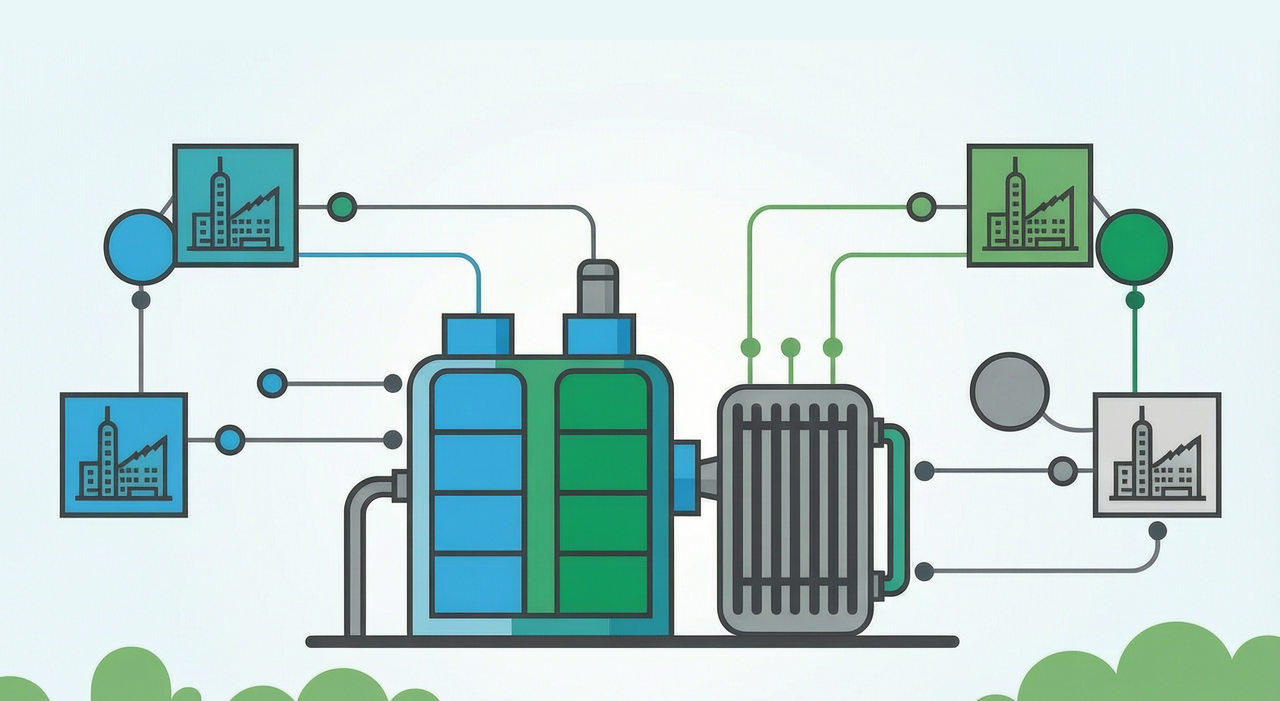
III. Reference for Process Selection of Color‑Coated‑Plate Waste‑Gas Treatment
Many enterprises tend to copy peer solutions without evaluating their own actual working conditions when purchasing waste‑gas‑treatment equipment. Drawing on extensive project experience, CADAIR puts forward general selection guidelines below:
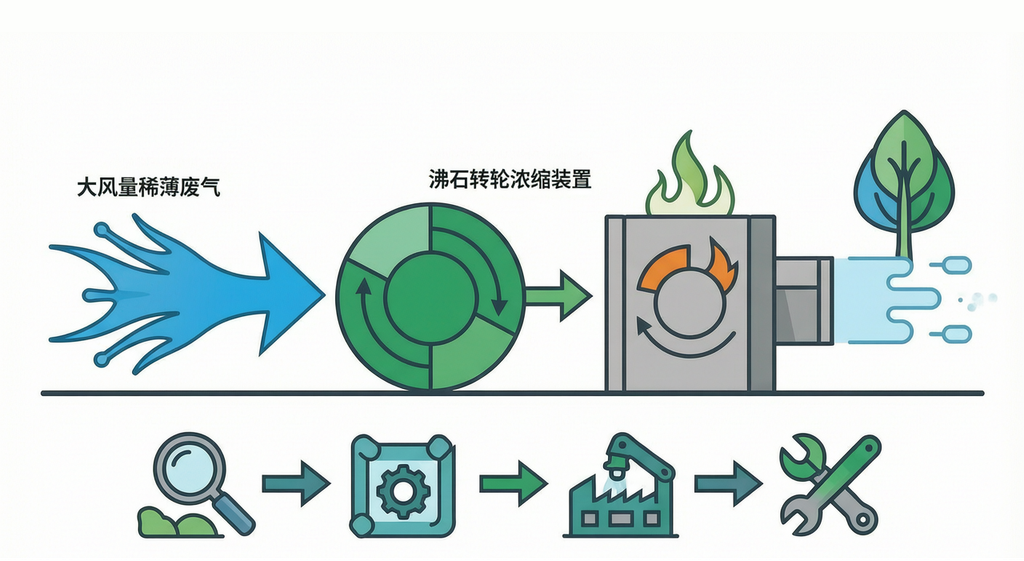
- High‑air‑volume & low‑concentration waste gas from coating sections: Zeolite rotor concentration is preferred. It concentrates large‑flow waste gas into low‑air‑volume, high‑concentration streams, downsizing incineration equipment and reducing natural‑gas consumption.
- High‑concentration & high‑viscosity waste gas from curing ovens: Evaluate tar and resin content first, strengthen front‑end pre‑filtration. RTO / TO processes are recommended with structural design for coking & blockage prevention.
- Combined waste gas from coating + curing: Assess separate collection & independent treatment or mixed centralized processing. Make final decisions after comprehensive calculation of air volume, concentration and impurity levels.
- Revamping projects for old production lines: Prioritize review of existing gas‑collection pipelines and workshop space, evaluate equipment access conditions, plan phased implementation paths to minimize production‑stop losses.
- Tap potential of waste‑heat recovery: High‑temperature flue gas generated by RTO incineration on continuous color‑coating lines can match thermal demands of production lines. Waste‑heat recovery realizes compliant treatment while lowering overall plant energy costs.
IV. CADAIR Solution Capabilities for the Color‑Coated‑Coil Industry
Targeting complex working conditions of color‑coated‑coil production, CADAIR delivers one‑stop VOC‑treatment services including site survey, working‑condition assessment, customized solution design, equipment manufacturing, installation & commissioning and full‑cycle operation‑maintenance.
- Comprehensive process portfolio: Complete sets of Zeolite Rotor Concentrator, Zeolite‑RTO, Zeolite‑TO and 3‑chamber RTO equipment, flexibly matched based on air volume, waste‑gas components and budget.
- Suitability for new‑build and revamping scenarios: Customized “one‑plant‑one‑policy” solutions taking full account of plant‑space constraints and revamping with minimum production shutdown.
- Enhanced pretreatment design: Mitigate risks of rotor clogging and RTO coking for high‑viscosity solvent‑laden waste gas in color‑coating processes and improve long‑term equipment operational stability.
- Support for waste‑heat recovery: Unlock energy‑saving potential for continuous‑production lines and help enterprises cut costs and reduce carbon emissions.
- AI intelligent control system: Dynamically adjust operating parameters in response to waste‑gas fluctuations caused by color‑switching to lower energy consumption.
- Nationwide service network: Proven project delivery and operation‑maintenance capabilities serving state‑owned steel enterprises, listed new‑material firms and leading regional color‑coating manufacturers.
V. Conclusion
For VOCs treatment of color‑coated coils, the core is not high nominal parameters on equipment datasheets, but solutions matching real production conditions to achieve long‑term emission compliance and controllable full‑lifecycle O&M costs. When sourcing suppliers and complete waste‑gas‑treatment equipment, enterprises are advised to prioritize verification of the vendor’s real‑world industry references and customize treatment solutions in accordance with production‑line air volume, waste‑gas composition and production patterns.
CADAIR keeps deepening its footprint in VOCs abatement for color‑coating and general industrial coating sectors and provides free working‑condition assessment and technical exchanges for color‑coating manufacturers.