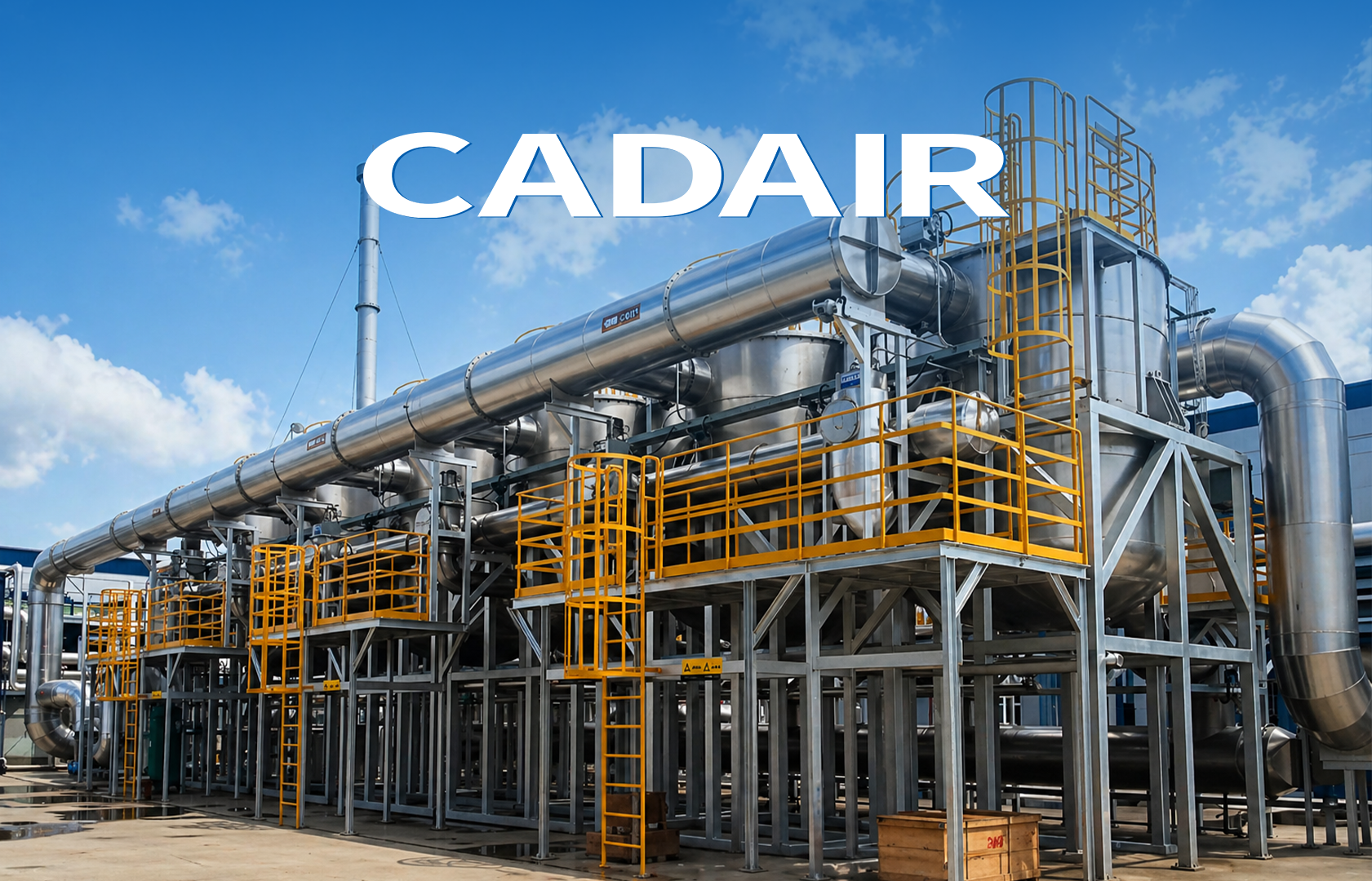
(CADAIR Carbon Fiber Adsorption + Concentration System)
🔹 Quick Answer
CADAIR’s dichloromethane (DCM) recovery system uses carbon fiber adsorption combined with steam desorption and condensation to efficiently recover high-purity solvent, while low-concentration tail gas is further treated through concentration and scrubbing systems to ensure compliant emissions.
1. What Makes CADAIR’s DCM Recovery Process Different?
Unlike conventional systems that rely only on condensation or activated carbon, CADAIR uses a dual-stage carbon fiber adsorption + recovery + polishing system.
👉 This allows:
- High recovery efficiency
- Stable operation
- Simultaneous recovery + compliance
2. Process Flow Overview
Step 1: Pre-treatment System
Cooling + Dust Removal
- Reduces gas temperature
- Removes particulates
- Protects downstream adsorption units
Step 2: Carbon Fiber Adsorption (KF-K FILTER)
Core Function:
- Adsorbs most of the dichloromethane (DCM)
👉 Key advantage:
- Carbon fiber has higher adsorption efficiency than traditional activated carbon
- Faster adsorption/desorption cycles
3. High-Concentration DCM Recovery Path
After adsorption, the system separates into two paths.
🔹 Path A: DCM Recovery
Steam Desorption + Condensation Separation
- Steam desorbs DCM from carbon fiber
- Condensation converts vapor → liquid
- Achieves solvent recovery
👉 Result:
Recovered dichloromethane can be reused
4. Low-Concentration Tail Gas Treatment
🔹 Path B: Tail Gas Handling
Low-concentration gas enters:
Carbon Fiber Rotor Concentration (KB Module)
- Further concentrates residual VOCs
- Converts large airflow → smaller high-concentration stream
Final Step: Two-Stage Scrubber
- Removes remaining pollutants (e.g., methanol, residual VOCs)
- Ensures emission compliance
👉 Final output:
Clean gas meets emission standards
5. Why This System Works Better Than Traditional Solutions
Traditional Problems:
- Low recovery efficiency
- High energy consumption
- Poor stability
CADAIR Advantages:
1. High Recovery Efficiency
- Most DCM captured in first adsorption stage
2. Dual-Path Design
- Recovery + emission treatment simultaneously
3. Carbon Fiber Technology
- Faster regeneration
- Higher adsorption capacity
- Lower pressure drop
4. Energy Optimization
- Steam desorption + concentration reduces overall energy cost
6. Typical Application Scenarios
This system is widely used in:
- Optical film production (TAC film)
- Lithium battery separator coating
- Pharmaceutical solvent recovery
- Chemical processing plants
7. How to Choose This System?
| Condition | Recommendation |
|---|---|
| High-value solvent (DCM) | Use recovery system |
| Medium/high concentration | Carbon fiber adsorption + recovery |
| Large airflow | Add rotor concentration |
| Strict emission standards | Add multi-stage scrubbing |
8. Frequently Asked Questions
Why use carbon fiber instead of activated carbon?
Carbon fiber offers:
- Higher adsorption efficiency
- Faster desorption
- Longer service life
Can this system achieve both recovery and compliance?
Yes.
👉 That is the core advantage of CADAIR’s dual-path design.
What happens to low-concentration exhaust?
It is:
- Concentrated
- Scrubbed
- Discharged safely
Is this system suitable for continuous operation?
Yes.
It is designed for stable, long-term industrial use.
9. Key Takeaway
CADAIR’s DCM recovery system is not just a treatment system—it is a closed-loop recovery solution.
👉 Core structure:
Pre-treatment → Carbon Fiber Adsorption →
(Recovery via Desorption + Condensation) +
(Tail Gas via Concentration + Scrubbing)