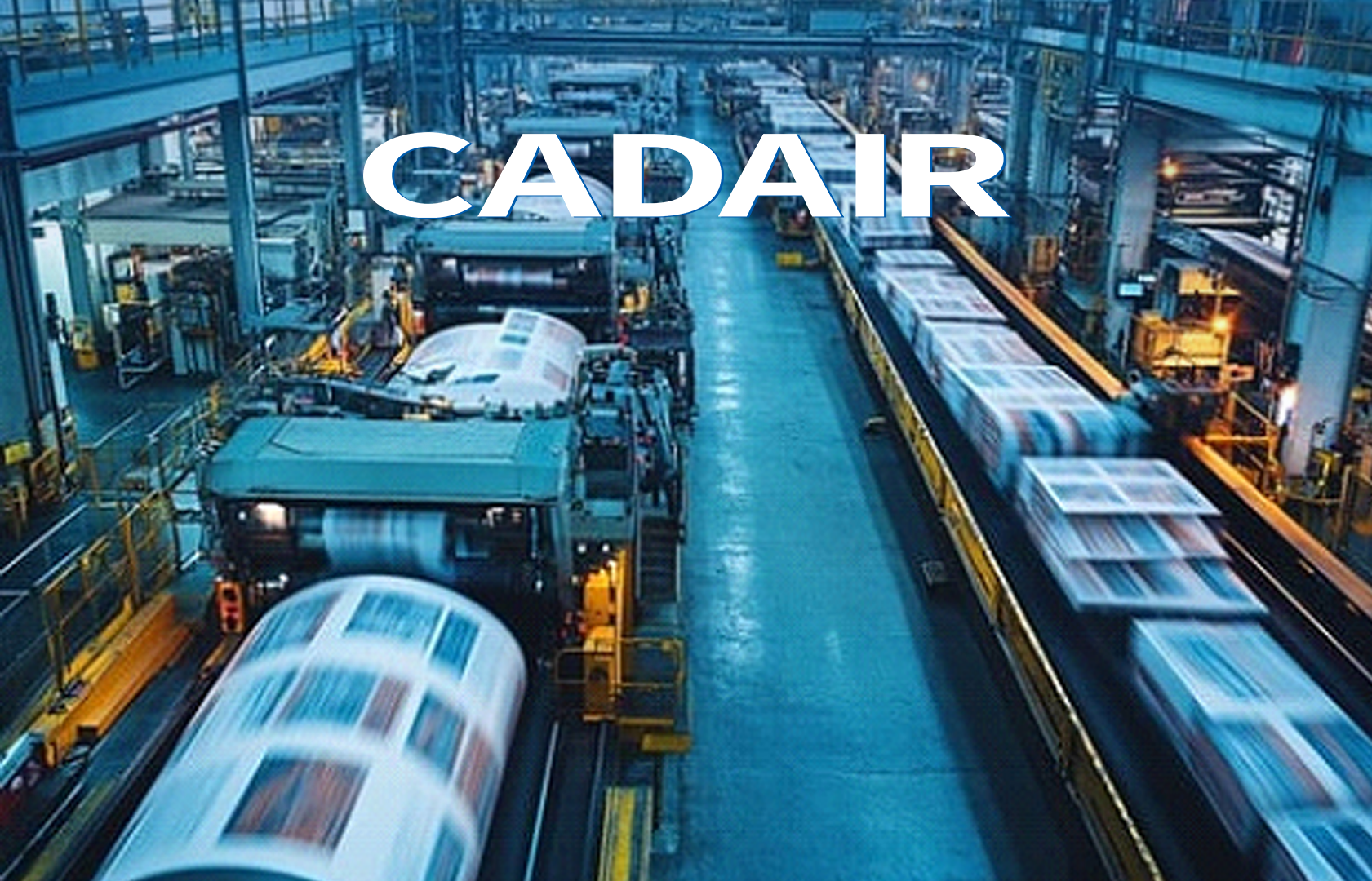
(Zeolite Rotor + RTO / CO Solutions by CADAIR)
🔹 Quick Answer
CADAIR’s printing exhaust gas treatment solutions use zeolite rotor concentration (typically 5×–40×, up to 50×, and up to 70× for low-temperature rotors) combined with RTO or catalytic oxidation (CO) to efficiently handle large air volume, low-concentration VOC emissions.
👉 Higher concentration ratios significantly reduce downstream equipment size and energy consumption while ensuring stable compliance.
1. Why Zeolite Rotor + Oxidation Is Used in Printing?
Printing exhaust gas typically features large airflow and low VOC concentration, making direct oxidation inefficient.
👉 The optimized solution:
- Zeolite rotor → concentrates VOCs (typically 5×–40×, customized up to 50× or even 70×)
- RTO / CO → efficiently treats high-concentration gas
👉 Key insight:
The higher the concentration ratio, the smaller and more energy-efficient the downstream oxidation system becomes.
2. Case Study 1: Flexible Packaging Printing (Global Client)
Project Background
The client is a global packaging leader serving industries such as:
- Food
- Beverage
- Medical devices
👉 VOC emissions are generated during high-speed printing processes.
Operating Conditions
- Airflow: 140,000 Nm³/h
- VOC concentration: 400–550 mg/Nm³
- Temperature: ≤45°C
Process Configuration
👉 Zeolite Rotor + RTO
Process flow:
- VOCs are adsorbed by zeolite rotor
- Gas is concentrated (customized ~10×)
- High-concentration stream enters RTO
- Thermal oxidation removes VOCs
Heating Method
- Natural gas
Commissioning Time
- August 2022
Key Advantages
- Handles extremely large airflow
- Stable operation under continuous production
- Significant energy savings compared to direct RTO
3. Case Study 2: Gravure & Offset Printing Plant
Project Background
The client operates:
- 2 gravure printing lines
- 3 offset printing lines
👉 VOCs are generated during ink drying and solvent evaporation.
Operating Conditions
- Airflow:
- 50,000 Nm³/h
- 28,000 Nm³/h
- VOC concentration: ~220 mg/Nm³
- Temperature: ≤38°C
Process Configuration
👉 Zeolite Rotor + Catalytic Oxidation (CO)
- Total systems: 3 sets
- Customized concentration ratios:
- 20×
- 10×
- 25×
👉 Designed based on different production lines and exhaust conditions
Heating Method
- Electric heating
Commissioning Time
- March 2017
Key Advantages
- Flexible system design for multiple production lines
- Lower energy consumption with catalytic oxidation
- Efficient treatment of low-concentration VOCs
4. RTO vs CO: How to Choose?
| Technology | Best Use Case | Advantage |
|---|---|---|
| RTO | Large airflow, medium concentration | High stability, ≥99% efficiency |
| CO (Catalytic Oxidation) | Lower concentration, smaller systems | Lower energy consumption |
| Zeolite Rotor | Pre-treatment | Concentrates VOCs (5×–70×), reduces airflow |
5. Why CADAIR Solutions Work
1. High-Efficiency Concentration
- Typical: 5×–40×
- Max: 50×
- Low-temp rotor: up to 70×
👉 Significantly reduces downstream system size and energy demand
2. Customized System Design
- Concentration ratio tailored to:
- VOC concentration
- Airflow
- Gas composition
- Emission standards
3. Energy Optimization
- Higher concentration → lower fuel/electricity consumption
- Flexible heating (natural gas / electric)
4. Proven Industry Experience
- Packaging printing
- Gravure printing
- Offset printing
6. Frequently Asked Questions
What is the best solution for printing VOCs?
👉 Zeolite rotor + RTO or CO is the industry standard.
Why is the concentration ratio important?
Because it directly determines:
- Equipment size
- Energy consumption
- Overall system efficiency
Is higher concentration always better?
Not always.
👉 The optimal ratio depends on actual operating conditions and system design.
Can one system handle multiple production lines?
Yes.
CADAIR designs multi-system configurations with different concentration ratios based on line conditions.
7. Key Takeaway
Printing VOC treatment requires concentration before oxidation—and the concentration ratio is the key factor.
👉 Best practice:
Zeolite Rotor (5×–70×) → Concentration → RTO / CO
✅ CADAIR’s advantage lies in achieving high and customizable concentration ratios, enabling smaller systems, lower energy consumption, and highly efficient VOC treatment.