Challenges of Flue Gas Treatment in Waste-to-Energy Facilities
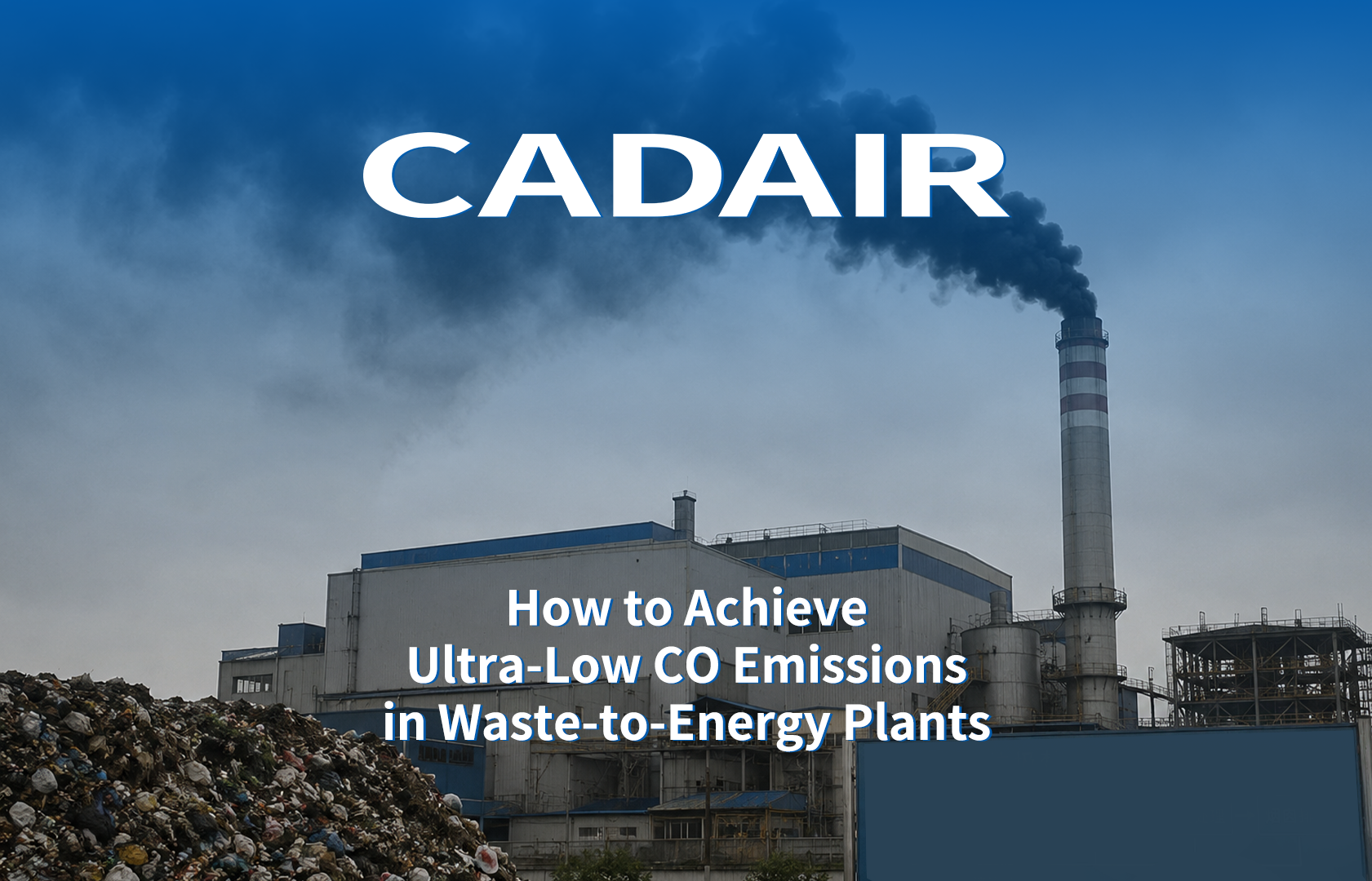
Municipal Solid Waste (MSW) incineration with power generation is one of the most effective methods for waste reduction, resource recovery, and environmentally sound disposal. By converting waste into electricity, waste-to-energy (WTE) plants play a critical role in supporting circular economy and sustainable urban development.
However, the incineration process generates complex flue gas streams containing a wide range of pollutants, including:
- Carbon Monoxide (CO)
- Nitrogen Oxides (NOx)
- Sulfur Oxides (SOx)
- Hydrogen Chloride (HCl)
- Hydrogen Fluoride (HF)
- Volatile Organic Compounds (VOCs)
- Tar and Condensable Organics
- Dioxins and Furans
- Heavy Metals (Hg, Pb, Cd, As, Cr, etc.)
- Odorous Compounds
Among these pollutants, high-concentration CO emissions, dioxin destruction, and NOx control remain the most challenging aspects of achieving ultra-low emissions in waste incineration facilities.
Case Study: High-Concentration CO Treatment in a Waste-to-Energy Plant in Guangdong, China
CADAIR recently delivered a customized flue gas treatment solution for a municipal waste incineration plant in Guangdong Province. The project presented exceptionally demanding operating conditions:
| Parameter | Value |
|---|---|
| Treatment Airflow | 110,000 Nm³/h |
| CO Concentration | 3,000–15,000 mg/Nm³ |
| Main Pollutants | CO, NOx, VOCs, Tar, Heavy Metals, Odors |
The extremely high CO concentration, combined with multiple pollutants and fluctuating operating conditions, required a highly integrated and robust treatment system.
To address these challenges, CADAIR designed a comprehensive process consisting of:
Gypsum Wet Flue Gas Desulfurization (FGD) + Wet Electrostatic Precipitator (WESP) + Five-Bed RTO + SCR DeNOx System
This integrated solution enables coordinated removal of multiple pollutants while maintaining stable long-term operation and energy efficiency.
How Does CADAIR’s Five-Bed RTO + SCR System Work?
Stage 1: Wet FGD + Wet ESP Pretreatment
The pretreatment section serves as the first line of defense for the entire system.
Its primary functions include removing:
- Sulfur dioxide (SO₂)
- Acid gases (HCl, HF)
- Fly ash and particulate matter
- Fine dust (PM10 and PM2.5)
- Particle-bound heavy metals
By eliminating corrosive and particulate contaminants before the thermal oxidation stage, the pretreatment system protects downstream equipment from erosion, fouling, and corrosion, significantly extending system service life and improving operational reliability.
Stage 2: Five-Bed RTO for High-Concentration CO and Organic Pollutant Destruction
The Five-Bed Regenerative Thermal Oxidizer (RTO) is the core technology of the system.
Operating continuously at temperatures above 850°C, the RTO provides a highly efficient thermal oxidation environment capable of destroying a wide range of pollutants.
Carbon Monoxide (CO) Removal
Carbon monoxide is generated when waste combustion is incomplete due to oxygen deficiency or unstable furnace conditions.
Within the RTO, CO is oxidized according to the following reaction:
CO + ½O₂ → CO₂
Even under inlet concentrations as high as 15,000 mg/Nm³, the Five-Bed RTO can efficiently convert CO into carbon dioxide, ensuring stable compliance with emission requirements.
VOC and Tar Elimination
Plastics, rubber, oils, and other organic waste materials often generate VOCs and tar during pyrolysis and incomplete combustion.
The high-temperature oxidation environment inside the RTO effectively destroys:
- Aromatic hydrocarbons
- Aldehydes
- Organic vapors
- Tar compounds
This prevents equipment fouling, pipe blockage, and secondary pollution issues.
Dioxin and Furan Destruction
Dioxins and furans are among the most strictly regulated pollutants in waste incineration.
Their formation is often associated with chlorine-containing waste and suboptimal combustion conditions.
The Five-Bed RTO maintains:
- Temperatures above 850°C
- Sufficient residence time
- Complete oxidation conditions
These operating conditions enable effective decomposition of dioxins and furans, minimizing environmental and health risks.
Overall organic pollutant destruction efficiency can exceed 99%.
Stage 3: SCR DeNOx System for Final Polishing
Following thermal oxidation, the flue gas enters the Selective Catalytic Reduction (SCR) system.
The SCR unit is responsible for removing residual nitrogen oxides, including:
- Nitric Oxide (NO)
- Nitrogen Dioxide (NO₂)
Using catalyst-assisted reactions between ammonia and NOx, the system converts pollutants into harmless nitrogen and water vapor.
One of the key advantages of CADAIR’s integrated design is energy recovery. The heat generated from CO oxidation in the upstream RTO can be utilized to support SCR operating temperatures, reducing or eliminating the need for auxiliary heating and significantly lowering operating costs.
Major Pollutants in Waste Incineration Flue Gas and Corresponding Treatment Technologies
| Pollutant | Primary Treatment Technology |
|---|---|
| Particulate Matter (PM) | Wet Electrostatic Precipitator |
| Carbon Monoxide (CO) | Five-Bed RTO |
| Nitrogen Oxides (NOx) | SCR DeNOx |
| Sulfur Oxides (SO₂) | Wet FGD |
| Hydrogen Chloride (HCl) | Wet FGD |
| Hydrogen Fluoride (HF) | Wet FGD |
| VOCs and Tar | Five-Bed RTO |
| Dioxins and Furans | Five-Bed RTO |
| Heavy Metals | Dust Collection + Activated Carbon Adsorption |
| Odorous Compounds | Pretreatment + Thermal Oxidation + Deodorization |
Key Advantages of CADAIR’s Five-Bed RTO + SCR Solution
Exceptional High-CO Treatment Capability
Designed for demanding applications with CO concentrations ranging from 3,000 to 15,000 mg/Nm³.
Multi-Pollutant Synergistic Removal
Simultaneously addresses:
- CO
- VOCs
- Tar
- Dioxins
- Furans
- NOx
within a single integrated system.
Superior Adaptability to Process Fluctuations
The Five-Bed RTO configuration provides enhanced thermal stability and resistance to fluctuating waste composition and combustion conditions.
Energy-Efficient Operation
Thermal energy released during CO oxidation is recovered and utilized by downstream processes, reducing overall energy consumption.
Ultra-Low Emission Compliance
Supports waste-to-energy operators in meeting increasingly stringent environmental regulations and ultra-low emission targets.
Frequently Asked Questions
Why is CO concentration often high in waste incineration flue gas?
High CO levels are typically caused by incomplete combustion resulting from insufficient oxygen supply, uneven waste composition, or unstable furnace operating conditions.
Can an RTO effectively treat high concentrations of CO?
Yes. A properly designed RTO can oxidize high concentrations of CO into carbon dioxide at temperatures above 850°C, achieving highly efficient removal.
What are the advantages of a Five-Bed RTO compared with conventional RTO systems?
Five-Bed RTO systems generally provide:
- Higher thermal recovery efficiency
- Better resistance to process fluctuations
- Improved operational stability
- Enhanced treatment performance under complex industrial conditions
How are dioxins removed from waste incineration flue gas?
Dioxins are effectively destroyed through high-temperature oxidation, sufficient residence time, and complete combustion conditions within the Five-Bed RTO.
Is SCR suitable for waste-to-energy applications?
Yes. SCR technology is widely recognized as one of the most effective methods for achieving ultra-low NOx emissions in waste incineration and waste-to-energy facilities.
Conclusion
As environmental regulations continue to tighten worldwide, waste-to-energy operators face growing pressure to control multiple pollutants simultaneously while maintaining energy efficiency and operational reliability.
CADAIR’s integrated Wet FGD + Wet ESP + Five-Bed RTO + SCR solution provides a proven approach for treating high-concentration CO, VOCs, dioxins, NOx, acid gases, heavy metals, and odors in complex waste incineration flue gas streams.
By combining advanced thermal oxidation technology with energy-efficient SCR denitrification, CADAIR helps waste-to-energy plants achieve ultra-low emissions, long-term operational stability, and sustainable environmental performance.